Saturday, 5 February 2022

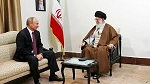
Iran joins Russia to end petrodollar dominance

In a commentary on February 04, 2022, The National Interest said Iran and Russia, as two countries subject to US sanctions, are seeking to undermine the petrodollar’s dominance in global finance and trade.

Following is an excerpt of the article:

During Iranian President Ebrahim Raisi’s recent visit to Moscow, a number of agreements with Russian oil and gas companies related to constructing petro-refineries and transferring technology and equipment were signed.

Vladimir Putin is the first Russian president to visit Iran since Josef Stalin’s visit in 1943. Since 2007, Putin has traveled to Tehran twice to attend a summit of Caspian littoral states, and in each visit, he met with Leader of the Islamic Revolution Ayatollah Ali Khamenei.

In 2007, Ayatollah Khamenei told Putin “A powerful Russia is in Iran’s interest,” to which Putin replied, “The interest of the Russian nation lies in a powerful and influential Iran in the international scene.”  

Prior to the 1979 Revolution, the United States had total domination over Iranian politics. After the revolution and during Saddam Hussein’s protracted war against Iran, both Washington and Moscow heavily supported Iraq’s invasion of Iran.

But, after the Iraq-Iran War, Moscow changed its policy toward Iran and sought to build a friendship while the United States and the West embraced hostility. The détente between Tehran and Moscow has had significant consequences for the region’s geopolitics. 

Both Iran and Russia “admonish the United States’ hypocrisy on human rights, terrorism, and unilateralism.”

Ayatollah Khamenei made it clear, “Tehran and Moscow must step up cooperation to isolate the United States and help stabilize the Middle East.” As a result, Tehran and Moscow have directed their policies in West Asia to isolate the United States. Tehran and Moscow’s full-blown support prevented the Assad government from collapsing, while the United States and its allies supported the war in Syria aimed at overthrowing Bashar al-Assad. 

There are numerous areas that Iran and Russia can find common ground. To elaborate further, both combat extremist groups, such as ISIS and al-Qaeda; both admonish the United States’ hypocrisy on human rights, terrorism, and unilateralism; both grapple with US sanctions and hope to topple the petrodollar’s dominance in global finance and trade. 

On the economic front, geographical proximity and transit connections are likely to strengthen trade and business between the two countries. In some ways, the North-South corridor of trade, which passes through the historic cities of the Caucasus through the Persian Gulf and India, will be restored. The Russian dream to access the warm waters of the Persian Gulf may soon materialize.  

Nevertheless, there are also divergences between Iran and Russia on some issues. For example, Russia has close ties with Israel, while Iran considers Israel an enemy. Russia also seeks to attract Turkey and Saudi Arabia away from the United States.

Kazem Jalali, Iran’s Ambassador to Russia emphasizes how President Ebrahim Raisi’s visit to Moscow is a “turning point” in relations between the two countries. “Iranians begrudge the Tsarist Russia” but “today’s Russia is different from the Tsarist Russia.”

Jalali added, “Russia is facing the West, and Putin and his close associates look positively at Raisi’s presidency.”

Today, Iran is dealing with the “White Tsar” (current Russia), which is different from “Red Tsar” (the old Russia).

In his meeting with Putin, President Raisi said, “The relations between Tehran and Moscow are on the path towards strategic ties.”


Iraq fails in meeting oil production quota

Iraq, second-largest producer of OPEC and one of the leading OPEC plus members is struggling to boost its oil production as much as its quota in the pact allows. 

However, with January output of 120,000 barrels per day (bpd) was lower than its production ceiling, according to data from state marketing firm SOMO, according to a Reuters report.

The figures from SOMO showed that instead of rising, oil production in Iraq dropped in January by 63,000 bpd from December 2021. This was due to insufficient storage capacity, an oil official in Iraq told Reuters.

Exports from the second-largest OPEC producer after Saudi Arabia declined in January because of bad weather, maintenance of export terminals and technical issues, the official said.

Unplanned outages and a lack of capacity to pump more led to lower or stagnant production in January at OPEC members Iraq, Iran, Angola, Congo, and Libya, a Reuters survey showed earlier this week.

Iraq and several other producers among OPEC and OPEC plus are not pumping as much quantity as the pact allow. This is tightening the market and distorting analyst assumptions about market balances.

For half a year now, OPEC plus has actually added lower volumes to the market each month than the 400,000 bpd nominal monthly increase announced in each of the OPEC plus meeting since August 2021.

At its latest monthly meeting on Wednesday, the OPEC+ group announced another 400,000 bpd increase in production for March.

While the nominal increase is modest, as in the previous seven months, many producers within the OPEC plus group are struggling to pump to their quotas, leaving an increasingly large gap between production increase on paper and actual growth in output, which leaves the market tighter than many analysts and forecasters, had anticipated just a few months ago.

Going forward, the market will be closely looking at how much of that increase OPEC plus can actually deliver, considering that half of its members have lagged in ramping up output to their quotas so far, while more producers­—with few exceptions such as Saudi Arabia and the UAE—will be struggling to raise production.

Indian Last Minute Diplomatic Boycott of Beijing Olympics

India announced a diplomatic boycott of the Beijing Olympics on February 03, 2022 after the Chinese Communist Party (CCP) picked a People’s Liberation Army (PLA) soldier involved in a bloody 2020 conflict with India as a torchbearer in the Games’ torch relay. 

India’s state broadcaster also decided to not telecast the opening and the closing ceremonies of the Games as a result.

“It is indeed regrettable that the Chinese side has chosen to politicize an event like the Olympics … the Charge d’Affaires of the Embassy of India in Beijing will not be attending the opening or the closing ceremony of the Beijing 2022 Winter Olympics,” said Arindam Bagchi, the official spokesperson of the Ministry of External Affairs on Thursday.

The Indian government was considering sending its top diplomat to Beijing to attend the opening of the games until this week, but then Beijing made a PLA regiment commander, Qi Fabao, a torchbearer of the games on Wednesday, irking India. Qi had been involved in a violent border clash with Indian soldiers in the Himalaya’s Galwan Valley in June 2020.

New Delhi had earlier decided to set aside its problems with China following a meeting between the foreign ministers of India, Russia, and China in November, and supported the Games that were boycotted by many countries including the United States.

This was because traditionally India doesn’t believe in politicalizing sports events and has never boycotted one since its existence, according to Srikanth Kondapalli, a professor of Chinese studies at Jawaharlal Nehru University, New Delhi.

But India was blindsided when Qi who had sustained head injuries during the Galwan clash took the flame from Wang Meng, China’s four-time Olympic short-track speed skating champion. While doing so both “made military salutes to each other,” reported Chinese state media Global Times.

“The inclusion of a PLA soldier who tried to kill Indian soldiers at Galwan in 2020 in the Olympic torch relay was a provocative act that triggered the decision to boycott,” Madhav Nalapat, strategic analyst and vice-chair of the Manipal Advanced Research Group, told The Epoch Times.

To India, Qi’s participation is a politicization of the Games because the only criteria of his selection as a torchbearer was his involvement in Galwan conflict, said Kondapalli of Jawaharlal Nehru University.

Frank Lehberger, a sinologist specializing in CCP policies and a senior fellow at the Indian think tank Usanas Foundation, told The Epoch Times that long before the Olympics started he expected China to “concoct some symbolisms” to humiliate India during the Olympics as revenge for PLA’s “humiliating defeat at Galwan Valley.”

The Galwan conflict, which took place in the Himalayan border region for eight hours on June 15, 2020, claimed the lives of 20 Indian soldiers. The hand-to-hand combat involved PLA soldiers attacking Indians with iron rods and batons wrapped in barbed wire.

After refusing to disclose its casualty count for eight months, the CCP admitted in February 2021 to losing four soldiers, when ahead of Party’s 100 anniversary, it announced military honors posthumously for them.

However, an investigative report citing findings from a group of social media researchers published by Australian media outlet The Klaxon on Wednesday said that China lost 38 soldiers, mostly drowning in the sub-zero temperature waters of the Galwan River.

The PLA soldiers honored with the “July 01 medal” in 2021 were a part of 29 CCP members honored on the occasion. The July 1 medal is a decoration bestowed by the Party’s paramount leader on those members of the CCP who make outstanding contributions to the Party in “China’s revolution, reform, and opening up” according to CGTN, the overseas arm of China’s state broadcaster.

Chinese leader Xi Jinping, who awarded the medals in a ceremony held in Beijing’s Great Hall of the People on June 29, 2021, said the recipients had “staunch faith.”

Global Times reported at the time that having staunch faith “is to stay true to the original aspiration and dedicate everything, even the precious life, to the cause of the Party and people.”

Lehberger said India should have understood the CCP’s character and seen this coming. “And India’s reluctance joining the boycott earlier was understood by the Chinese side as the signal that they could act in even more provocative way,” he said.

Satoru Nagao, a non-resident fellow at the Washington-based think tank Hudson Institute told The Epoch Times that only 25 countries are attending the opening ceremony and most of them are “non-democratic” countries, adding that India’s decision to diplomatically boycott the Games was “good.”

“For China, admiring its soldiers is far more important than respecting India, because India is an enemy for China. Soldiers are fighting the enemy, India. China showed that it is respecting soldiers who are fighting the enemy India,” said Nagao.

This incident is not the first time the CCP has used the Galwan conflict to send a message. Over the New Year, various Chinese state media shared videos of PLA soldiers raising a CCP’s red flag at Galwan Valley.

And on December 29, 2021 the Chinese announced “standardized” Chinese names for 15 places in Arunachal Pradesh, an Indian state on the border with Bhutan and Burma that the Chinese regime has attempted to claim and aggressively intruded upon in the past few decades.

“It shows that Chinese nationalism is directed against India,” said Kondapalli, adding that there’s a need to watch out to see if this portends more aggression towards India in the future.

China will next host the 2022 Asian Games in Hangzhou in eastern China’s Zhejiang Province from September 10 to 25.

Friday, 4 February 2022

Afghan future depends on inclusive government

Pakistan’s Ambassador to Tehran, Rahim Hayat Qureshi, met Vahid Jalalzadeh, Chairman of the National Security and Foreign Policy Committee of the Iranian parliament. 

Jalalzadeh said religious, historical and cultural commonalities between the two nations and good neighborliness are important factors in deepening relations between the two neighbors in various areas.

The senior legislator stressed the importance of parliamentary diplomacy to help remove obstacles to development of economic and trade relations and said, “Continuous consultation and positive and growing dialogue between government officials, military officials, and parliamentarians are a sign of the depth of friendship and brotherhood of the two nations.”

These will help “strengthen and consolidate cooperation between each other in various fields, especially in the field of economics,” he remarked.

He added that Iranian businessmen are looking to increase the level of their economic relations with Pakistan. 

“We know this is a reciprocal feeling. We expect the officials of the relevant departments to try to pave this way.” 

In another part of his remarks, the MP reiterated the important of security cooperation in border areas to counter the actions of terrorist groups, saying the terrorist groups are not aware of the very strong relations between the officials of the two countries. 

Jalalzadeh added, “In the Islamic Republic of Iran, there is a strong consensus among the country's top officials to increase interactions with neighbors, especially the friendly and brotherly country of Pakistan.”

Elsewhere in his remarks, the legislator emphasized the establishment of peace and stability in the region, especially in Afghanistan, and said that the Afghan people have been suffering from occupation and war for four decades. 

“There should be lasting stability and security, as well as formation of an inclusive government in Afghanistan. Iran and Pakistan, as two key players in Afghanistan, can work together to alleviate the suffering of the people of this country,” Jalalzadeh pointed out.

In conclusion, Jalalzadeh emphasized the peaceful nature of Iran's nuclear activities and added that in the last two years, the International Atomic Energy Agency (IAEA) has visited Iran's nuclear sites 15 times and confirmed the peaceful nature of nuclear activities, yet Iran is under unilateral pressure from the United States.

The US and the Zionist regime continue to claim that they are concerned over Iran's nuclear activities, he noted.

For his part, Ambassador Qureshi referred to the 70th anniversary of Pakistan's independence and said Iran was the first country to recognize Pakistan’s independence.
He also considered religious, historical and cultural affinities as important in strengthening relations between Pakistan and Iran.

Elsewhere in his remarks, Qureshi said relevant Pakistani officials are moving to establish border markets with Iran.

Pointing to the high economic potential of the two countries to develop cooperation, he said, “Agreements have been signed between the officials of the two sides, which we hope will be able to increase and strengthen the level of economic and trade exchanges more than before.”

The Pakistani envoy also stressed the important and effective position and role of Iran in resolving the crisis in Afghanistan, saying the difficult situation in Afghanistan is a matter of concern for Pakistan. 

“Establishing lasting peace and stability in Afghanistan is important for the region and neighboring countries. We hope that this will be achieved with the help of the Islamic Republic of Iran in forming an inclusive government,” he concluded. 


OPEC plus decides fate of energy market in 16 minutes

The Ministers of the OPEC plus, who met via video conference, rubber-stamped in just 16 minutes the monthly production hike by 400,000 bpd. In the shortest meeting so far in its history, OPEC+ decided on Wednesday to increase the collective production by 400,000 barrels per day (bpd) in March 2002. 

This left production plan unchanged and pushed Brent price above US$90/barrel.

Some analysts, and traders, had expected a higher production increase, considering the recent rally that has frustrated major oil-consuming nations, including the United States.

Earlier this week, Goldman Sachs had expressed the view that OPEC plus might decide to announce a larger production increase for March than the usual 400,000 bpd, keeping in view the recent oil rally to and the potential for renewed discontent from major oil importers at these high price levels.

OPEC plus confirmed the 400,000-bpd increase in record time and didn’t even plan a press conference after the meeting. 

Brent Crude prices returned to US$90 per barrel just after news of the modest production increase and the record-short meeting broke.

While the nominal increase is modest, as in the previous seven months, many producers within the OPEC+ group are struggling to pump to their quotas, leaving an increasingly large gap between production increase on paper and actual growth in output, which leaves the market tighter than many analysts and forecasters, had anticipated just a few months ago.

Going forward, the market will be closely looking at how much of that increase OPEC plus can actually deliver, considering that half of its members have lagged in ramping up output to their quotas so far, while more producers­—with few exceptions such as Saudi Arabia and the UAE—will be struggling to raise production.

According to the production table provided by OPEC, Saudi Arabia and Russia will each have a quota of 10.331 million bpd in March 2022.

The next OPEC plus meeting is scheduled for March 02, 2022.


Thursday, 3 February 2022

Awami League accused of hiding its misdeeds and repressive acts

Turning down the allegation of hiring any lobbyist in the USA, BNP on Thursday categorically said it is Awami League that spent huge public money by appointing lobbyists abroad to hush up its misdeeds and repressive acts.

Addressing a press conference, BNP Standing Committee Member, Khandaker Mosharraf Hossain demanded a transparent investigation to dig out how much money of taxpayers have been spent on lobbying firms by the ruling party and its sources.

BNP Standing Committee arranged the press conference at BNP Chairperson’s Gulshan office to give the party’s formal reaction to the government’s allegation of recruiting lobbyists abroad to campaign against Bangladesh.

Mosharraf said State Minister for Foreign Affairs Md Shahriar Alam claimed that they did never appoint any lobbyist but engaged a company purely on the media front in 2015, but the evidence doesn’t support it.

On behalf of US Chapter Awami League, he said Sajeeb Wazed Joy hired Alcalde & Fay lobbyist firm in the United States on November 29, 2004 with effect from January 1, 2005.

As a signatory to the contract, the BNP leader said he (Joy) paid US$1.250 million, US$30,000 each month, to the lobbyist firm in between 2005 and 2007.

“This is a bad luck of people that this illegal repressive regime has been spending the money of oppressed people on lobbyist firms to cover up the crimes it has committed by resorting to brutal repression, killing, enforced disappearance and snatching human and democratic rights,” he said.

Mosharraf said it is necessary to present a report before people on how much money the public have been spent in the name of engaging lobbyists.

The BNP leader also presented some documents on Sajeeb Wazed Joy’s agreement with two US firms Alcade & Fay and Friedlander.

He said Joy has been working with another lobbyist firm, BGR, on a regular basis for many years. “Friedlander, another lobbyist firm, was hired in September last year for a fee of US$40,000 for a month to arrange a high-level meeting and exchange visits between the two countries. “If you go to dig worms in this regard, bigger snakes will come out.”

Earlier, State Minister for Foreign Affairs Md Shahriar Alam alleged that BNP spent at least US$ 3.75 million on lobbyists to campaign against Bangladesh, and he shared relevant documents with the media which are also available in the public domain.

He also claimed that the Awami League government never appointed any lobbyist in its last three tenures but engaged a company purely on the media front in 2015 to help the world know Bangladesh based on facts and counter-propaganda against the country and its people.


Wednesday, 2 February 2022

Abu Dhabi to invest US$10 billion in Israel

The biggest news from Israeli President Isaac Herzog's visit to the United Arab Emirates was not to do with diplomacy or defense but the huge amount Abu Dhabi plans to invest in Israel.

According to the sources privy to the details, UAE Crown Prince Mohamed bin Zayed has decided to unfreeze US$10 billion in Israeli companies that he had promised to former Prime Minister Benjamin Netanyahu.

The UAE's large sovereign funds will divide the investments between them, including the ADIA Fund and the Mubadala Fund, although the first fund that will enter the Israeli market is the ADG (Abu Dhabi Growth) Fund, part of the ADQ Group. This fund plans investing US$200 million in Israeli companies during the year 2022, and a similar sum each year over 10 years.

A senior source, Abu Dhabi has been waiting patiently for the Israeli political scene to stabilize before renewing the process of fulfilling bin Zayed's promise. Herzog's visit, personal, diplomatic but not political, meant that he was the right person at the right time to officially initiate the investment process.

ADG Fund Chairman Faris Mohammed Al Mazrouei met with several members of the small Israeli delegation that accompanied President Herzog. At meetings in Abu Dhabi, the Israelis and Emiratis spoke about the mechanisms for the investment and how organizations like the Manufacturers Association of Israel and the Israel Export Institute would help direct the investments.

Another important link in the chain will be Start-Up National Central, which in recent years has specialized in matching up Israeli startups with investors. Start-Up National Central CEO Avi Hasson, who traveled to the UAE as part of President Herzog's delegation, informed that the unfreezing of the US$10 billion by the UAE for investment in Israel was highly significant for both the countries. He said that the Emirati use the investment funds as a strategic tool and are expressing through the funds the importance with which they see relations with Israel.

Hasson thinks that Israel is perceived by the Emirati as a symbol of innovation and progress due to the companies located here, and therefore it represents a good investment. "This is not philanthropy or a political investment fund," he said. "The Emirati are seeking profits from their investments. We do not have a commercial agenda but extensive knowhow of the abilities in the advanced technology sector and the ability to connect Israeli companies with the precise needs of investors."

Hasson stressed there has to be a match between the Israeli ‘here and now’ approach and the slower UAE approach of first building trust through a genuine connection between the parties and only then moving forward.

Pentagon deploying 3,000 troops to allies in Europe

According to a report, the Pentagon is deploying over 3,000 troops to bolster European allies, the first such movement as the United States looks to bolster NATO’s capabilities in the region amid growing tensions between Russia and Ukraine.

“At the President’s direction and Secretary Austin’s recommendation, the Department of Defense will reposition certain Europe-based units further east, forward deploy additional US-based units to Europe, and maintain the heightened state of readiness of response forces to meet these commitments,” a senior administration official said in a statement to The Hill.

“These forces are not going to fight in Ukraine. They are not permanent moves. They respond to current conditions,” the official added.

News of the deployment was first reported by The Wall Street Journal. According to the newspaper, the troops will be deployed to Germany and Poland.

Russia has amassed upward of 100,000 troops near its border with Ukraine, and the Biden administration is now warning that a military incursion of Ukraine is imminent.

The Pentagon last month put 8,500 troops on high alert to deploy, largely to bolster NATO’s response force. However, President Biden has been clear that no US forces will be deployed directly to Ukraine.


Israel getting new laser defense system ready

Israel is getting itself surrounded with a defensive laser wall, with new missile interception technology, which will be ready within a year, announced Prime Minister Naftali Bennett in a speech at the Institute for National Security Studies in Tel Aviv on Tuesday.

The IDF will begin using the laser interception system in the next year, first experimentally and later operationally, starting in the South.

“This will allow us, in the medium to long-term, to surround Israel with a laser wall that will defend us from missiles, rockets, UAVs and other threats that will essentially take away the strongest card our enemies have against us,” Bennett said.

The Defense Ministry successfully intercepted drones with the powerful airborne laser system installed on light aircraft in June last year. The system downed several UAVs at a range of one kilometer with a 100% success rate. The ministry intends to build a laser with a power of 100 kilowatts that will have an effective range of 20 km.

Bennett explained that today a terrorist in Gaza can launch a rocket into Israel that costs hundreds of dollars to make, while the Iron Dome battery shooting down the rocket costs tens of thousands of dollars.

“This equation doesn’t make sense,” the prime minister stated. “It allows [the terrorists] to launch more and more Kassams and for us to shed many millions on a ‘lightning strike’ and billions during a campaign. We decided to break the equation, and it will be broken in only a few years.”

At that point, Bennett said, Israel’s enemies “will invest a lot, and we will invest a little. If you can intercept a missile or rocket with an electric pulse that costs a few dollars, we are weakening the ring of fire that Iran has built on our borders.”

Israel will offer the laser technology to its regional allies that are also facing threats from Iran and its proxies, the prime minister said.

Bennett repeated his comparison of Iran to an octopus, sending its tentacles – proxies – to wreak havoc throughout the Middle East, and growing stronger all the time.

“The campaign to weaken Iran has begun,” he said. “This campaign is in all dimensions: nuclear, economic, cyber, open and secret actions, alone and in cooperation with others. The weaker Iran is, the weaker its proxies are. The hungrier the octopus is, the more its tentacles shrivel.”

Bennett expressed hope that the nuclear talks between world powers and Iran “will end without an agreement, because that agreement is bad for Israel.”

“Removing sanctions and flooding the Iranian regime with billions of dollars means more rockets, more UAVs, more terrorist cells, more cyber attacks and propaganda operations,” he said.

The prime minister pointed out that the Iran Revolutionary Guard Corps and its proxies have been actively attacking the United Arab Emirates and other countries while the Vienna talks are ongoing.

“That is the definition of negotiations under fire. That’s blackmail,” he said.

Israel’s strategy to fight back against Iran will stand regardless of the results in Vienna, because “even with an agreement, we think the Iranians will continue to be the Iranians,” he added.

“If an agreement is signed and the flow of dollars is renewed, we all understand Iranian aggression will only increase in the region.”

In addition, Bennett pointed out that the sunset clauses in the 2015 Iran nuclear deal, which the delegations in Vienna are seeking to revive, expires in a short time, at the end of 2030.

With US Ambassador Tom Nides in the audience, Bennett said that Washington’s interests and Jerusalem’s “do not always overlap.”

“Their interest in our region is lessening,” Bennett said of the Americans. “Their eyes are currently focused on the border of Russia and Ukraine, and in the long term, they are in a strategic conflict with China.”

There is “no longer one global policeman,” he said.

“There are no vacuums in the geopolitical arena,” Bennett stated. “Any place that is cleared is immediately taken. The United States’ place in the region can be filled – God forbid – by forces of terror and hate, and it could be filled by Israel.”

Israel’s allies in the region could be part of a “multidimensional alliance” against forces that seek to destabilize the Middle East, he said.

Tuesday, 1 February 2022

India trying to win over hearts of its neighbors

According to The Bangladesh Chronicle, India has announced substantial assistance for all the SAARC member countries, except Pakistan. The announcement was made by Indian Finance Minister Nirmala Sitharaman while presenting the 2022-23 budget in the parliament.

South Asian Association for Regional Cooperation

The South Asian Association for Regional Cooperation (SAARC) is an economic and political organization of eight countries in South Asia. It was established in 1985 when the Heads of State of Bangladesh, Bhutan, India, Maldives, Nepal, Pakistan and Sri Lanka formally adopted the charter. Afghanistan joined as the 8th member of SAARC in 2007. To date, 18th Summits have been held and Nepal’s former Foreign Secretary is the current Secretary General of SAARC. The 19th Summit was to be hosted by Pakistan in 2016, which never happened.

India announced Rs 300 crore annual budgetary financial assistance for Bangladesh, up from Rs 200 crore in the outgoing fiscal 2021-22. The allocation of the financial assistance has been provided for the Ministry of External Affairs.

Myanmar will get Rs 600 crore, Rs 200 crore more than last financial year, and Nepal will get Rs 750 crore from India in the coming fiscal.

India has allocated Rs 200 crore as aid to Taliban-ruled Afghanistan in for 2022-23 even though New Delhi does not have diplomatic presence in Kabul where its embassy has remained closed since the Taliban took over Afghanistan in August last.

The government of Ashraf Ghani in Afghanistan had in the last fiscal received around Rs 348 crore from India.

The Maldives at Rs 360 crore (as against Rs 250 crore in 2021-22) also saw an increase in India’s annual aid provision in today’s budget document.

At Rs 2,266.24 crore in 2022-23, Bhutan is once again be the highest recipient of India’s annual financial aid. But this is lower than Rs 3,004.95 crore in 2021-22 fiscal.

The second highest recipient in the coming financial year of the allocation will be the Indian Ocean island of Mauritius — Rs 900 crore.


Monday, 31 January 2022

US still trading with Iran despite sanctions

According to the data released by the Islamic Republic of Iran Customs Administration (IRICA), the value of trade between Iran and the United States has reached US$69.594 million since the beginning of the current Iranian calendar year (March 21, 2021) up to late January 2022.

As ILNA reported, during the mentioned period Iran exported US$248,000 worth of commodities to the US, while the value of imports from the country was reported at US$69.345 million.

The value of trade between the two countries increased 18% as compared to the figures for the previous year. The value of exports to the US increased 253% as compared to the previous year, when exports were reported at US$136,000.

The imports, however, decreased by 17% compared to the figure for the previous year during which Iran imported US$79.836 million worth of commodities from the US, the US ranked 23rd among the top exporters to the Islamic Republic.

The value of Iran’s non-oil exports rose 38% during the first 10 months of the current Iranian calendar year (March 21, 2021-January 20, 2022), as compared to the same period of time in the past year, according to IRICA Head Alireza Moghadasi.

Iran exported over 100 million tons of non-oil products worth US$38.763 billion in the mentioned period, the official said.

According to Moghadasi, the weight of exports in the mentioned period also grew by seven percent in comparison to the figure for the previous fiscal year’s same 10 months.

He said major export destinations of the Iranian non-oil goods were China, Iraq, and Turkey during the said 10 months.

The IRICA head further announced that the Islamic Republic imported 33 million tons of non-oil commodities worth US$41.473 billion in the mentioned period, a 34% growth in value and a 17$ rise in weight, year on year.

The United Arab Emirates was the top exporter to Iran during the period under reiew, followed by China, Turkey, Germany, and Switzerland, he stated.

Bickering over hiring lobbyist firms in Bangladesh

Foreign Minister AK Abdul Momen today said that the BNP and Jamaat-e-Islami had appointed eight lobbyist firms so that the US stops providing aid and development assistance to Bangladesh.

While delivering his statement in the parliament, Momen said that the government has also proof that BNP, through appointing lobbyists, was involved in imposing US sanctions on Rapid Action Battalion (RAB) and appealed to the United Nations Department of Peace Operations to ban the force from UN deployment.

The foreign minister came up with the statement following Jatiya Party and BNP lawmaker’s Sunday’s demand in parliament on the much-talked issue of appointing lobbyists by the BNP and the government. In his statement, Momen said, BNP-appointed lobbyists have provided such statements against Bangladesh that would offend the people of the country.

“BNP has told them (the US) that the security of the USA will be hindered due to Bangladesh.

The minister raised questions about the source of huge money that BNP had spent to pay those lobbyist firms, and demanded an investigation into how that money was sent abroad.

There might be differences of opinion between the government and the BNP, but the country cannot be harmed like that, he added.

The foreign minister also said hiring lobbyists in the US is a legal process under the US law. India, Pakistan, Qatar, Saudi Arabia, and other countries and organizations around the world appoint lobbyists to improve political and economic relations, he added.

Jamaat hired a firm to stop the trial of war criminals in 2014. For this they paid US$150,000. They hired another lobbyist firm to stop the trial proceedings.

He said the BNP had spent US$120,000 each month as retainer fee and US$2.7 million each year from February 2015 to April 2017.

Momen said the BNP had hired four lobbyist firms till 2017 and one in 2019, and to prevent the trial of war criminals, BNP-Jamaat appointed three lobbyist firms.

The foreign minister said that none of the BNP workers in the grassroots would want Bangladesh’s trade and commerce to shut. Some of their top-level leaders have done such things without informing them. Also, some BNP members had written to the UN secretary general to declare Bangladesh’s parliament illegal, he added.

Stating that lifting of sanctions against the RAB will take time, Momen said that the United States would lift its sanctions on the RAB if accurate information is provided to them.

Commenting that the government is working on the US sanctions against the RAB, the foreign minister said that the work on partnership dialogue with the United States will start next month. “There will be a security dialogue in April.”

Indicating that it would take some time to lift the embargo, the foreign minister said, “We have held several meetings with the USA. Insha Allah, whenever we will be able to provide the information to them properly, I believe the sanction will be withdrawn from a very good organization like RAB.”

The minister added, “But the process will not start tomorrow. It will take time. We have to be patient.”

The minister in his statement said, the government had not hired lobbyists, rather it has hired a PR firm.

“The government didn’t hire any such body who engaged in lobbying the Senate and the State Department,” he said, adding, “What the government did was to stop the spreading of propaganda against the country, and to spread the real information to counter the false information.”

He said an organization called BGR was appointed in 2014-15. The BGR was appointed to stop the anti-Bangladesh campaign.


Sunday, 30 January 2022

Trade between Iran and Russia likely to touch new record

The trade turnover between Russia and Iran is likely to reach record-breaking US$4 billion as of 2021 year-end, Russian Trade Representative in Iran Rustam Zhiganshin told TASS.

"The turnover surged by 89.4% during the first eleven months against the like period of the last year and stood at US$3.76 billion. Grounds are in place to expect we will reach the record-high figure of US$4 billion as of 2021 year-end," the trade representative said.

"Agricultural produce account for about 80% in the trade turnover between the countries," Zhiganshin said. "Grains and oil-bearing crops moved up in our export in the first instance," he said. "Export of vaccines can be noted among new positions - our relevant supplies to Iran totaled US$45 million," he said.

"Implementation of certain projects in the energy sphere is underway, which became more active in 2021. This backed the turnover growth over the last year," Zhiganshin noted. "Vegetables, fruits, dried fruits and nuts are imported from Iran in the first instance," he said.

Also, the spokesman of the Islamic Republic of Iran Customs Administration (IRICA) announced last week that the value of trade between Iran and Russia rose 41% in the first nine months of the current Iranian calendar year (March 21-December 21, 2021), as compared to the same period of time in the past year.

Head of Iran’s Trade Promotion Organization (TPO) Alireza Peyman Pak has stressed the need for establishing export consortia between Iran and Russia for accelerating mutual trade under the framework of the agreement with the Eurasian Economic Union (EAEU).

Peyman Pak made the remarks in a meeting with the Russian Ambassador to Tehran Levan Dzhagaryan Back in November 2021.

In this meeting, major Russian companies were introduced to the Iranian side to cooperate in various sectors including production, trade, and export, while the issue of extraterrestrial cultivation and establishing joint plants for food processing were also discussed.

The need for cooperation between the two countries to facilitate the transit of goods and the removal of customs barriers by the Russian side as well as facilitating the issuance of visas to traders and drivers were also among the issues discussed in the meeting.

Joe Biden must put house in order before taking action against Russia

The alarms are growing louder about the Ukraine crisis — and questions are becoming sharper as to how the issue will reverberate through domestic politics of United States. It is feared that a full-scale invasion of Russia would pitch the US President Joe Biden into new turmoil. 

The failure to prevent such a move would be regarded as a diplomatic failure by the White House. It would be another foreign policy misstep to add to the chaotic withdrawal from Afghanistan last year.

But Republicans are divided on Ukraine, with some the most pro-Trump elements of the GOP voicing isolationist sentiments. Their views complicate the GOP’s traditional hawkish image.

Biden has ruled out involving US troops directly in a ground war in Ukraine, even in the event of a Russian invasion. He faces the challenge of keeping NATO allies on the same page if Russian President Vladimir Putin mounts some kind of aggressive operation that stops short of a traditional, full-scale military assault.

In alluding to this conundrum at a recent press conference, Biden appeared to suggest that Putin could get away with a “minor incursion” — a statement that infuriated the Ukrainians, and which the White House tried to clean up, with limited success.

At a Pentagon briefing on Friday, Secretary of Defense Lloyd Austin and Gen. Mark Milley, Chairman of the Joint Chiefs of Staff, said that Putin had assembled all he needed for a full-scale invasion of Ukraine. The Russians are now estimated to have more than 100,000 troops adjacent to the border.

Milley told reporters that “you’d have to go back quite a while to the Cold War days to see something of this magnitude.”

The comment echoed Biden’s remark last week that a Russian invasion would “change the world” and would, in practical terms, be “the largest invasion since World War Two.”

But one pressing political question is whether Biden will play a political price at home for a failure of diplomacy if Putin presses ahead.

Robert Wilkie, a former Secretary of Veterans Affairs and, before that, an Under Secretary of Defense during the Trump administration, faulted the Biden administration, saying, “we haven’t been playing the long game while Putin has.”

Wilkie, who was also Assistant Secretary of Defense under President George W. Bush and is now a visiting fellow at the conservative Heritage Foundation, argued that there were longer-term moves the administration could make to constrain Putin, such as “opening up an avenue for Finland and Sweden to come into the NATO family” to help change the overall dynamic in Europe.

But he also noted there were real difficulties, not least Russia’s increasing closeness with China, which he argued made sanctions less likely to be effective. 

“Unlike in the past, Putin has a banker now — and that’s Beijing,” he said.

Liberal voices are of course more supportive of Biden’s position, arguing that he has played his hand as well as he could, including making clear to Putin that there will be severe consequences for an invasion.

“The US does have a number of tools that it can use that would be really painful for the Kremlin and potentially catastrophic for Russia overall,” said Max Bergmann, a senior fellow and the Director for Europe and Russia at the liberal Center for American Progress.

Bergmann added, “We should not think of this as a way to find a silver bullet that will cause Vladimir Putin to not invade or to say ‘uncle.’” He argued Putin had painted himself into a corner with his troop build-up and would have to go ahead with some form of action at risk of losing face.

Russia denies it has any intention of invading Ukraine, assurances that are dismissed in Washington because of the troop movements. The Kremlin wants a formal commitment that Ukraine, which is not a NATO member, will never be allowed to join the alliance. But that kind of guarantee is a non-starter with the US and other western nations.

Paul Gosar has contended, “We have no dog in the Ukraine fight.” A recent story from Axios noted the influence of Fox News broadcaster Tucker Carlson, who has been openly skeptical about the need for the US to get involved on Ukraine’s side. The website also noted a number of GOP candidates who have sounded similar themes.

Those positions sit very uneasily with the GOP’s traditional hawkish image. They also draw scorn from liberal foreign policy experts, who accuse Trump Republicans of giving comfort to an adversary.

“Protest is fine, disagreement on policy is fine, but active support for Putin’s expansionist policies, including the potential invasion of another democracy, give confidence to Putin that he has effectively undermined the American president at home,” said Joel Rubin, a former deputy assistant secretary of State during the Obama administration.

Some polling shows the peculiar contours of US public opinion in relation to Ukraine. An Economist/YouGov poll released lately, for example, indicated more Republican voters than Democratic voters consider Putin a “strong leader.” 

Asked whether it was more important for Washington to “take a strong stand” on Ukraine or “maintain good relations with Russia,” voters of both parties went for the first option. But Republicans did so by a slimmer net margin than their Democratic counterparts.

There is, too, the fact that American voters have a raft of other, more immediate topics to worry about, with COVID-19 and inflation prime among them.

That could mean that another blow to American prestige in the shape of a Russian invasion would hurt Biden anew. Or, it could mean that US voters simply don’t care all that much what happens in Kyiv.

Right now, it’s waiting game that is becoming tenser by the day. The most likely time for a Russian invasion is in the next few weeks, as the ground freezes and makes troop movements easier.

 “I think [Putin] is going to do it,” said Bergmann. “Once you put this in motion, it can be hard to unwind it without losing face and credibility…He could just leave forces where they are. But, yeah, I would be nervous.”

Hamas commander accused of spying for Israel escapes from Gaza prison

According to a report by The Jerusalem Post, a former commander of Hamas military wing who was accused of spying for Israel has escaped from a maximum security prison in the Gaza Strip. The fugitive, Abed al-Karim Abu Odeh, 35, was arrested by Hamas in 2019 on suspicion of mapping underground tunnels with a tracking device he allegedly received from his Israeli accomplice.  

It was not clear how Abu Odeh, who was being held in the Ansar Prison in the Gaza Strip, managed to escape. The rare escape is seen by many Palestinians as a serious embarrassment for Hamas.

Hamas has arrested a number of suspects on suspicion of helping Abu Odeh according to a Palestinian journalist in the Gaza Strip.

Hamas officials described Abu Odeh as an extremely dangerous security prisoner and offered a reward for information leading to his capture.

The officials said they did not rule out the possibility that Abu Odeh, who was a top commander of the Hamas military wing, Izz ad-Din al-Qassam Brigades, would try to cross the border into Israel.

Hamas set up checkpoints and deployed dozens of security officers in several parts of the Gaza Strip, especially near the border with Israel, in an attempt to prevent Abu Odeh from leaving the coastal enclave.

Hamas also issued a warning to fishermen in the Gaza Strip against helping Abu Odeh.

Eyad al-Bozm, spokesperson for the Hamas-controlled Ministry of Interior, said that Abu Odeh escaped from prison on Saturday morning. “The Hamas security forces are taking measures to re-apprehend him,” he added without elaborating.

On Saturday night, Hamas security officers raided the home of Abu Odeh and arrested a number of his family members, according to sources in the Gaza Strip.

Saturday, 29 January 2022

Bennett and Iran animosity

Naftali Bennett, Prime Minister of Israel, has said that the theory of “killing Iran with 1000 knife wounds is similar to what happened to the former Soviet Union”. Doesn’t he sound delusional?

In an interview with the Israeli Ynet daily, Bennett said, “… but Iran itself, which is the root of evil, is safe. Here is a cold war going on, we are changing this equation, we are trying to weaken Iran in all dimensions economically, socially and security-wise. We act more and do not give up.”

The notion of comparing Iran to the Soviet Union, and the current status of the Islamic Republic with the 1985-1989 of the Soviet Union shows how far Bennett is from the ground reality.

What is going on in Tehran is that the country is by no means isolated. The Belt and Road Initiative put forward by China and Iran’s active participation in the initiative, 25-year Iran-China cooperation document, the soon-to-be-signed 20-year cooperation document with Russia, and so many more examples clarify Iran’s position as a regional and even trans-regional power. 

In some rather insulting remarks, the Israeli prime minister said, “I look at Iran as an ongoing campaign. Iran has been an octopus for decades, its arms encircling the falcons in Lebanon, Gaza, Syria, and the falcons fall into its trap and bleed. We have dramatically increased the range of attacks as well as the type of attacks and the quality of the targets. This creates a problem for Iran.”

The delusional Bennett seems to have forgotten how its Iron Dumb was penetrated in the 12-day war against Gaza. The fact that Bennett thinks he has created problems for Iran is a true reflection of a pathological liar who wants to mend his reputation after only seven months in office. 

In response to a question about “a thousand knife wounds” strategy that the Tel Aviv regime dreams of implementing, Bennett said, “A thousand blows is not like that.

Remember the cold war between the United States and the Soviet Union? Did the Americans attack the Russians? No, but they were able to crush them wisely.”

He continued, “We must act without interruption until they leave here. What are you doing here? What do you think you are doing In Syria? What do you think you are doing at our borders?”

Someone needs to ask Bennett the same questions. What is Israel doing in West Asia? Where is this regime’s status in the economic, political and sociological equations of the region? 

The regime with a dark history of trespassing, colonizing and occupying other people’s lands is in no place to talk about a rich civilization like Iran who has been present in the region for more than 2500 years. 

Regardless of the fact that Israel is not able to confront Iran at all, Bennett seemingly has taken some time off of repairing an Iron Dome full of holes. 

Struggling with a cyberspace that is full of holes, leaks of the military forces with their ID numbers on the internet, a war minister with a housekeeper who turned out to be a spy and so many other crises in only seven months, Bennett can’t keep quiet, and seems to be giving interviews which are full of lies. 

US creating hype to justify action against Russia

The Pentagon on Friday called on Russia to stand down on Ukraine as tensions rise over the threat of a Russian military invasion. Defense Secretary Lloyd Austin in a briefing with reporters said Moscow has for months been deploying forces along Ukraine’s border at a “consistent and steady pace,” which has been supported by Russian naval activity in the northern Atlantic and Mediterranean Sea. 

“We don't believe that President Putin has made a final decision to use these forces against Ukraine,” Austin said. “He clearly now has that capability.”  

Russia has amassed at least 100,000 troops near the Ukrainian border, and the United States has warned in recent weeks that Putin could attack at any moment. President Biden has warned Putin that such an attack would be met with severe economic consequences for Moscow. 

The Kremlin has denied any intention of seeking to invade Ukraine, but weeks of diplomatic dialogue aimed at diffusing the conflict has largely proven unsuccessful. As diplomatic talks continue, NATO has moved to bolster its security forces along the eastern flank, as Ukraine shares borders with four alliance members. 

Austin and Gen. Mark Milley, Chairman of the Joint Chiefs of Staff, stressed that there was no reason for armed conflict.

“It's the policy of the United States government to continue to support an independent Ukraine and their goals. And we are continuing our efforts to enhance their ability to protect themselves,” Milley said. 

“We strongly encourage Russia to stand down and to pursue a resolution through diplomacy,” he continued. “Armed force should always be the last resort. Success here is through dialogue.” 

The US has called for a meeting of the United Nations Security Council to address Russia’s behavior and the build-up of Russian troops on Ukraine’s border. 

A senior administration official on Friday told reporters the US wants to get UN members on the record.

“It basically boils down to the question of whether there should be a path of war, or whether there should be a path of diplomacy,” the official told reporters in a briefing.

“I think the expectation is that members of the Security Council will be weighing in on this question and supportive of a diplomatic approach.”

The official said that no concrete measures or a joint statement are expected to come out of the council meeting. Russia, as one of five permanent members of the council, holds power to veto such measures in the council. The other permanent members are United States, France, United Kingdom and China.

As US lawmakers scramble to iron out a sanctions package against Russia ahead of a potential invasion, the head of Ukraine’s parliament sent a letter to several US senators outlining specific demands for what those sanctions should look like. 

Ruslan Stefanchuk, chairman of Ukraine’s Verkhovna Rada legislature, thanked the senators for supporting Ukraine, and stressed the importance of already adopted laws to support Ukraine in combating Russian aggression, according to a statement from the parliament.

According to Axios, which first obtained the letter, the request was sent to Senate Foreign Relations Committee Chairman, Robert Menendez and James Risch, the ranking member on the Senate Foreign Relations panel. The letter was also sent to Rob Portman, Jeanne Shaheen, Chris Murphy, John Cornyn, Lindsey Graham and Ben Cardin.  

The senators have lately taken part in a meeting over Zoom to try to figure out the details for legislation on sanctioning Russia. 

Friday, 28 January 2022

Poor becoming poorer in India

In India taxation policy is pro-rich, depriving the poor majority of even the basics to improve their lives. The poor became poorer, while the rich got richer in India during 2021, says a survey by Oxfam International.

Indian billionaires increased their wealth by 39% in 2021 and are getting richer at a much faster pace, but the poor saw their annual income drop by 53% and are still struggling to earn a minimum wage and access quality education and health care, the report revealed.

Titled “Inequality Kills: India Supplement 2022,” the report said that the richest 98 Indians own the same wealth as the bottom 555 million people.

Donate to UCA News with a small contribution of your choice Indian billionaires grew from 102 in 2020 to 142 in 2021 even though the country witnessed yet another year of pandemic.

 This was also the year when the share of the bottom 50% of the population in national wealth was a mere 6%. The combined wealth of the richest 100 Indians on the Forbes list stands at more than half a trillion US dollars. There were only three women among the 100 richest Indians.

India had the third-highest number of billionaires in the world, just behind China and the United States. It now has more billionaires than France, Sweden and Switzerland combined.

In 2020, India’s top 10% held close to 45% of the country’s national wealth. The Oxfam report once again confirmed that while India is one of the fastest-growing economies in the world, it is also one of the most unequal countries with inequality continuing to rise sharply for the last three decades.

Since 2015, more and more of India’s wealth has gone to its richest one percent. Globally, too, wealth increased during 2021 to make the world’s billionaire elite richer when common people struggled against the pandemic for the second consecutive year.

“The massive gap between rich and poor will continue to increase to unimaginable proportions if the elected representatives of people in parliament do not take their job seriously,” said A.C. Michael, convener of the United Christian Forum.

This deliberate inequality was bound to continue, said Michael, a former member of Delhi Minorities Commission. “Sadly, they, elected representatives, are more busy dividing people on the basis of religion for their political gains instead of addressing the more pressing issues that could better the lives of people,” he added.

Professor Himanshu Jain of Jawaharlal Nehru University said what is particularly worrying in India’s case is that “economic inequality is being added to a society that is already fractured along the lines of caste, religion, region and gender.”

This surge in the wealth of the country’s top 100 billionaires comes at a time when India’s unemployment rate was as high as 15% in urban areas and the healthcare system was on the brink of collapse.

Unfortunately, not only has the taxation policy been pro-rich but it has also deprived India’s states of important fiscal resources — both particularly damaging in the context of the Covid-19 crisis.

The pandemic revealed how dependent Indian states are on the federal government for technical expertise and financial support despite a federal structure supported by India’s constitution.

In spite of health being a state subject, the state continued to retain more resources in non-divisible pools rather than devolving them to manage the pandemic.

The Oxfam report recommended that the government revisit its primary sources of revenue generation, adopting more progressive methods of taxation and assessing its structural issues that permit such wealth accumulation by the rich.

Additionally, the government should also redirect revenue towards health, education and social security, treating them as universal rights and as a means of reducing inequality, thereby avoiding the privatization model for these sectors.

Oxfam also called on the government to recognize the unequal lives that Indian citizens live by measuring them and legislating to protect their interests.

Courtesy: South Asia Journal

Tehran-Baku ink MoU for constructing bridge over Astarachay River

Iran and Azerbaijan have signed a memorandum of understanding (MOU) for cooperation in constructing a bridge over the Astarachay River. The MoU was signed by Iranian Deputy Transport and Urban Development Minister Kheirollah Khademi and Azerbaijan’s Deputy Minister of Digital Development and Transport Rahman Hummatov in Baku.

As reported by IRNA, the project for the construction of the mentioned bridge was commenced in a ceremony attended by Iranian Transport Minister Rostam Qasemi and Azeri Deputy Prime Minister Shahin Mustafayev.

Qasemi, who is also the head of the two countries’ Joint Economic Committee, traveled to Azerbaijan with a delegatio to visit the country’s economic areas and explore avenues of mutual cooperation.

Iran and Azerbaijan had earlier announced the total investment made in the project to be 4.7 million euros.

The construction of Astarachay Bridge is going to be a positive step in completing the North-South Corridor and is expected to open a new gate for the development of all-out relations between the two neighbors.

Speaking at the ceremony, Mustafayev said the construction of the bridge is scheduled to be completed by the end of the current year.

"The president and the government of the Republic of Azerbaijan attach special importance to the development of relations with the Islamic Republic of Iran, and the presidents of Iran and Azerbaijan expressed interest in further developing relations between the two countries in a cordial meeting in Ashgabat," the official said.

Azerbaijan and Iran have established deep relations in various areas including trade, economy, energy, customs, and investment, he said: "There are good opportunities between the two countries to implement joint projects in these fields."

Mustafayev further mentioned the upward trend of trade between the two countries and said, “Despite the Coronavirus pandemic in the last two years, the trade turnover of Iran and the Republic of Azerbaijan in the first 11 months of 2021 increased by 30% as compared to the previous year and the amount of road transport also increased by 62.5%.”

“During this period, the transportation and transit of goods between the two countries have not stopped for a single day,” he stressed.

Qasemi for his part called Azerbaijan the closest neighbor to Iran and said, "We hope that after the meeting of the presidents of the two countries, relations between the two nations will develop as much as possible."

He pointed to the development of relations with neighbors as one of the priorities of the Iranian government and, referring to Iran's participation in the implementation of projects in Azerbaijan’s liberated territories in Karabakh, said, "Cooperation between the two countries in this area can accelerate the reconstruction of these regions.”

Qasemi noted that the development of transport and transit in the region is in the interest of both countries, and said that the two countries’ Joint Economic Committee could help deepen economic relations between them, as well as provide the necessary facilities for businessmen and entrepreneurs.

Khademi termed the construction of the Astarachay Bridge as an effective step in completing the north-south corridor and said, "The construction of this bridge will lead to economic, tourism, industrial and transportation development of the two countries due to the cultural, social and religious commonalities of the two neighboring countries."

“The Astarachay border bridge will lead to the development of transit trade between the two countries, which, in parallel with the existing railway bridge, will lead to the comprehensive development of the region,” he said.

Thursday, 27 January 2022

Crisis in Belarus and role being played by Russia, European Union and United States

After the presidential election in Belarus on August 9, 2020, mass demonstrations broke out spontaneously throughout the country. Hundreds of thousands of people took to the streets protesting against widespread election fraud. 

These protests soon met with sustained, brutal suppression. The masses were eventually driven from the streets, yet the resistance against the Belarusian dictatorship persists to this day.

It is clear that Alyaksandr Lukashenka lost the popular legitimacy he had enjoyed for many, if not most, of the last 26 years. Why did this Belarusian revolution fail to succeed? The responses of Russia, the European Union, and the United States to the 2020–21 protest movement had a decisive impact on the pro-democracy uprising in Belarus and will continue to be crucial for how the situation in Belarus unfolds in the future.

The 2020–21 Belarusian protest movement to date can be divided into three main phases: violent repressions; temporary cease-fire; and regime retaliation. The next phase of the Belarusian crisis will be one of power transition. This transition will likely happen after the constitutional referendum scheduled for February 27, 2022. The current draft of the new Belarusian constitution proposes several crucial changes for the political system in Belarus.

First, the amendments aim to weaken the powers of the Belarusian parliament and to strengthen the role of the All-Belarusian People's Assembly (ABPA). This body which under the present constitution does not have governing status would be endowed with wide-ranging powers and would consist of 1,200 delegates loyal to the regime. The ABPA would have the power to approve Belarus’s foreign and security policy, propose changes to the constitution, draft laws, select judges of the top courts, and have other functions. The acting president would automatically become a member of the ABPA and potentially serve as its chair, if elected by the other delegates. By strengthening the powers of the ABPA, Lukashenka is trying to create an alternative center of power which would allow him to stay in the Belarusian political arena even if he decides to step down as a president.

Second, the constitutional amendments envisage the president’s immunity from prosecution and prohibit anyone who temporarily left the country in the last 20 years from running for presidency. This provision directly targets members of Belarusian political opposition who were forced to live into exile to avoid repressions. This amendment deprives the Belarusian opposition of the opportunity to challenge the ruling regime directly inside Belarus, and provides additional guarantees for the safety of Lukashenka and his entourage. 

Finally, the new constitutional provisions also grant the president immunity from prosecution and introduce a limit of two five-year presidential terms in office. However, since these restrictions would only apply going forward, Lukashenka could potentially stay in power until 2035.

Lukashenka has not yet declared whether he will step down after the referendum. The current political instability in the region, including the January protests in Kazakhstan and the escalating tensions between Russian and Ukraine, increase the chances that Lukashenka will stay in power after the referendum.

In either case, the West will not cease pressure on the Belarusian regime and will continue to support those fighting for democratic reforms there. For its part, Russia will continue to use the vulnerability of Lukashenka and his close entourage to increase its political, economic, and military presence in Belarus.

Russia, the EU and the US have all played an important role in the evolution of the 2020–21 Belarusian post-electoral crises. The Belarusian mass protests failed to succeed in August 2020, thanks both to Russia’s significant support of the Lukashenka regime and a lack of quick and comprehensive response from the EU and the US.

However, the Ryanair incident in May 2021 catalyzed increased Western action against the Lukashenka regime. It resulted in greater coordination between the EU and the US and led to the passage of several packages of targeted sanctions. Hard sanctions are likely to continue to serve as the baseline policy towards the Lukashenka regime in the near future for the EU and the US, while Russia will likely continue exerting its influence in pursuit of greater political, economic, and military integration with Belarus.  Lukashenka’s regime has a potential to maintain political control in the country in the short-term perspective. However, in the long run it will have to face the irreversible transformations happening in the Belarusian society and step on a path of political transition.

US confronts a pair of ruthless dictatorships

I am inclined to share with my readers an article by Newt Gingrich, warning that the United States is confronting a pair of ruthless dictatorships in two potential collisions that could change history and leave the super power at enormous risk.

The news media focus is currently on Vladimir Putin and his threat to occupy part or all of Ukraine. Everyone recognizes that President Joe Biden made a dangerous mistake in his two-hour press conference when he said “a minor incursion” by Russia into Ukraine might be acceptable. His administration was trying to reverse that comment as soon as the press conference ended and spent the next two days trying to reassure everyone—including our allies—that Biden did not mean what he clearly said.

Of course, the Biden threat that there would be “severe sanctions” if Russia invaded Ukraine probably has no effect on Putin. First, when he seized all of Crimea the Obama-Biden administration threatened severe sanctions and nothing seemed to hurt Russia much. Second, at a time when Biden’s war on American energy has raised the price of oil and forced him to beg Russia and Saudi Arabia increase production to lower the price, Putin must be reveling in the absurdity of Biden’s words versus Biden’s actions.

Oil is the biggest source of foreign income for Russia. Every US$/barrel increase is a windfall Putin can spend on the Russian military and foreign adventures. In October 2020, with President Donald Trump’s energy independence policy, the price of crude was US$39.90/barrel. Today, with Biden’s anti-American energy policy, the price of crude has jumped to US$85.43/barrel.

Despite Biden’s strong words about sanctions, the effect of his policies has been a US$45.53/barrel increase in profit (114.11%) for Putin to pay off his oligarchs, buy better military equipment, and engage in foreign adventures. Any supposed sanctions Biden imposed would have to overcome this windfall—and then go much deeper—for Putin to even feel it.

Far from being intimidated, the Russians have announced that they will be holding military maneuvers off Ireland. That country has complained and said they don’t want Russian warships in their neighborhood. Since Ireland is not a member of NATO, and its own forces are totally inadequate for dealing with Russia, NATO would have to get involved if there was a serious incident.

While Putin is keeping everyone focused on Ukraine, Xi Jinping is busy putting pressure on Taiwan. Last Sunday, the Chinese Communists flew 39 aircraft—including a nuclear bomber—near Taiwan.

The simple fact is Putin and Xi sense real weakness in the American commander in chief. They sense that American confusion and weakness is an enormous opportunity.

While Biden has a difficult time communicating with his allies—and has had no impact on Germany which is now choosing Russian natural gas over NATO—Putin and Xi are talking regularly and coordinating activities.

The American system was built for a strong commander in chief. Gen. George Washington spent eight years fighting the British to establish independence of United States. When he became President of the Constitutional Convention, his influence was decisive. Washington knew from his own experience that American survival in a dangerous world required a commander in chief—not a legislator in chief, not a speechmaker in chief, not a cheerful conciliator in chief. The American presidency only works with a strong, competent, commander in chief. Currently United States does not have one. Biden is incapable of filling Washington’s shoes.

He has referred to a movie, “Munich: The Edge of War.” It is a clever treatment of the Munich meeting between Adolf Hitler and British Prime Minister Neville Chamberlain in which Chamberlain gave away Czechoslovakia in order to buy what he called “peace for the time.”

Before Munich, in a radio broadcast to the British people, Chamberlain had described the German-Czechoslovakian crisis as “a quarrel in a far away country between people of whom we know nothing.”

On learning that Chamberlain had sold out the free country of Czechoslovakia—leaving it defenseless against the German dictatorship—Winston Churchill warned: “You were given the choice between war and dishonour. You chose dishonour and you will have war.”

He draws the conclusion, “Weakness when facing dictators is always dangerous. The situations in Ukraine and Taiwan are both dangerous. The US commander in chief appears incapable of meeting the dual challenge”.


OPEC plus likely to stick to planned March output increase

OPEC plus is likely to stick with a planned increase in its oil output target for March 2022 when it meets on Wednesday next week. Several sources from the producer group said, as it sees demand recovering despite downside risks from the pandemic and looming interest rate rises.

While two OPEC plus sources said oil at a seven-year high close to US$90 a barrel might prompt the group to consider further steps, the vast majority of sources said no new decision was expected at the February 02, 2022 online meeting.

One Russian source told Reuters the country was concerned the price rally might revive a boom in US shale production.

"OPEC plus countries should be on high alert with this price level given the bullish forecasts for shale oil production in 2022," the source said.

The source added that high oil prices were also hurting profit margins of Russian refineries.

OPEC plus, which groups the Organization of the Petroleum Exporting Countries (OPEC), Russia and other allies, has raised its output target each month since August by 400,000 barrels per day (bpd) as it unwinds record production cuts made in 2020.

Current plans would see OPEC plus do so again in March.

"We are very likely to go for another 400,000 barrels per day," one of the OPEC+ sources said. "There are no reasons against it."

OPEC plus has resisted pressure from the United States since last year to raise supplies more quickly.

Despite its increased targets, actual output from OPEC plus has not kept pace as some members struggle with capacity constraints, and this has been a factor underpinning prices.

OPEC plus missed its production target by 790,000 bpd in December 2021 as members such as Nigeria and Angola struggled to raise output, the International Energy Agency said.

Several banks and analysts including Morgan Stanley and JP Morgan, expect oil prices to top US$100/barrel later in the year 2022 amid tight OPEC plus spare capacity and strong demand.

Some OPEC plus sources believe that the recent price rally is driven more by geopolitical tensions than fundamentals.

"With Russian-Ukrainian tension one could expect that, but [it is] not a supply issue for sure," one of the sources said about prospects for US$100 oil.

Wednesday, 26 January 2022

US succeeds in selling Bradley fighting vehicles to Croatia

According to a report, Croatia will buy 89 US Bradley fighting vehicles as part of a plan to form an infantry brigade to aid NATO, Prime Minister Andrej Plenkovic announced Wednesday. 

Croatia will receive 62 fully equipped and armed versions of the armored vehicles plus another 22 for reserve parts and five for training in a US$196 million deal, Plenkovic announced on Twitter. 

As part of the agreement, Croatia will pay slightly more than US$145 million while the United States will cover US$51 million. 

“This is a confirmation of good cooperation and I believe that in this way, we have added another piece to the mosaic of our cooperation,” Plenkovic told reporters, according to The Associated Press. “The Croatian army will achieve a new level of quality.” 

Croatia, which has been negotiating the vehicle deal since 2017, currently uses Bradley models from as far back as Operation Desert Storm in the early 1990s and wants to upgrade the machine guns, missiles, radios and armor, among other parts.  

Plenkovic said the new vehicles will begin arriving in 2023. 

A member of NATO, Croatia looks to bolster its military equipment to keep up with its neighbor and Russian ally Serbia. The country also must contend with an increasingly aggressive Kremlin, though its president said Tuesday that it would not be sending troops if tensions between Russia and Ukraine continue to escalate. 


Netherlands cancels €2.2 million contract with Palestinian NGO

Reportedly, the Netherlands has canceled a €2.2 million contract with the Union of Agricultural Work Committees (UAWC) over ties to the Popular Front for the Liberation of Palestine, according to a report by NGO Monitor.

The Netherlands announced that it would cancel its contract with the Palestinian NGO on January 5, 2022 amid an internal review that revealed 34 officials and board members who worked at UAWC in 2007-2020 had ties to the PFLP – some of whom held leadership positions and were responsible for vicious terror attacks, such as the 2019 murder of 17-year-old Rina Shnerb.

NGO Monitor, itself a non-governmental organization that analyzes International NGO's reception and potential bias toward Israel, originally alerted the Dutch government about the affiliation of many UAWC employees and board members to the PFLP in 2018 and have remained in communication since.

As a result of the investigation and subsequent cancellation of the contract's funding, NGO Watch estimates that the Netherlands government has cut €2.2 million worth of support to the UAWC.

Following the announcement, NGO Monitor sent letters to the governments of Switzerland, Italy, Spain, France, Germany, Belgium, Norway, Denmark, Sweden and the European Union urging them to also freeze all ongoing or future funding to UAWC and other PFLP-linked NGO's.