Wednesday, 9 June 2021

An uneasy calm prevailing in Pakistan’s neighborhood

Having lived in turmoil area for decades, I feel a bit uncomfortable when a clam prevails in Pakistan’s neighborhood, because it is usually followed by some uncalled-for incident. 

Most of us know that focus of the United States has shifted away from South Asia and Middle East and North Africa (MENA) to South China Seas. India is still struggling to control widespread pandemic. Iran is getting ready for Presidential elections scheduled for 11th June 2021. On top of all a ceasefire has been established between Israel and Hamas.

Afghanistan

As per plan, most of the US soldiers will leave Afghanistan over the next few weeks, which will require ensuring greater air-surveillance and setting up quick response teams to tackle any emergency, mainly because uninterrupted supply lines have to be maintained for thousands of the US contractors that will continue to work in Afghanistan after the departure of troops.

One of the fears is that Afghanistan will once again plunge deep into civil war. This time the situation will be more alarming because of presence of groups supported by United States, Russia, China, India and Iran. In the past Pakistan had faced influx of Afghan refugees, but this time the threat is greater, because of presence of hundred and thousands of militants, who may slip into Pakistan in search of safe heaven.      

India

At present India faces multiple issues, besides COVID. These include boarder issues with China, growing resentment in Bangladesh and Afghanistan. Lately, Maldives has also been offended because of Indian infiltration in its affairs and India not supporting Palestinian cause. India also faces expulsion from Iranian Chabahar port after Iran and China signed various economic cooperation agreements with Iran.    

Iran

A rather complex situation has emerged after the announcement of Presidential elections in Iran. Not only number of candidates is large, but internal rifts are being created to show cracks in the system. The biggest setback is slow down of JPCOA negotiations. It is also becoming evident that there is no likelihood of easing of sanctions in near future. Pakistan has been a victim of imposition of US sanctions on Iran, particularly due to abandoning of Iran-Pakistan-India (IPI) gas pipeline.

Iran has been openly accused of proxy wars in Lebanon, Syria, Iraq and Yemen. Israel has drilled into the minds of Arabs, “Iran is a bigger threat as compared to Israel”. This has not only smashed unity of Muslim Ummah, but also causing transfer of billions of dollars to the United States and other countries manufacturing lethal arms.

Tuesday, 8 June 2021

Is Israel handing over control of Gaza to Egypt?

There are many rumors that the Egyptians are planning to return to the Gaza Strip. Many people here are convinced that the Egyptian-sponsored reconstruction work is part of a plan to pave the way for a permanent Egyptian security presence in the Gaza Strip.

The Egyptians are working to achieve Palestinian national reconciliation and reunite the West Bank with the Gaza Strip. Egypt has invited representatives of several Palestinian factions to Cairo as it supports the establishment of a Palestinian state comprising of West Bank, Gaza Strip and East Jerusalem.

It may be recalled that during the 1948 War of Independence, the Arab League established the “All-Palestine Government” to govern the Egyptian-controlled Gaza. Palestinians living in the enclave were issued “All-Palestine” passports. Egypt did not offer them citizenship. After the dissolution of the All-Palestine Government in 1959, Egypt continued to control the Gaza Strip until 1967. The Egyptians never annexed Gaza and chose to administer it through a military governor.

After the establishment of ceasefire between Israel and Hamas on 21st May 2021, Egyptian President Abdel Fattah Sisi has pledged US$500 million to help rebuild the houses and buildings that were destroyed during the fighting. Dozens of Egyptian bulldozers, cranes and trucks entered the Gaza last Friday. This created an impression among the Palestinians that Egypt is planning to return to the coastal enclave it ruled between 1948 and 1967.

It is not clear if Egypt wants to go back to the days when it was administering the Gaza. But Sisi’s decision to contribute to the reconstruction effort shows that he wants to be heavily involved with everything concerning Gaza.

Some critics go to the extent of saying that the presence of the Egyptian construction teams in the Gaza means that Hamas and other Palestinian factions will not be able to resume the rocket attacks on Israel.

They say, “It will be hard for Hamas to initiate another round of fighting with Israel when there are many Egyptians inside the Gaza Strip. If Hamas or Palestinian Islamic Jihad starts firing rockets at Israel while the Egyptian construction teams are working in the Gaza, the two groups will get into trouble with Egypt.”

The Head of Egypt’s General Intelligence Service, Abbas Kamel, last week made a rare visit to the Gaza, where he met with leaders of Hamas and other Palestinian factions and discussed with them ways of maintaining the ceasefire and the reconstruction efforts.

It is on record that relations between Egypt and Hamas were strained after Sisi came to power in 2013 after deposing President Mohamed Morsi and outlawing the Muslim Brotherhood. In 2015, an Egyptian court listed Hamas, an offshoot of the Muslim Brotherhood, as a terrorist organization. Morsi and other members of the Muslim Brotherhood were later charged with spying for Hamas and Iran.

Until a few years ago, Egypt’s state-controlled media had accused Hamas of helping Muslim terrorists who attacked Egyptian security forces in the Sinai. Hamas has strongly denied the charges, saying it does not meddle in the internal affairs of any Arab country. The relations between Egypt and Hamas have improved over the past few years.

Monday, 7 June 2021

Jerusalem flag march cancellation gets mixed response from Muslims and Zionists

A flag march through the Old City of Jerusalem was called off on Monday after Israel Police rejected the organizers' request that participants be allowed to march through the Old City's Damascus Gate. The march was viewed as a possible way to set off violence on the eve of the swearing in of a new government in the Knesset.

Defense Minister Benny Gantz held a briefing on Sunday to discuss the march and urged the police to cancel it. 

On Sunday, Hamas Spokesperson Khalil al-Hayya warned that ‘provocations’ against Palestinians should be stopped, including the flags march, so that this upcoming Thursday ‘is not like 11th May, or Jerusalem Day, when rockets were hurled towards Jerusalem.

In protest, Palestinian activists groups are planning a counter-march for Thursday, N12 reported.

Israel Police emphasized that the current route of the march has been rejected, but that it could be approved if the route were to change to exclude Damascus Gate.

Religious Zionist MK Bezalel Smotrich called the decision a shameful surrender to terrorism and Hamas threats. His fellow party member, Itamar Ben-Gvir, said that he would still march the planned route. "I do not plan to give up," Ben-Gvir said.

Likud MK May Golan, who was heavily criticized on Monday for referring to Yamina and New Hope Party leaders Naftali Bennett and Gideon Sa'ar as suicide bombers due to their decision to form a government without Prime Minister Benjamin Netanyahu, said she would join Ben-Gvir in marching anyway.

The Joint List released a statement in response to the cancellation which said that "Racist hate demonstrations and calls for murder are not protected under freedom of expression and protest. Especially when it comes to occupied territory."

"We will continue to stand firm against the Right's attempts to ignite Jerusalem and the entire region and lead to bloodshed," the statement added.

Originally, the march was scheduled to pass through the Damascus Gate near the Sheikh Jarrah neighborhood. Organizers said that the march was needed to make up for the one that was cancelled last month on Jerusalem Day due to the escalation in tensions on the Temple Mount and with Hamas in the Gaza Strip. 

A few hours before the controversial Flag March was scheduled to take place, the Sovereignty Movement is expected to launch the 'Greater Jerusalem' project, calling for the expansion of Jerusalem to include Gush Etzion, Mevaseret, Ma'aleh Adumim and parts of the Binyamin Regional Council.

The announcement of the project is scheduled to take place during the third Youth Sovereignty Conference in the Oz veGaon Nature Reserve in Gush Etzion and will "focus on the centrality of Jerusalem in the life of the people of Israel and the State of Israel," the group wrote in a statement.

The leaders of the sovereignty movement, Yehudit Katzover and Nadia Matar, said that the choice to focus on the conference on the centrality of Jerusalem in the life of Israel and the State of Israel stems, among other things, from a reaction to violent riots which shook mixed-ethnicity cities nationwide last month and the threats against Israel which were seen coming from Iran, Turkey, Hamas and Hezbollah.

"The struggle for the path of Zionism and the righteousness of the path of Zionism begins in Jerusalem," they said.

"The enemies of Israel clearly recognize the centrality of Jerusalem and they wave it again and again as a pretext for attacking Israel," the statement said, adding that last month's riots "also began under the pretext of Arab defense of Jerusalem."

"In the face of all this, the clear and distinct voice of the Israeli youth is imbued with the belief in the righteousness of his way, aware of his mission in the Zionist chain, and especially well aware of the importance and centrality of Jerusalem, the eternal capital of the eternal people," the statement continued.

According to Katzover and Matar, the conference's purpose is not just a celebration of Jerusalem. They are also hoping it leads to renewed calls for a unilateral annexation of territories which are currently under the control of the Palestinian Authority.

"In this spirit," Katzover and Matar said in their statement, "the third conference of the sovereignty youth will be held, and from it will emerge a renewed call for the application of Israeli sovereignty over the entire country from the Galilee through Judea, Samaria, Jerusalem and the Jordan Valley to the Negev."

Critics of unilateral annexation of the West Bank say that forcing a regime on Palestinians without supplying them with full and equal voting rights would result in a form of apartheid and that forcing one while supplying them with equal voting rights would mean an end to the Jewish majority in Israel. 

The organizers of the conference said that at the end of the gathering, which has so far enrolled hundreds of youths from all over the country, buses will allocated to take interested participants to the march.

The Sovereignty Movement released another statement after police announced the cancellation, saying "It is very unfortunate that we are folding under Hamas threats. The sovereignty of Jerusalem is violated and our dignity as a free people in our country and our capital is trampled."

"The enemies feel and understand the spiritual power of Jerusalem, they know very well that Jerusalem is the center of our being and therefore harm it," the statement said, again referring to Hamas.

The statement reiterated the 'Greater Jerusalem' project, saying "Jerusalem must grow, become stronger and become a metropolis with satellite cities in order for its national and international status to be strengthened, so that its demographics change with an absolute Jewish majority."

The Sovereignty Movement has not announced whether the buses to central Jerusalem will be called off due to the march's cancellation.

Maldives turning foe for India and Israel

Maldives, a small country with a population of around half a million people with Muslim majority, faces likely retaliation from India for supporting Palestinians. In this endeavor,  support of Israel can't be ruled out. While the probability of an assault is low, both the countries can follow the typical 'regime change' mantra of United States.

Maldives have suspended all relations with Israel – including imposing a ban on all Israeli products ‑ because of the atrocities committed against the people of Palestine. Lately, President Ibrahim Mohamed Solih said via Twitter that the people of Maldives stand in solidarity with Palestine.

If one can recall, Ibrahim Mohamed Solih won the most votes and was sworn in as the Maldives new president in November 2018. There was also a change in foreign relations. His predecessor Abdulla Yameen was politically very close to China with some ‘anti-India’ attitude, but President Solih reaffirmed the previous ‘India-First Policy’ and Maldives and India strengthened their close relationship.

The spokesperson to the President, Mohamed Mabrook Azeez, added that the stance of Maldives was clear. “We stand against injustice and in solidarity with the Palestinian people’s struggle to secure their inalienable right to statehood,” Mabrook said.

He further said all relations between Maldives and Israel were now suspended, including the import of Israeli products. Import of most Israeli products was banned by Maldives since 2014. Only special medical products could be imported, and that require a special permit.

During the recent conflict in Palestine the Maldivian public showed their support for the Palestinian cause by using the colours of the Palestinian flag all over the island nation.

The public outcry to ban Israeli tourists from Maldives has also increased. An emergency motion was submitted to the Parliament by opposition party Progressive Party of Maldives (PPM) member, Ahmed Shiyam, calling to ban Israeli tourists.

It is worth mentioning that The Maldives established diplomatic relations with Israel in 1965, as it was the third state to recognize Maldives. But Maldives suspended the ties in 1974.

In 2009, under President Mohamed Nasheed, Maldives signed cooperation agreements with Israel on tourism, health, education, and culture. In 2010, the Israeli government sent a team of eye doctors to treat patients and train local medical personnel in Maldives.

In May 2011, the Maldives’s then-foreign minister, Ahmed Naseem, became the first top official from the Maldives to visit Israel. However, the renewed relationship did not develop into full diplomatic relations.

But in July 2018, under President Abdulla Yameen, Maldives terminated the cooperation agreements with Israel.

In 2020, after UAE and Bahrain recognized Israel and it was reported the government had discussed establishing ties with Israel, but the Maldivian foreign minister denied having initiated discussions regarding establishing ties with Israel.

Sunday, 6 June 2021

What caused downfall of Benjamin Netanyahu?

With the passage of time it is becoming evident that Israel's legendary Prime Minister, Benjamin Netanyahu has lost his charisma. Now, his friend and foes are discussing likely reasons that have contributed to his outset.

My reply is very simple and easy to comprehend. He has met a fate that is rule one of the spy book, “eliminate an agent when he becomes redundant”.  I will go to the extent of saying that he is very lucky because he is still surviving and analysts are talking about his possible return to power.

The history books are full of the stories of the icons who were assassinated after their missions were accomplished. While the list is very long, I will name a few from the recent history: Jamal Khashoggi of Saudi Arabia, Saddam Hussein of Iraq and Anwar Sadat of Egypt. Also I can’t resist referring to blowing up of plane with President of Pakistan, Muhammad Zia-ul-Haq, US Ambassador to Pakistan and more than half a dozen of Pakistani Generals, who helped United States in winning war against USSR in Afghanistan.

Netanyahu’s biggest accomplishment was recognition of Jerusalem as capital of Israel by the United States and shifting of its Embassy there. He was also used to buyout loyalties of a few Arab countries. Finally he was trapped to initiate an assault on Gaza that included demolishing a building that housed international media houses. All these acts accelerated his departure. On top of all, a new and unnatural alliance has been created to nominate his successor.

Some embedded journalists are saying, “Netanyahu’s downfall is not the result of any external shock. Unlike Golda Meir, he had no Yom Kippur War. Unlike Herbert Hoover, he had no Great Crash. And unlike George W. Bush, he had no Hurricane Katrina. Netanyahu’s downfall is not about events or ideas. It’s about character.”

It is also being said that historians will likely mark 2021 as the year his star fell, even if someday his career rebound. After 12 straight years of political mastery, the wiz who habitually built coalitions, floored opponents and toyed with rival and allied parties – has run out of tricks.

Just to malign him, a number of questions are being raised, how could Netanyahu not understand that leaving Gideon Sa’ar out of his last government (of more than 30 members) would make the wounded man hate and fight him? How could he not understand that Bennett would not forgive his attempt to create negative news about Bennett’s wife? How would Gantz forgive Netanyahu’s failure to let him know he was negotiating peace agreements?

It is also being said, he believed that since he is that smart, everyone else is that stupid; Netanyahu assumed that since he is that big, justice is that small.

Indeed, contrasting and balancing Netanyahu’s greatness and smallness will be his biographers’ trickiest task. His downfall is not a mystery. It resulted from the smallness of a big leader who knew so much about history, economics and diplomacy, but so little about people, justice and trust.

Saturday, 5 June 2021

India ditches Palestinians, as usual

Israel’s recent airstrikes in Gaza and its targeting of Palestinians elsewhere in the occupied territories has attracted strong reactions from across the world. While millions of conscientious people of all faiths and nationalities condemned this butchery, many of Tel Aviv’s supporters and friends termed Israel’s brutalities self-defence. 

One of the surprises was that some states that had formerly supported the Palestinian cause were conspicuous by their silence, apparently to please Israel.

India was among this group at the recent vote at the UN Human Rights Council calling for a probe into Israel’s recent atrocities, it chose to abstain. This led the Palestinian foreign minister to observe in a letter to New Delhi that the abstention stifles the important work of the Human Rights Council at advancing human rights for all people.

Indian stance towards the Palestinian cause didn’t surprise many. Under the Hindutva banner India is a firm ally of Israel, with Benjamin Netanyahu boasting of the deep friendship between New Delhi and Tel Aviv.

For years, India has diplomatic relations and has been trading with Israel. Thousands of Israeli tourists flock to India every year. Israel is the third largest weapons supplier to India after the United States and Russia.

This may be termed a natural pairing as both the states have applied similar brutal methods in occupied Palestine and held Kashmir. Today, India-Israel relations are clearly a marriage of convenience, with both states sharing notes on how to brutalize the Palestinians and Kashmiris.

While people of conscience across the world will continue to raise a voice for the Palestinians, the plight of the Kashmiris will also not be forgotten. State-sponsored brutality cannot snuff out the desire of the people of Palestine and Kashmir for freedom and dignity.

One can still recall that on his recent visit to India, Israeli Prime Minister Benjamin Netanyahu had said in a TV interview that the relationship between the two countries was “a marriage made in heaven”.

According to ex-Senate Chairman, Raza Rabbani, “It is more of a union conceived in hell”. He warned the Muslim world that the emerging nexus between the United State, Israel and India was a major threat to Muslim Ummah”.

Friday, 4 June 2021

Pakistan establishes 3 markets in Baluchistan bordering Iran

Pakistan has established three border markets at Gabd, Mund and Chedgi in Baluchistan’s border with Iran for the rehabilitation of people living along the borders affected by the anti-smuggling drive.

An official statement of the Ministry of Commerce (MoC) said that these markets are being established in light of the memorandum of understanding (MoU) signed between the two countries in April.

These markets will not only enhance bilateral trade, but they would also provide economic opportunities and sustenance to people residing in the border areas.

The Anti-Smuggling Steering Committee constituted for the rehabilitation of people living along the borders, affected by the anti-smuggling drive had recommended the establishment of Joint Border Markets in November 2019.

The commerce ministry, responsible for border trade under Rules of Business 1973, was assigned the task.

Subsequently, after field visits by the technical teams of two sides, they signed an MoU in April. Three pilot projects of Border Sustenance Market Places are being established at Chegdi-Kohak (Panjgur District), Mand-Pishin (Kech District) and Gabd-Rimdan (Gwadar District).

The list of commodities to be traded in the market places and the tariff concessions will be subsequently finalized by the two sides in accordance with the MoU. The three pilot projects will be funded by the federal government.

It may be recalled that Pakistan and Iran had held a virtual meeting in March 2021 for opening up these border markets. To read details click https://shkazmipk.blogspot.com/2021/03/iran-and-pakistan-to-develop-joint.html.

Why is Dr. Moeed Yousuf feeling edgy?

This evening one of my friends and most stringent critic of my writing, Ms. Kaniz-e-Fatima, reminded me that over the last few days I have been over-engrossed in Israeli elections. I have been ignoring impact of geopolitics on Pakistan.

Luckily, the first news that attracted my attention was the statement of Dr. Moeed Yusuf, Pakistan’s National Security Adviser saying “Shifting blame on Pakistan to save face amid US withdrawal from Afghanistan was unacceptable”

He also complained that international media had been biased against Pakistan in the past and it was the same today.

He grumbled, “The United States has assured us that Pakistan will not be made a scapegoat amidst the withdrawal of US troops from Afghanistan, but only time will tell whether they stay true to their word as history suggests otherwise.”

Yusuf stressed that Pakistan needed to maintain bilateral ties with the US, which continued to view Pakistan as a regional player, without compromising on national interests.

“The approach is still regional. Though, the US has shifted focus from Af-Pak and are now obsessed with China, seeing India as a country that has a role to play in this equation,” said Yusuf.

The prospect of an end to the US presence in Afghanistan after 20 years comes despite fighting raging across the countryside in the absence of a peace deal, giving rise to security concerns and fears that violence will increase and could also spill over to neighboring states, including Pakistan.

I created this blog in 2012 and since then have been writing about ‘US hegemony in the region’ and ‘dichotomy of the western media’.

I had also written in the past ‘Pak-US relation is marriage of convenience’.

Many critics may agree with me that US has been using Pakistan’s land and other strategic resources to achieve its foreign policy objectives in the region. I feel sorry for Moeed, who despite holding such an important office is still unaware of these harsh realities.

Thursday, 3 June 2021

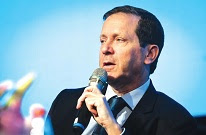
Let all congratulate Isaac Herzog, President-elect Israel

It is time to congratulate Isaac Herzog on his election as 11th President of Israel.

As the world is now talking about ‘Two States’ his biggest responsibility will be to give Palestinians their legitimate share by accepting Palestine as a state. 

He will have to stop annexation and construction of settlements on occupied land and relinquish control of Gaza, West Bank and East Jerusalem.

A veteran politician, Herzog is a former head of the Labor Party, a former opposition leader, a former labor, social affairs and social services minister and Diaspora minister and is the son of Chaim Herzog, who served as Israel’s president from 1983 to 1993. Therefore, is perfectly aware of the issues and also the possible solutions

His openness deserves admiration, he said, “I call my opponent, Israel Prize-winning educator Miriam Peretz, a hero and an inspiration.”

US President Joe Biden words must be kept in mind, “Throughout his career, President-elect Herzog has demonstrated his unwavering commitment to strengthening Israel’s security, advancing dialogue and building bridges across the global Jewish community”.

Now, he has to build bridges to improve relationship with Palestinians, if he believes in ‘mutual coexistence’.

If he is serious in bringing peace and prosperity for Israelis, he will also have to eradicate hostilities against Palestinians.

Above all, he has to convert Gaza, world’s largest open air prison, into a peaceful neighborhood.

Wednesday, 2 June 2021

Coalition formed to oust Netanyahu

A new governing coalition has been formed and is prepared to replace Prime Minister Benjamin Netanyahu, opposition leader Yair Lapid officially informed President Reuven Rivlin and Knesset Speaker Yariv Levin late Wednesday night.

"I commit to you Mr. President, that this government will work to serve all the citizens of Israel including those who aren't members of it, will respect those who oppose it, and do everything in its power to unite all parts of Israeli society," Lapid told Rivlin.

Yamina leader Naftali Bennett, Lapid and Ra'am (United Arab List) Chairman Mansour Abbas signed an agreement at a meeting on Wednesday night at Ramat Gan's Kfar Hamaccabiah Hotel, in the first coalition deal ever signed by an Arab party.

Abbas had added last-minute demands on Wednesday, following multiple conversations with Prime Minister Benjamin Netanyahu. After Netanyahu offered to cancel a law enforcing fines on illegal Arab building, Abbas demanded the same from the unity government being formed.

The Southern Islamic Movement's Shura Council decided in Kfar Kassem on Wednesday night to empower Abbas to make a final decision about whether to enter the coalition, based on his conversation with Bennett and Lapid. 

"The decision was hard and there were several disputes but it was important to reach agreements," Abbas told reporters after singing the deal.

Another coalition deal was signed with the New Hope Party. The deal guarantees splitting the role of the attorney-general, preventing Palestinian construction in Israeli controlled Area C of the West Bank and legalizing the usage of cannabis. The party received the Justice, Education, Construction and Communications portfolios.

Another dispute appeared to be on the way to a compromise after Bennett's number two in Yamina, MK Ayelet Shaked, accepted a rotation in the Judicial Selection Committee with Labor leader Merav Michaeli. According to the compromise, Shaked would serve on the committee in the first half of the term, along with an MK from Labor, and Michaeli in the second half, along with an MK from New Hope.

But Michaeli then demanded to go first in the rotation, which Shaked requested. One way of resolving the dispute that was discussed is a rotation of portfolios in the second half of the term, with Shaked becoming justice minister, New Hope leader Gideon Sa'ar shifting from the Justice to the Foreign Affairs portfolio and Bennett moving from Prime Minister to Interior Minister and alternate Prime Minister when Lapid becomes Prime Minister. Michaeli could also be promoted in that scenario.  

Michaeli and Lapid met late Wednesday night just ahead of the deadline.

The judicial selection committee is due to select six new Supreme Court judges over the next four years. It automatically includes the justice minister, who will be New Hope leader Gideon Sa'ar, one additional minister, an MK from the coalition and one from the opposition. There are also representatives from the current Supreme Court and the Bar Association.  

Michaeli said late Tuesday night that she accepted the agreement that gives Shaked the right to serve in the selection committee first. In return, Labor received the Chairmanship of the Knesset Law and Constitution Committee. She said she was proud to make history in ousting Netanyahu.

Shaked was not the only MK in Yamina causing problems. MK Nir Orbach, who has been touted as a possible coalition Chairman, was undecided about whether to vote for the government in the minutes before the deadline.

Orbach and Bennett met late Wednesday night after the coalition was announced. The meeting was positive, according to Yamina, and they will hold another one Thursday.

Lapid needed to tell President Reuven Rivlin and Knesset Speaker Yariv Levin by Wednesday midnight that he can form a government. Had he not done so, the mandate would have gone to the Knesset, where any MK had the opportunity to build a coalition with the support of 61 MKs.

A source close to Lapid said that even if details remain unresolved, Lapid would still tell Rivlin he had formed a government and allow the remaining issues to be dealt with before the new government gets approved in the Knesset.

Lapid had wanted to inform Levin that he had formed a government during Wednesday's Knesset session, in order to make sure the Knesset speaker would schedule a vote of confidence in the new government and the swearing in of the new ministers by next week. 

But final deals were not reached in time. It is expected that once Levin receives word from Lapid that a government is ready, he will insist on waiting as long as permitted by law in order to maximize pressure on Yamina MKs, which could end up being 12 days.

Marathon talks among representatives of the eight parties set to join the coalition at the Kfar Hamaccabiah Hotel finalized coalition agreements with every party overnight Tuesday night, concluding with a deal with Blue and White. A Blue and White spokeswoman said they agreed upon a number of central policy areas to advance and strengthen democracy and Israeli society at large.

Know more about Isaac Herzog, Israel’s eleventh president

Isaac Herzog made history on Wednesday when he became Israel’s first second-generation president-elect. Long before he actually announced his candidacy, it was generally assumed that Herzog would become Israel’s eleventh president. He never made a secret of the fact that this was his ultimate ambition, although he would have preferred to be prime minister before he became president.

He has followed in the footsteps of his father Chaim Herzog, Israel’s sixth president, in many respects. Chaim Herzog was the key spokesman for Israel during the 1967 Six Day War. Isaac Herzog, who served in the elite intelligence Unit 8200, was one of the major spokesmen for Israel during the Second Lebanon War. Chaim Herzog was a lawyer by profession. Isaac Herzog is also a lawyer by profession.

Chaim Herzog was a Labor MK before his election to the presidency. Here, his son outdid him, because he was not only a Labor MK, but had served as leader of the Labor Party, and leader of the opposition, and before that minister of social welfare, diaspora affairs, construction and housing and tourism, prior to all that he was cabinet secretary.

For the past three years he has also served as chairman of the Jewish Agency in which capacity he worked closely with Aliyah and Integration Minister Pnina Tamano-Shata to bring Ethiopian Jews to Israel, and was at the airport to greet them when they arrived. Many of these new immigrants had waited for years for their dream of making aliyah to be realized.

Herzog also traveled abroad extensively to cement relationships with those communities with which he was already familiar, and to forge new relationships with those communities with which he had not previously engaged.

Unlike his father, Herzog was not officially a diplomat, but in his various roles as a public servant, participated in diplomatic events, and as opposition leader, he met almost every foreign dignitary who came on an official visit to Israel. And of course, there were sensitive security issues in which there was no division of opinion between Left and Right, meaning that in his meetings with these foreign dignitaries Herzog echoed the line taken by the prime minister and defense minister.

At the Jewish Agency, where both his father and mother also once worked in the pre-state and early-state periods, Herzog outdid his father, by virtue of being the chairman. Like his father, who wrote several books, Herzog also has several books to his credit, and aside from what he’s written, like his father, he is a voracious reader.

He has also been elected president at a younger age. His father was 65.  Herzog is 60.

The Herzog family has a long history of public service. It’s a well-known fact that his paternal grandfather, for whom he was named, was the first Ashkenazi chief rabbi of Israel, but what is less known is that the family has a centuries old history of public service – both official and unofficial.

After the Second World War, Herzog’s grandfather accompanied by Herzog’s uncle Yaakov Herzog (who later became famous as Israel’s eloquent ambassador to Canada), went to Europe to search for child Holocaust survivors, many of whom had been taken in by convents and monasteries. The nuns and the priests were reluctant to give them up and denied that they were Jewish. Rabbi Herzog stood in front of all the children and recited the Shema prayer. Those who came from traditional or Orthodox homes spontaneously joined him, and he was thus able to restore their heritage and bring them to the Land of Israel.

It’s hardly surprising that one of the two of his grandsons who bear his name chose to go to the Western Wall in Jerusalem to pray there on the day before his election for president.

Israel elects new President

Jewish Agency chairman Isaac Herzog will be the 11th President of Israel after he received 87 votes from MKs in a secret ballot vote in the Knesset plenum. Herzog's opponent, Miriam Peretz, prize-winning educator of Israel received 27 votes and three MKs abstained. Had she been elected, Peretz would have become Israel’s first woman president.

It was the largest victory in any presidential election in Israel's history. Herzog will take over from the current President Reuven Rivlin when his term ends on 9th July 2021.

Herzog thanked all the MKs who voted for him and said it was an honor to serve the entire people of Israel. He called Peretz a hero and an inspiration.

"I will be the president of everyone," Herzog said, singling out Israelis across the political spectrum and Diaspora Jewry.

Herzog said alongside Netanyahu that he was ready to work with any government and any prime minister.

Prime Minister Benjamin Netanyahu and Yamina leader Naftali Bennett, who is trying to replace him, congratulated Herzog and wished Peretz well.

Rivlin spoke with Herzog on the phone, and also called Miriam Peretz to thank her.

“I send you my warmest greetings, Mr. President,” Rivlin said. “I can tell you that the responsibility of the role that you are about to assume is unlike anything you have done until now. The Jewish and democratic system we established here, in the land of our ancestors, has a body and soul. If the Knesset is a place of argument, as we have certainly seen recently, the President's Residence is a place of discourse, partnership and statehood.”

Rivlin said the title of ‘first citizen’ and the task of guarding the character of the State of Israel, particularly at this point in time, are heavy responsibilities.

"I have no doubt that you will bear these responsibilities superbly," Rivlin said. "I am proud to pass on the baton to you in a month’s time.”

With his victory, Herzog become the first president whose father had been president. Chaim Herzog was Israel's sixth president. 

Both Herzog, who visited the Western Wall on Tuesday to pray for success, and Peretz continued their efforts to meet with as many MKs as possible ahead of the vote.

Every Knesset faction granted its MKs the freedom to vote their conscience, rather than binding them by faction discipline. None of the factions endorsed a candidate.

This is the first presidential race in Israel in which none of the candidates were current MKs.

Peretz said she was thrilled that after her background coming to Israel from Morocco and going to a transit camp, she was considered worthy to stand against someone of Herzog's caliber. She said she would continue in her mission to heal the rifts in the nation.

In her concession speech, alongside Netanyahu, Peretz said that by running, she accomplished what as a child she could not have even dreamed of.

"A fitting president who honors us was elected," Peretz said. "I will pray for his success, because his success is our success."

Michael Siegal, The Jewish Agency’s Chairman of the Board of Governors, said Herzog's "unwavering dedication to the Jewish people and to serving the State of Israel is an inspiration, and we will all undoubtedly continue to benefit from his leadership."


Monday, 31 May 2021

Istanbul Canal: Commencement of a crazy project

On 6th May 2021, I had posted a blog titled Istanbul Canal: Benefits and pitfalls reporting Turkey’s intention to start work this year on Istanbul Canal project, an artificial canal connecting the Black Sea to the Sea of Marmara. 

Today, I was astonished to read a Bloomberg report, Turkish President Recep Tayyip Erdogan saying the construction of a multi-billion dollar canal, an alternative to Istanbul’s Bosporus strait, will begin by end June.

Erdogan’s announcement came a decade after he first revealed his “crazy project” and at a time when his support has hit an all-time low. The 45-kilometer (28-mile) Canal Istanbul would cost around US$15 billion and link the Black Sea with the Sea of Marmara.

The government says it is meant to ease shipping traffic and the risk of accidents in the Bosporus, which bisects Turkey’s biggest city.

Erdogan is betting that the building of the canal and the rise of new cities along its route will create thousands of jobs and wealth that will dramatically boost the country’s economic growth and reverse the slide of his popularity ahead of the 2023 presidential elections. Discontent has grown over the Erdogan government’s handling of the economy and over allegations of corruption from a mafia boss, which he’s dismissed.

During the president’s 18-year rule, Turkey has poured tens of billions of dollars into giant infrastructure projects, including the new Istanbul airport, a new bridge over the Bosporus and massive city hospitals.

The planned waterway is projected to create a new city of half a million, with several bridges connecting the two sides. Shares of Turkey’s state-run property developer Emlak Konut and cement-maker Akcansa Cimento, a partnership between HeidelbergCement and Sabanci Holding, climbed as much as 6.4% and 7.6%, respectively on Monday.

“We will lay the foundations of the Canal Istanbul at the end of June,” Erdogan said at the opening ceremony of a TV signal tower on the anniversary of the capture of Istanbul by Ottoman Turks in 1453 on Saturday, a day after inaugurating a giant mosque in Istanbul’s central Taksim square. “We will build two cities on the right and left of the Canal Istanbul. With these two cities,” Istanbul’s beauty and strategic importance will increase, he said.

In order to mitigate the impact of the pandemic on the economy, his government is struggling to open up the economy and revive the tourism industry by ramping up vaccinations. The goal is to narrow the current-account deficit and alleviate sufferings of businesses that have complained about insufficient government support and families that are withering under soaring inflation.

Erdogan has dismissed concerns of his political rivals that the project would hit taxpayers, the environment and undercut a 20th-century agreement meant to ensure stability and security in the Black Sea. Erdogan has said Turkey won’t exit the 1936 Montreux Convention but said warships will be able to use the canal.

Istanbul’s Mayor Ekrem Imamoglu, who’s seen as a potential future challenger to Erdogan, is firmly opposed to the project, saying it would “annihilate” water resources for Istanbul’s 16 million residents, ruin the province’s nature beyond repair and make it unlivable. Turkish prosecutors on Friday demanded imprisonment of Imamoglu, whose victory in 2019 ended more than a quarter-century of control over Istanbul by Erdogan’s party and its predecessors, on charges of allegedly insulting the country’s election watchdog.

“The people of Istanbul elected Imamoglu on March 31 to prevent the destruction of the green, the city from being buried in cement, the people from being treated loutishly and finally block the formation of that freak system called the Canal Istanbul,” Meral Aksener, head of the opposition Iyi Party which backed Imamoglu’s candidacy, said at a competing ceremony marking the capture of Istanbul on Saturday.


Saturday, 29 May 2021

Two States Concept: Solution or Prolongation of Miseries

After recent 11-days deadly encounter between Israel and Hamas many international organizations, humanitarian institutions and observers are expressing concerns about the settlement based on two-state solution: Palestine and Israel. 

There is growing consensus that the proposed solution does not offer a viable settlement to the decades-long Israeli-Palestinian conflict.

Israel is facing global condemnation because it did not take into account the repercussions of storming Al-Aqsa, arresting worshipers, putting them into prison, and humiliating them in front of the eyes and ears of the world. Most radios and televisions across the world covered the event. Israelis were also under the impression that the Palestinian cause has lost color with the passage of time and some Arab countries normalizing their ties with Israel.  

In the recent crisis in the Sheikh Jarrah neighborhood, where the Palestinians have been facing discrimination since 1972, an Israeli plot to displace them and build settlements on the ruins of their homes under the claim that the land on which their homes were built by the Jordanian government was rented. These are intended to legalize their existence and occupation.

The international community, including the General Assembly of the United Nations and the Security Council, as well as the United States of America, European countries, and official and unofficial bodies are talking a lot about the two-state solution to resolve the crisis between Israel and Palestine.

Concerted efforts have been made in putting an end to such a situation, including nearly three decades of diplomacy; the Oslo Accords, the Camp David summit, the Clinton Parameters, the Taba summit, the Arab Peace Initiative, the road map for the Middle East, and Abbas and Olmert's talks in the context of the Annapolis process, and John Kerry's efforts to achieve peace and other relentless attempts.

The Zionist regime considers the formation of any future Palestinian government is synonymous with facing a huge human force that is not stopped by the F-35 fighters or cruise missiles and is not prevented by tanks.

Some Israelis who believe in building a state based on their military power designate the Palestinians as terrorists groups willing to cut settlers into pieces while others, who are more realistic, believe that the Palestinians are a people who do not compromise their cause and do not accept trading their homeland despite the fact that the world has abandoned them. They were fighting with stones, but with the establishment of the state, they would target Israel with missiles, fighters, and all that they would possess.

Accepting a Palestinian state means living alongside the Palestinians in their vicinity, and not to continue bombing, killing, displacing, or desecrating the sanctities of Al-Aqsa Mosque and the rest of the holy sites for Muslims and Christians until hearing the last Palestinian breath out.

Many analysts don’t expect that Israel will accept the idea of a two-state solution, which means the establishment of a fully sovereign Palestinian state in the West Bank and Gaza alongside itself. It should be noted that the West Bank, including Jerusalem, for the Jews, is the core and essence of the biblical land.

Another obstacle facing the two-state solution is settlement operations; the presence of settlers, and the absolute control of Israel over more than half of the West Bank, according to the Oslo agreement, makes it difficult for the establishment of a Palestinian state with real sovereignty, due to lack of independence, security and economic components as it is surrounded by Israel from four sides. In addition Israel is not likely to abandon Jerusalem due to political, religious, economic and tourism considerations.

One of the other main obstacles to achieve the two-state solution is the idea of returning of Palestinian refugees to their homeland from which they were forcibly evicted. 

The right of return is the essence of the Palestinian cause. Their leadership constantly reiterates the right of return, they are fully aware that this will not be achieved in light of the circumstances that Palestine is experiencing at regional and international levels.

 What is the benefit of the two-state solution if half of the Palestinian people remain homeless and scattered? It seems impossible that Israel to accept this level of embarrassment; and even though it is now not in a position to be forced to make all these concessions, knowing that this step can put existence at stake.

Thursday, 27 May 2021

What to forget Nakba or antisemitism?

May 15, marks the 73rd anniversary of the Palestinian Nakba (catastrophe). During the Nakba between 750,000 and 1,000,000 Palestinians were driven out of their homes and ethnically cleansed at the hands of Zionist militia and the Israeli army to force the creation of the state of Israel. 

This year's commemoration took place against the backdrop of renewed Israeli aggression and bloodshed against Palestinians. The Nakba did not end in 1948 and continues to this day with Israel relentlessly pursuing the dispossession of the Palestinian people. 

Here are 10 facts the world needs to know about the Palestinian Nakba: 

1- Between 1947 and 1949 Israel and pre-state Zionist militia forced approximately 750,000 to 1,000,000 Palestinians into exile making them refugees. 

2 – At present, there are around 8 million Palestine refugees in the Occupied Palestinian Territory and neighboring Arab countries such as Lebanon, Jordan, and Syria. They are denied their UN-sanctioned right to return to their homes, lands and other property by Israel.

3 - The Nakba was a deliberate and systematic act carried out in order to create a Jewish majority state in historic Palestine, which was overwhelmingly indigenous Palestinian Arab prior to 1948.

4 - Contrary to Zionist mythology, pre-state Zionist militia begun its ethnic cleansing of Palestinian towns and villages months before the creation of the State of Israel. The massacre and depopulation of the Palestinian village of Deir Yasin took place in 9th April 1948. 

5 - Approximately 150,000 Palestinians remained inside what became Israel's borders in 1948, many of them internally displaced. They were granted Israeli citizenship but to this day live as second-class citizens in their own homeland, subjected to dozens of laws that discriminate against them because they are not Jewish.

6 - Israeli forces systematically destroyed about 530 Palestinian towns and villages to prevent refugees from returning. Many homes that remained standing were repopulated with its Israeli Jewish population. 

7 - The Jewish National Fund (JNF) acquired approximately 78 percent of its land holdings from the state between 1949 and 1953, much of it the land of Palestinian refugees that the state confiscated as “absentee property.” The JNF holds this land stolen as “the perpetual property of the Jewish People,” which means Palestinians are unable to get it back

8 - The Nakba did not end in 1948 and continues to this day, in the form of Israel’s ongoing theft of Palestinian land for settlements and for Jewish communities inside Israel, its destruction of Palestinian homes and agricultural land, revocation of residency rights, deportations, demographic engineering, periodic brutal military assaults, and forced displacement.

9 - Many residents of Sheikh Jarrah were ethnically cleansed from their homes during the Nakba. They currently face becoming refugees for the second or third time. What is happening now in Sheikh Jarrah and Jerusalem is a prime example of the Nakba in action. It repeats itself in the Jordan Valley, in the Naqab and across the territory under Israeli control. Indigenous Palestinians are being forced from their homes by state sponsored violence at the hands of Israeli soldiers, Israeli police, and armed Israeli citizens.

10 - Israel has a law that prohibits Palestinians who are second-class citizens of the state from commemorating the Nakba on May 15. This does not stop Palestinians from remembering. Share the stories of the Nakba from Palestinians and join BDS campaigns, the most effective way to support our struggle to achieve our internationally recognized rights, including the Right of Return for refugees.

Israel resisting reopening of the US consulate for Palestinians in Jerusalem

Israeli Prime Minister Benjamin Netanyahu informed US Secretary of State Antony Blinken that his country opposes reopening of a US consulate for Palestinians in sovereign Israel. His announcement came hours before the US went public with its plan to do so in Jerusalem.

Blinken did not specify where in Jerusalem the new consulate would be. Many other countries have consulates or embassies to the Palestinians in east Jerusalem, which is part of Israel under Israeli law but not recognized by most countries, or in Ramallah.

The Trump administration then merged the US consulate for Palestinians, on Jerusalem’s Agron Street, into the US Embassy to Israel in West Jerusalem in March 2019; the move was mostly symbolic as most consulate workers continued doing the work they did before, but under the title of “Palestinian Affairs Unit.”

Blinken said in a press conference that he is not sure what the time frame will be on reopening the consulate.

“I can tell you that it’s, I think, important to have that platform to be able to more effectively engage not just the Palestinian Authority, but Palestinians from different walks of life, the NGO community, the business community, and others. And so we look forward to doing that,” he stated.

White House Press Secretary Jen Psaki said soon after that reopening the consulate “is an important step in our view, in terms of continuing to rebuild the relationship with the Palestinian leaders that was cut off for several years because of the closure of the consulate, because UNRWA funding was cut off in 2018, and there really wasn’t a method for engaging with Palestinian leaders and others.”

Israeli Ambassador to the US and UN Gilad Erdan said that it is the US’s prerogative to reopen the consulate, but that Israel “indeed expressed clear opposition to reestablishing the consulate on Jerusalem’s municipal territory.”

“It can be in Abu Dis [or] Ramallah,” Erdan told KAN. “The fact that the Americans may have a security concern from opening a consulate for their workers in these places only shows what we’re talking about.”

Erdan also pointed out that opening the PA embassy in Jerusalem contradicts American policy recognizing the city as Israel’s capital, as former US president Donald Trump did in 2018 and Biden said he would not reverse. Still, Erdan said, “we can disagree with the current government and not every disagreement has to become a crisis.


Wednesday, 26 May 2021

Creation of a fact-finding mission to investigate Israeli actions against Palestinians

Pakistan and the Palestinian Authority (PA) have submitted a resolution on the creation of a fact-finding mission that will be voted on Thursday when the United Nations Human Rights Council (UNHRC) holds a special session on the matter in Geneva.

The United Nations Human Rights Council is expected to establish a commission of inquiry into Israeli actions against Palestinians doing the period leading up to and including the 11-day Gaza war that ended on May 21.

In particular, the committee would investigate Israeli activity in Gaza and Jerusalem as well as the ethnic riots that broke out in mixed cities within sovereign Israel.

"The commission would be authorized to make recommendations, in particular on accountability measures, all with a view to avoiding and ending impunity and ensuring legal accountability, including individual criminal and command responsibility, for such violations, and justice for victims," the Resolution states. 

It would explore the "alleged violations of international humanitarian law and all alleged violations and abuses of international human rights law leading up to and since 13 April 2021, and all underlying root causes of recurrent tensions, instability and protraction of conflict, including systematic discrimination and repression based on national, ethnic, racial or religious identity."

Israel's mission to the UN in Geneva responded immediately, noting the absence of Hamas's firing of rockets against Israeli cities and towns.

"No mention of Hamas. No mention of 4300+ rockets," it stated, adding, "we call on Member States to speak up and oppose this resolution."

Thursday's special session will be the 30th one that the UNHRC has held since its inception in 2006, out of which nine focused on Israel. No other country has been the subject of so many special sessions.

There have been at least five fact-finding missions into Israeli military actions in the past, including one on the Hamas-led "Great March of Return" as well as on past Gaza wars.  


Tuesday, 25 May 2021

Iran presidential lineup

The Iranian Interior Ministry finally issued the much-awaited list of candidates who were found eligible to run for president, ending a wave of rumors and speculations over the potential array of candidates in the June presidential election. 

The Ministry said in a statement that it received the list of candidates whose qualifications were confirmed by the Guardian Council. The list included a number of prominent figures such as Saeed Jalili, Seyed Ebrahim Raisi, Alireza Zakani, Seyed Amir Hossein Qazizadeh Hashemi, Mohsen Mehralizadeh, Mohsen Rezaei, and Abdolnaser Hemmati.

These candidates are now allowed to start election campaigns and promote themselves in the eyes of millions of voters across the country. 

The list of candidates came as a surprise to many observers as it did not include some prominent figures that have been widely thought to be qualified for the 13th presidential election of the Islamic Republic. Former Majlis Speaker Ali Larijani, First-Vice President Es’haq Jahangiri, and Saeed Mohammad, the former Chief of the Islamic Revolution Guard Corps’ engineering conglomerate Khatam al-Anbiya, were among the disqualified candidates. 

According to Fars News, the election vetting body disqualified at least 18 candidates who are principlist or close to the principlist faction. It also rejected 14 candidates who are reformists or close to the reformist faction. 

This was a clear indication that the Guardian Council refused to vet candidates on the basis of their political affiliation. In fact, the council set a clear example of impartiality and abiding by law by disqualifying Larijani, who currently serves as an advisor to the Leader on international affairs. 

Larijani was widely promoted by moderate and reformist political circles as a candidate whose ties to the establishment enable him to earn qualification from the council and turn the tide in favor of reformists and their moderate allies in the government of Hassan Rouhani. 

But the Guardian Council made it clear that its vetting process is by no means subject to political or “expediency” considerations. Instead, it would examine the candidates in strict accordance with the law. 

In fact, the disqualification of Larijani indicated that the council never discriminates against candidates from different political and social backgrounds. At the end of the day, Larijani has held high-level posts in the Islamic Republic for years and now is currently serving as an advisor to the Leader. This is another indication that the Guardian Council can discharge its legal duties even when it comes to disqualifying high-level figures.

This brings us to the issue of the fluidity of the vetting process, which is more subject to present-day considerations than to past experiences. In some cases, the Guardian Council confirms individuals who have been disqualified in the past and vice versa. This does not mean that council’s criteria for screening are changing from time to time. The standards and criteria of the Guardian Council are subject to the law as a yardstick for who will be qualified or disqualified.

Regardless of the standards, the council performs its duty in legal but quiet ways. Usually, the oversight body does not publicly reveal the reasons behind its decisions regarding the candidates. And this has paved the way for some political factions to unfairly blame it for disqualifying certain candidates. Despite these criticisms, the council continues to protect the confidentiality of the vetting process. This has much to do with protecting the privacy of candidates.  

If the council reveals the reasons behind the disqualifications, the disqualified candidates’ reputation may be damaged; at the end of the day, the vetting process also includes security details about the candidates. That’s why the Guardian Council continues to vet candidates in a legal way while protecting the candidates’ reputation from being undermined by a formal process that is designed to increase social and political cohesion.


Love and hate relation between Netanyahu and Hamas

The recent 11-day encounter between Israel and Hamas clearly demonstrates that Israeli Prime Minister, Benjamin Netanyahu hates Hamas the most. Netanyahu’s retaliation against Hamas was based on one fact ‘people of Gaza refuses to become subservient to Israel’s dictate, while people living areas under the control of Palestinian Authority and West bank don’t behave in the similar manner’.

This point gets credibility because elections in PA administered area were postponed on the fears that Hamas has also developed its strong clout there. It may also be said that Israel wanted to destroy Hamas infrastructure, which could only be done by dragging it into an encounter, paving way for the most precise air attacks, including blowing up of tunnels and the tower housing Hamas intelligence office.

The media outlets towing Israeli policy are saying: 1) Hamas has suffered a devastating blow. Its military assets, administration infrastructure and underground system of tunnels have been destroyed, 2) already difficult humanitarian conditions of two million Palestinians living in Gaza has become even worse, 3) the citizens are incapable of paying the high price of Hamas’s aggressive ideology and 4) a permanent solution to the Israeli-Palestinian conflict, based on two-state solution is not yet achievable.

Hamas is also being portrayed as ‘bad boy’ adamant at keeping its control over Gaza and pursuing the role of leading the Palestinian national movement and of taking over the PLO.

It may sound a bit shocking, but it is reality that Israelis are sick and tired of Netanyahu’s policy of maintaining Hamas’s control in Gaza. The money, supplied to Hamas by Qatar with the support of Netanyahu, enabled the huge military build-up that Israel is now trying to destroy.

It is not only Israelis, several Arab countries, who don’t like Hamas want to see the end of its regime in Gaza.

With the support of the international community and under the auspices of the Arab League, it is being proposed to establish a civilian, non-partisan Palestinian administration in Gaza. The new order in the Gaza will be enshrined in a new UN Security Council resolution and resolution from the Arab League.

If such a non-partisan administration is established, Qatar will no longer be dominantly involved in Gaza. Other Gulf countries will replace it. The external security of the Gaza could be under the responsibility of Egypt. Domestic security would be under a new police agency, reporting to the civil administration, not to Hamas.

Israel expresses its readiness to assist in the activities of the new Gaza administration, including those involving trade, labor, energy and activity

This alternative path will promise to offer people living in Gaza a safer and better future. The citizens of Israel living in the South would gain the calm and security they deserve after thousands of rockets hitting them for more than two decades.

Whatever the next step is to improve the Gaza situation, the Israeli-Palestinian conflict will not be resolved. The International quartet, together with the Arab quartet will encourage the parties to resume negotiations for a permanent status agreement based on two states, which may not be achieved in near future.

Monday, 24 May 2021

Copper price on the rise

Copper prices rose on Monday as a softer USD spurred modest purchases, but gains were capped by concerns over price curbs on industrial metals in top consumer China. Benchmark copper on the London Metal Exchange (LME) was up 0.3% at US$9,916 a ton at 1014 GMT.

However, prices of the metal used widely in the power and construction industries are down 8% since touching a record high of US$10,747.50 a ton earlier this month.

“The USD is giving some support to copper, but overall the mood is negative,” one metals trader said. “Still, the market did need a breather and consolidation.”

China’s market regulators warned industrial metal companies to maintain “normal market order” during talks on the significant gains in metals prices this year.

China’s government also said last week that it would manage “unreasonable” price increases for commodities such as copper, coal, steel and iron ore.

Some concern about supplies on the LME market has narrowed the discount for cash copper over the three-month contract to about US$14 a ton from US$28 last week.

Supporting copper is political uncertainty in Peru and top producer Chile. An overhaul of Chile’s market-orientated constitution is under way and the country is debating whether to increase royalties on miners.

Peru, the No. 2 producer, is heading for a polarized June presidential election. Leading in the polls is a little-known socialist who wants to redistribute mining wealth.

A likely surge in reviewable energy demand, particularly windmills is set to drive a surge in copper demand. It is estimated that the quantity of copper required per wind turbine is staggering at 63,000 pounds.

A week ago, price of the basic metal surged to a record high because of supply chain disruptions. By the end of the week it had cooled off on efforts by China to rein in the commodity market rally.

Now copper price is on the way up again, and this is likely to be a steady trend. The reason for this is renewable energy—and more specifically wind energy. Offshore wind turbines require 8 tons of copper for every megawatt of generation capacity. According to data from the International Energy Agency, “An average turbine of 3.6MW will contain close to 29 tons of copper.”

This upward trend in demand for copper will only intensify in the coming years as the world expands its renewable power generation capacity. It is likely to be supported by the constant threat of a supply disruption like the one in Chile that spurred the latest reversal in copper’s fortunes.

Earlier, copper price rebounded by concerns of supply disruptions in Chile and signs that Chinese demand is picking up.

Workers at BHP Group’s remote operations center in Santiago rejected the company’s final wage offer, with almost 97% of the union’s members opting to strike. Under Chilean labor rules, BHP now has the right to call for five days of government mediation. Meanwhile, demand in top user China is recovering after prices retreated, Jinrui Futures Co. said in a note, pointing to a spike in the domestic spot premium.

Bets on tight supplies and rising use have fueled a year-long rally in copper, which touched an all-time high before gains ebbed. The risk of a strike poses an added threat to output from the top copper-mining country, which already faces a potential giant tax hike. A proposal to tax Chilean copper sales at rates of as high as 75% is rippling all the way to Peru, where the leading presidential candidate wants to impose a similar measure.

“LME metals have started the new week on a firmer footing amid a slew of news stories,” Ed Meir, an analyst at ED&F Man Capital Markets, said in a note. “We are watching copper in particular; we learned that a union representing workers at BHP’s Escondida and Spence mines rejected an offer on a future contract, raising the risk of a strike at these sizable facilities.”

Sunday, 23 May 2021

Israelis march in Tel Aviv for peace and coexistence

Thousands of Israelis marched in Tel Aviv on Saturday evening in a show of support for peace and coexistence between Jews and Arabs after two weeks of intense violent riots across the country. 

Protesters also voiced support for the recent ceasefire between Israel and Hamas that came into effect early Friday, called on the government to take immediate action to end Israeli occupation in the West Bank and to reach peace with the Palestinians.   

The mass march was organized by the "Standing Together" and "Breaking the Silence" movements. It left Rabin Square in Tel Aviv and made its way toward Habima Square.

Speakers included well-known Israeli novelist and left-wing activist David Grossman, author ʻAwdah Bishārāt, Joint List leader Ayman Odeh and MK Tamar Zandberg (Meretz).

"I hear politicians and security officials speak about another round of fighting in a few months or years, while being blind to the 7 million Palestinians living between the [Jordan] river and the [Mediterranean] sea," Odeh said. "There are two peoples living here and both deserve the right for self-determination." 

"These past few days have shown us how life in this country can look like - a nightmare," Zandberg added. "We don't want to start waiting for the next war, but to change direction toward peace - to live together in true partnership."

A similar protest took place last Saturday at Habima Square, which was one of several protests attended by Jews and Arabs across the country that called for peace and for coexistence amid the nationwide riots and the military operation in Gaza.

Jews and Arabs gathered daily during Operation Guardians of the Walls on bridges and intersections along the country and protested against the ongoing violence.

Also on Saturday, hundreds gathered outside the Prime Minister's Residence in Jerusalem, calling on Prime Minister Benjamin Netanyahu to resign and blaming him for the escalation in Gaza and claiming that he deliberately extended the operation for no reason but personal interest.

Earlier Saturday, about 200 people marched along the streets of the mixed city of Jaffa, voicing support for coexistence between Arabs and Jews while visiting small local businesses.


Saturday, 22 May 2021

What could be likely impact of Gaza crisis on South Asia?

While some analysts may say South Asia is not a party to the Gaza conflict, the region is still vulnerable to its potentially destabilizing effects. It poses security risks within the region, including violent protests and terrorist attacks.

It is worth exploring what the crisis means for South Asia, which does not have common border with the Middle East. India and Nepal have long-standing links to Israel and Bhutan normalized ties in December 2020. As against this Pakistan fully support the Palestinian cause.

India has strengthened its ties with Israel significantly. Relations between the two countries have grown stronger under Indian Prime Minister Narendra Modi. He became the first sitting Indian prime minister to visit Israel. India has supported the Palestinian cause in the past. In 2018, Modi became the first Indian prime minister to visit the Palestinian territories too.

India’s ambassador to the United Nations issued a bit confusing statement on the conflict. He condemned Palestinian violence and described Israel’s use of force as retaliatory, but in the same breath affirmed India’s strong support for the Palestinian cause and two-state solution.

As against this, Pakistan has put to rest all lingering speculation that it could be one of the next countries normalizing ties with Israel. Pakistan made it clear that it will only recognize Israel when a Palestinian state is established.

Some analysts say the current conflict also poses security risks for South Asia. It could spark pro-Palestinian protests that could lead to violence. They also fear that some non-state actors or miscreants hiding in Afghanistan may enter Kashmir and try to put the valley inferno.

Washington must actively manage Israel-Palestine conflict it can’t end

The administration of US President Joe Biden entered office expecting to take a less proactive approach to the Israeli-Palestinian conflict than many of its predecessors. Four days into the recent war between Israel and Hamas this approach was evident. 

Biden responded to a question,“I have spoken to Israeli Prime Minister Benjamin Netanyahu. Israel had a right to defend itself, and that he hoped the fighting would be over sooner rather than later.”

The conflict requires management, because conditions simply do not exist for its resolution. Sadly, Biden administration has not yet put an ambassador in Israel (even an interim one) or a consul general in Jerusalem to deal with the Palestinians. Instead, management was left to one poorly staffed, midlevel official in the State Department. The Biden administration deserves credit for intervening at a higher level to get Netanyahu to stop the evictions, marches, and Israeli police violence in East Jerusalem.

Before the outbreak of this latest conflict, there was hope that a new government would be formed in Israel that would put an end to Netanyahu’s rule. Yair Lapid (the head of the Yesh Atid party) and Naftali Bennett (the head of the Yamina party) were about to cobble together a left-center-right coalition that would depend on the support of Arab parties to scrape together a majority vote of confidence.

Then a shocking spate of mob violence broke out between Jews and Arabs, spreading from Jerusalem to other Israeli cities. This severely complicated the task of building a government. Even if a unity government emerges, its first prime minister will be Naftali Bennett. Among Israel’s leaders, he is the most dedicated opponent of an independent Palestinian state and the most dedicated proponent of annexing the West Bank.

In the coming days, once the IDF has completed its destruction of Hamas’s infrastructure and eliminated as many of the leaders of its armed wing as it can find, Netanyahu will likely be willing, too. Usually cautious, he will not want to go into a fifth election with a war raging. Already, he is being blamed for the disruption to Israeli life. 

The world has seen Israel-Hamas wars before—the last one was in 2014. This time it is alleged that Hamas, with the assistance Iranian-backed Palestinian Islamic Jihad, fired rockets indiscriminately. Israel retaliated disproportionately. The United States supports Israel's right to defend itself. Europe wags its finger at Israel. Hamas eventually decides it has made its point. Qatar and Egypt mediate a cease-fire based on the usual “quiet for quiet” deal. Both sides bury their dead, clear the rubble, and go back to business as usual while the Israel Defense Forces (IDF) and Hamas’s Ezzedeen al-Qassam Brigades prepare for the next round.

The Biden administration’s approach suggests that Washington will be comfortable with another ceasefire, as it has other priorities. These include pandemic, economic recovery, climate change, China’s rise and Iran’s nuclear ambitions, to mention a few. The president’s deference to Netanyahu’s timetable is indicative of this change in approach, in which the parties are left to deal with the conflict.

Every crisis creates an opportunity. Could the circumstances this time create an opportunity for Washington to step up its engagement? Could the United States progress toward its avowed goal of a two-state solution to the Israeli-Palestinian conflict?

The answer, unfortunately, is no. The status quo actually suits both sides quite well and neither has an interest in changing it. Hamas was upset by the cancellation of Palestinian elections, in which it hoped to extend its influence to the West Bank. In exchange for that it took advantage of a confluence of Jewish-Arab confrontations in East Jerusalem to extend its influence there. It fired rockets toward Jerusalem. That in turn enraged Netanyahu, who was content to have Hamas rule in Gaza but not in the West Bank, and certainly not in East Jerusalem.

Hamas hopes to enhance its standing among Palestinians; Israel hopes to reestablish its deterrence against Hamas’s attacks on its citizens. Neither side is interested in having the United States broker a two-state solution. Hamas is dedicated to a one-state solution in which Israel does not exist; Netanyahu is committed to a three-state solution in which Hamas rules in Gaza and the Palestinian Authority presides over West Bank enclaves.

The third party to this conflict—Abu Mazen—would love to see the United States re-engage, because that would help make him relevant again. But American negotiators have had enough experience with Abu Mazen and believe that he is in no position to accept the compromises necessary to achieve a two-state solution. He fears, he will be denounced as a traitor by Hamas for any concession he makes to Israel, Abu Mazen intends to go into the history books as the leader who refused to compromise Palestinian rights.