Friday, 15 January 2021

Biden Middle East Policy: Need to disentangle United States from Iran-Saudi Arabia rivalry

The Biden administration will face a number of challenges in the Middle East over the next four years. The diplomatic landscape of the region offers the United States ample opportunities to offer peace initiatives. 

Some have been successful and enduring, like the 1978 Camp David Accords between Egypt and Israel. There have also been many more notable failed attempts, such as the stalled talks between Israelis and Palestinians during the Obama administration.

Diplomacy does not have to be big and bold to be successful. The Biden administration has an opportunity to stabilize the Middle East by disentangling from the regional rivalry between Iran and Saudi Arabia. This has the prospects of reducing the temperature of relations between these two regional rivals and possibly even prompting them to settle some of their differences on behalf of regional stability.

One may like it or not, the United States has become party to the rivalry between Iran and Saudi Arabia. Of course there are profound issues related to wars in Syria and Yemen and instability in Iraq and Lebanon that separate them. But much of the enmity they harbor for each other relates in no small way to Washington. Iran sees Saudi Arabia (and Israel) as the tip of the spear of US efforts to undermine it. Iran sponsored attacks on Saudi oil facilities in 2019 after Washington’s maximum pressure campaign is prima facie evidence of this.

Saudi Arabia has felt little incentive to even entertain diplomacy with Iran given the large US military footprint in the Persian Gulf and Trump’s hostility toward Iran. Not only is the United States a party to the Iran-Saudi rivalry, but it has hardened the resolve of both sides, driving them further away from diplomacy, with negative consequences for the entire region.

The United States lacks the capacity to persuade either of the regional rivals toward rapprochement. But Washington can play a constructive role by extricating itself from the role of central character in this conflict. This will require recalibrating relations with Saudi Arabia, supporting Riyadh but also making sure that it does not continue using Washington as a crutch for shunning diplomacy.

It also necessitates the United States working to ensure that the Abraham Accords between Israel and the UAE are used as a bridge for building further regional cooperation and not merely as a cudgel for deepening hostilities to Iran. And it will necessitate the United States moving toward a diplomatic track with Iran, starting with rejoining the 2015 nuclear deal, on the condition that Tehran reverts to compliance.

The US will need to use leverage to move a stubborn Iran into a more constructive regional role, but skillful diplomacy can deprive Iranian leaders of the narrative that their regional adventurism is a necessary defensive crouch for deterring a hostile Washington.

Disentangling the United States from the regional rivalry between Iran and Saudi Arabia won’t ensure peace between the two regional powers. But it can force Iran and Saudi Arabia to deal with each other on their own terms, and not hide behind relations with Washington.

If successful in cooling the temperature of relations between these two powers, it can also possibly have other benefits, such as sucking some of the oxygen out of the proxy conflict dimension of the civil wars roiling Syria and Yemen and helping stabilize Lebanon and Iraq.

While the United States can’t start a peace process between Iran and Saudi Arabia, peace should be the objective of the US diplomacy. Rebalancing relations with friends and foes would go a long way toward this objective. Steady resolve rather than bold diplomacy might be just what the region needs from Washington right now.

Jewish groups laud Trump impeachment

Several Jewish organizations have welcomed the impeachment of US President Donald Trump by the House of Representatives and condemned him for his role in the storming of the US Capitol last week.

At a rally given at The Ellipse, adjacent to the White House, on 6th January, Trump spoke to several thousands of his supporters, whom he had told to attend via Twitter. He called on them to march to the US Capitol building and demand that Congress not certify President-elect Joe Biden’s victory in the 3rd November 2020 presidential election.

 “You’ll never take back our country with weakness. You have to show strength and you have to be strong. We have come to demand that Congress do the right thing and only count the electors who have been lawfully slated,” Trump said, among other provocative comments.

The House of Representatives impeached Trump for high crimes and misdemeanors, with the article of impeachment stating that Trump “willfully made statements that, in context, encouraged – and foreseeably resulted in – lawless action at the Capitol, such as: ‘if you don’t fight like hell you’re not going to have a country anymore,’” and that these remarks incited the crowd to interfere with Congress’s certification of the election results.

The American Jewish Committee (AJC), one of the oldest and respected US Jewish organizations, said it welcomed the passage of the impeachment resolution and reiterated its “unqualified condemnation” of Trump’s actions, which it said “run counter to the democratic values we hold dear,” and disqualify the president from continuing to occupy his office.

“He has subverted the will of American voters by falsely alleging, without evidence that the November 2020 election was illegitimate, beset with fraud, and ‘stolen.’ Beyond that, he has incited his followers to commit acts of insurrection which involved an assault on a sacred edifice and which resulted in chaos, injury, and death,” the AJC said in a statement on Wednesday afternoon.

It added that “public officials charged with responsibility for addressing such conduct” use all means possible to hold Trump to account for what happened, including in the courts.

The Union for Reform Judaism said it applauded the passage of the article of impeachment “for his incitement of violence against the United States government,” and urged the Senate to convict him on this charge.

“President Trump’s behavior has shaken our democracy to its core. The president’s language and his actions preceding the riot and in the days since are an abdication of moral leadership,” said the URJ in its statement.

The organization said that “the expression of remorse is central to the act of teshuva, repentance” but that “rather than accept responsibility or express contrition for the role that his words played in the desecration of the Capitol and the deaths of at least six individuals, including two Capitol Police officers, President Trump has stood by his disproven lies and provocative rhetoric.”

The organization noted that Trump said in a video he tweeted out as the riot and invasion of the Capitol was underway that he loved his supporters involved in the attack, “among them white supremacists who rampaged through the House and Senate, some armed, some dressed in clothes bearing racist and antisemitic words and symbols.”

The left-wing J Street organization, which called for Trump’s removal from office immediately after the storming of the Capitol, also welcomed the passage of the article of impeachment.

“The House just voted (for the second time) to make clear what a majority of Americans know to be true: Trump is a danger to our democracy and is not fit to be our president. He never has been and should never have the opportunity to hold elected office again,” the organization said on Twitter.


Thursday, 14 January 2021

The Pompeo ploy

In a sign of inability to prevent the incoming administration from rejoining the 2015 Iran nuclear deal, US Secretary of State Mike Pompeo has resorted to what he took from the CIA archives to cook up a new story against Iran.

Lately, Pompeo participated in an event at the National Press Club in Washington, DC to level new accusations against Iran for its alleged links to the al-Qaeda (AQ) terrorist group. Pompeo claimed that Iran has become a “new Afghanistan” in terms of hosting al-Qaeda leaders.

“Al-Qaeda has a new home base: it is the Islamic Republic of Iran. As a result, bin Laden’s wicked creation is poised to gain strength and capabilities. We ignore this Iran-al-Qaeda nexus at our own peril. We need to acknowledge it. We must confront it. Indeed, we must defeat it,” the hawkish top US diplomat claimed.

Pompeo pointed out that the United States has taken drastic measures against al-Qaeda since the 9/11 attacks. These measures, Pompeo claimed, have pushed the al-Qaeda members to search for a new haven.

“That effort drove al-Qaeda to search for a safer haven, and they found one. The Islamic Republic of Iran was the perfect choice,” he claimed. The outgoing US secretary of state went to say that Iran still has links to al-Qaeda.

Pompeo did not present any evidence to support his allegations, and, in fact, some of these allegations are nothing new. However, they elicited a strong response from Iran and Russia.

Iran termed Pompeo’s claims as “warmongering lies.”

“From designating Cuba to fictitious Iran 'declassifications' and AQ claims, 'we lie, cheat, steal' is pathetically ending his disastrous career with more warmongering lies. No one is fooled. All 9/11 terrorists came from @SecPompeo's favorite ME destinations; NONE from Iran,” Iranian Foreign Minister Mohammad Javad Zarif tweeted in response to Pompeo’s remarks.

Iran’s Foreign Ministry also rejected the allegations as “baseless,” calling on Pompeo to “die of anger.”

“Resorting to such ploys and threadbare and baseless claims can, by no means, help the terrorist US regime correct its path, which is full of mistakes, and restore the unjustifiable image of the officials of this regime,” Saeed Khatibzadeh, spokesman for Iran’s Foreign Ministry, said in a statement. “As martyr Beheshti aptly put it, Mr. Pompeo! Be angry and die of this anger,” the spokesman continued.

Pompeo accused Iran of supporting al-Qaeda while ignoring his predecessor’s admission that it was the US that “created” and “funded” al-Qaeda. Former US Secretary of State Hillary Clinton said many times that the US has created and funded al-Qaeda to defeat the Soviets in Afghanistan.

“Let’s remember here that people we are fighting today, we funded 20 years ago. And we did it because we were locked in the struggle with the Soviet Union; they invaded Afghanistan. And we did not want to see them control Central Asia and we went to work. And it was President Reagan in partnership with the Congress led by Democrats, who said you know what? Sounds like a pretty good idea. Let’s deal with the ISIS and the Pakistani military, and let's go recruit these mujahidin. And great, let's get some to come from Saudi Arabia and other places, importing their Wahhabi brand of Islam, so that we can go beat the Soviet Union. And guess what? They retreated. They lost billions of dollars, and it led to the collapse of the Soviet Union,” Clinton infamously said testifying before a Congressional committee.

But why does Pompeo ignore these facts? The question is simple, because he hates the 2015 Iran nuclear deal – officially known as the Joint Comprehensive Plan of Action (JCPOA) – and wants to make sure that the incoming Biden administration would not be able to return to it.

This was on full display during his Tuesday speech. Pompeo sought to use the alleged links between Iran and al-Qaeda to warn against reviving the JCPOA. He claimed that before 2015, Iranian authorities had strictly restricted the movement of al-Qaeda members living inside of Iran, “putting them under virtual house arrest.”

“But I have to say today that is not the situation. Indeed, everything changed in 2015 – the same year that the Obama administration and the E3 – France, Germany, and Britain – were in the middle of finalizing the JCPOA,” Pompeo noted.

He then tried to imply that Iran may use its links to al-Qaeda to put pressure on JCPOA signatories to revive the nuclear deal.

“Imagine that al-Qaeda starts carrying out attacks at Iran’s behest, even if the control is not perfect.  Who is to say that this isn’t the next form of blackmail to pressure countries back into a nuclear deal?” Pompeo asked.

Pompeo is clearly trying to torpedo any future effort to revive the JCPOA. Over the past few years, he has taken many measures to ensure that the nuclear deal will not be revived. Pompeo led the Trump administration’s efforts to change the logic of sanctions and, in some cases, reimpose previously imposed sanctions under non-nuclear-related authorities, including the U.S.’s counterterrorism sanctions authority. The main purpose of these measures was to create what pro-Trump experts call a “wall of sanctions,” a strategy that aims to make it harder for the Biden administration to lift sanctions against Iran.

Establishing links between Iran and al-Qaeda may be intended to make it even more difficult for the incoming US administration to lift sanctions that were re-imposed under United States counterterrorism sanctions authority.  Pompeo may have succeeded in doing so.

In his recent interview with the website of the Leader’s office, Zarif said that a US return to the JCPOA will not be enough anymore because the US has imposed pre-JCPOA sanctions and changed their logic to terrorism-related authorities, which made the lifting of sanctions even more difficult.

According to Zarif, when the JCPOA was negotiated there was a different kind of sanctions imposed on Iran and the JCPOA has outlined how these sanctions would be lifted but the situation has changed after the Trump administration pulled out of the JCPOA.

“Over the past four years, Trump worked to hollow out the JCPOA and impose sanctions that even if the U.S. returns to the JCPOA, they will remain in place. For example, they (the Trump administration) removed nuclear-related sanctions on our Central Bank and Petroleum Ministry and imposed sanctions on them under counterterrorism authority. They basically changed the logic of sanctions,” Zarif said.

Wednesday, 13 January 2021

UAE aspires to become Israel’s largest trading partner?

Bilateral trade between Israel and the United Arab Emirates (UAE) could realistically reach as high as US$6.5 billion in several years, which would make the UAE one of Israel’s largest trading partners, Samir Chaturvedi, CEO of the Khalifa Industrial Zone Abu Dhabi (KIZAD), said at the UAE-Israel Peace and Prosperity Roundtable, presented by The Khaleej Times and The Jerusalem Post.

“I think that’s a realistic goal, not overly optimistic, “Chaturvedi said in a fireside chat on increasing bilateral trade. “Both of our economies are similar, in terms of size, population and innovation.”

David Leffler, Director General of the Economy Ministry, agreed.

“Both economies are export-oriented, and there are many reasons to be optimistic,” he said. “For example, the UAE imports about US$58 billion of precious stones and metals every year, and Israel imports US$12 billion. That can come out of that.”

Therefore, Leffler said, after all the official ceremonies about peace, the next step is for the countries’ business communities to get to know each other.

In a talk on preparing for a decade of economic transformation, Hamad Buamim, CEO of the Dubai Chamber of Commerce & Industry, expressed hope that normalization between the two countries will open up new opportunities in the post-pandemic world.

The year “2020 was a very difficult year, and everyone is looking for new markets to support economic recovery,” he said.

Buamim singled out tourism, healthcare, agriculture, food security and pharmaceutical equipment as areas ripe for new channels of cooperation.

A joint project with Israel’s Chamber of Commerce to map out other opportunities for collaboration will also help educate both sides and facilitate future cooperation, he noted.

In a panel on collaboration opportunities, Khalid al-Marzooqi, Commercial Director of KIZAD, noted that business “free zones” in Abu Dhabi offer a deregulated environment that helps create environments that are conducive for the ease of doing business.

Dr. Ibtesam al-Bastaki, Director of the Public-Private Partnership Department of the Dubai Health Authority, noted that Dubai’s government encourages public-private partnerships on many projects that allow it to split the risks with investors and provide potentially lucrative returns for dedicated investors.

Nir Hollander, Country Manager of Israel, Cyprus and Greece for cloud computing company Nutanix, noted that Israel and the UAE have a lot to learn from each other.

“Israel, the Start-up Nation, is said to have the most start-ups in the world outside of Silicon Valley, and Emirati society is known to be very innovative. The challenge will be to build infrastructures that will support future collaboration and trust for a long time.”

Biden appeasing Iran would be bad for US security, says Mike Pompeo

Lifting sanctions on Iran while it maintains its nuclear aspirations will endanger America and the world, US Secretary of State Mike Pompeo warned in an interview for The Jerusalem Post-Khaleej Times conference.

“If we appease Iran, if we underwrite Iran, if we allow Europeans to reenter [Iran] and create wealth for the kleptocrats at the head of this theocracy, that would be a bad thing for the region’s security, for Europe’s security and for American security,” Pompeo said.

Pompeo expressed hope that President-elect Joe Biden’s administration “will recognize that this is not 2015…The whole world can recognize that Iran is the destabilizing influence in the whole Middle East.”

The Trump administration left the 2015 Iran deal in 2018, and has maintained a “maximum pressure” sanctions campaign against the Islamic Republic. Biden has said he intends to bring the US back to the Joint Comprehensive Plan of Action, the Iran deal’s official name, along with an Iranian return to compliance.

Iran has repeatedly violated the agreement, most recently declaring last week that it would enrich uranium up to 20% in the underground Fordow facility.

As a result of the “maximum pressure,” Pompeo said “it’s very clear that Iran is more isolated than it has ever been.”

“Our decision to abandon the ridiculous thing called the JCPOA, which enabled, armed and provided resources and money to the largest state sponsor of terror in the world…put Iran in a place where it had to make hard decisions about its own economy, whether to feed its own people or fund Shi’a militias in Iraq and Syria,” he said.

Should Iran change its ways, the US can engage with its regime, Pompeo said, but “if they don’t, the US has to make sure it is part of a coalition that works alongside each other to promote stability in the Middle East.”

Building that coalition was one of the major factors in launching the Abraham Accords, in which the United Arab Emirates established diplomatic relations with Israel in August, followed by Bahrain, Sudan and Morocco.

“One of the things that enabled the Abraham Accords was America’s recognition that the most important players in this effort [against Iran] were the countries in the region, Gulf states, Israel – all those players were truly impacted,” Pompeo said.

Still, Pompeo said those countries did not just normalize ties with Israel because of the US; “it happened because it was the right thing to do.”

“Those sovereign nations came to the Abraham Accords…because it was the right thing for their own people,” he said. “These commercial, security and diplomatic relationships will continue to grow, and I hope the US will be an encouragement for that.”

The Abraham Accords has allowed the countries to partner with Israel to be “safer, more prosperous and more secure,” Pompeo said.

Normalization with Israel is “the right direction of travel for the entire region,” he added.

Asked if the rioting at the US Capitol last week was an obstacle to more countries establishing relations with Israel in the final days of US President Donald Trump’s term, Pompeo said he saw no correlation whatsoever.

“It’s not binary, normalizing or not. We see lots of countries moving in the right direction even if they have not formally signed the Abraham Accords,” he said.

Pompeo projected that Muslim-majority nations in Asia and Africa will likely be next to have open ties with Israel.

“It truly augurs well for security in the region,” he said.

Asked about the Pompeo Doctrine, his declaration that the State Department no longer sees settlements as illegal per se, he said: “We knew we had to recognize reality", adding that the US recognition does not undermine security for any country in the region. 

Similarly, Pompeo said that Jerusalem as the capital of the Jewish people and Israeli sovereignty in the Golan Heights are “just reality, and we recognized it.”

“We were told if we recognize those things all hecks would break loose and that didn't materialize,” he added.

At the same time, Pompeo said that the Trump administration worked to find a solution to the Israeli-Palestinian conflict, calling its peace plan “a real, true pathway for better existence for the Palestinian people.”

“The Palestinian leadership must get on board,” he said.


Chinese investment in undersea cable projects upsets United States and Australia

Moves by Chinese corporations to buy into undersea cable projects and telecommunications companies in the Pacific islands have become a point of major concern for Australia and the United States over the possibility of spying. This region has long been the backyard of Canberra and Washington. 

Now they increasingly find themselves fighting over influence with Beijing, which has strengthened its presence there by building infrastructure. The US has warned Pacific island nations about security threats posed by a bid by China's Huawei Marine to build a US$72.6 million undersea cable linking the Federated States of Micronesia, Kiribati and Nauru.

Washington sent a diplomatic note to Micronesia in July expressing strategic concerns about the project as Huawei Marine and other Chinese companies are required to cooperate with Beijing's intelligence and security services. It noted in a follow-up report that Republican senators Ted Cruz and Marco Rubio told Micronesia in a letter dated 18th September 2020 that China could leverage its way into the project to wage "campaigns of espionage and geopolitical coercion."

Huawei Marine used to be under the umbrella of Huawei Technologies, the Chinese telecommunications equipment maker that has been targeted by the US sanctions, before it was acquired by China's Hengtong Group.

The East Micronesia Cable project is backed by the World Bank and Asian Development Bank. The bidding process ended in May and the World Bank and ADB are currently reviewing the bid evaluation report, according to sources.

An undersea cable is needed to improve the weak telecommunications infrastructure in the Pacific islands. Such equipment is important from a security standpoint due to the massive volume of data that flows through it. Because Washington is responsible for Micronesia's defense under a decades-old agreement, it apparently has concerns that Beijing will be able to get its hands on military and other classified information.

"Companies that are required to cooperate with their home government's intelligence agencies and to conceal such cooperation, as is the case with Chinese companies, pose risks to the integrity and security of data travelling through undersea cable systems," said Michael Shoebridge at the Australian Strategic Policy Institute.

Australia has removed Huawei Marine from an undersea cable project in the past. In 2018, it decided to finance construction of an undersea cable between Sydney, Papua New Guinea and the Solomon Islands, and excluded Huawei Marine, which had already received an order from the Solomon Islands. And in October, it decided to finance the connection of a submarine internet cable to the Pacific island nation of Palau along with the US and Japan.

There has also been talk of Chinese companies entering the mobile-phone business in the Pacific islands. Australian media reported that China Mobile is interested in acquiring the Pacific operations of Jamaica's Digicel.

A spokesperson for Digicel confirmed to Nikkei that the telecom has received unsolicited approaches from a number of parties with respect to its Pacific operations. The spokesperson declined to comment further as discussions with the parties are confidential.

Digicel is believed to control 90% of the mobile market in Papua New Guinea and more than half in Vanuatu and Tonga. The Australian government is considering offering financial support to local bidders circling the Pacific operations of Digicel to block Chinese companies from acquiring the politically sensitive assets, according to the Australian Financial Review.

South Pacific island nations have come to the forefront in the battle for dominance between the U.S. and China, and hold geopolitical significance for Washington and its ally Canberra.

Beijing held a videoconference with 10 of the region's 14 island countries in late November. Even though the topic of the meeting was the coronavirus pandemic, the joint press release issued afterward included a line stating that "Pacific Island Countries reaffirmed to uphold the One China principle," which asserts that Taiwan is an inalienable part of a single China.

The Solomon Islands and Kiribati both severed diplomatic ties with Taiwan in September 2019 and switched to Beijing. China had reportedly been offering infrastructure support to both countries for some time, and agreed that October to fund a stadium for the Solomon Islands.

The US and Australia worry that if Beijing builds structures in the region that can be put to military use, it could monitor their military activities.

A Chinese company and the fisheries minister of Papua New Guinea have signed a memorandum of understanding to build a US$147 million "comprehensive multi-functional fishery industrial park," according to the UK's Guardian newspaper.

The proposed site of the facility is only about 200 km from Australian shores. The possibility has been floated of the Chinese side building a port for this business, which could further stoke tensions in the area.

Tuesday, 12 January 2021

German Chancellor threatens 8-10 weeks lockdown

EUR resilience remained remarkable on Tuesday. The common currency ended the day higher against the USD and JPY despite German Chancellor Merkel’s warning that the lockdown may last for 8 to 10 weeks if the numbers don’t improve. 

Reportedly, she told her conservative party counterparts that “If we don't manage to hold off this British virus, we will have a 10-fold incidence by Easter.” The government also warned that there could be no travel until late May. Germany reintroduced lockdown measures in early November but restrictions that include travel limitations, closures of schools and non-essential businesses were tightened this week only. 

Lockdown until April all but assures another technical recession with a contraction in the fourth quarter of 2020 and first quarter of 2021. EUR should be much weaker, but it continues to be supported by virus optimism, low interest rates, the persistent rally in stocks and lackluster demand for USD. 

We saw this same resilience in the fall when EUR/USD shrugged off early signs of a second wave. Will EUR/USD finally break down? Probably but it may take a more meaningful correction in stocks to draw away risk on flows.

Meanwhile, GBP soared on the back of less dovish comments from Bank of England Governor Bailey. Despite the UK’s virus troubles, he expressed skepticism about the effectiveness of negative interest rates and that it was too soon to talk about the need for more stimuli. Bailey said the idea was “controversial.” He also noted that the pandemic had a lesser than expected effect on inflation. 

The USD gave back its gains amidst little economic data. There’s talk that the Fed could considering tapering sooner than previously suggested. With virus cases raging across the nation, it is far too early for this type of speculation. Still, Fed President Bostic continues to suggest that he’s in that camp in saying that prices are stronger than expected. 

US inflation numbers are due for release Wednesday – CPI is expected to be stronger than expected with gas prices and average hourly earnings on the rise. This week’s US economic reports should be firmer, keeping the possibility of a dollar recovery in play.

All three of the commodity currencies traded higher on Tuesday with AUD leading the gains. No major economic reports were released from any of these countries, leaving USD weakness and the intraday recovery in stocks driving demand for those currencies. 


Monday, 11 January 2021

Return to Iran deal could spark Middle East nuclear arms race, says Henry Kissinger

The new US administration should not return to the spirit of the Iran deal, which could spark an arms race in the Middle East, said former US Secretary of State, Henry Kissinger at a Jewish People Policy Institute online conference.

He criticized the 2015 Iran deal, which President Donald Trump left in 2018. President-elect Joe Biden seeks to return to it if Iran agrees to comply again with the agreement’s limitations on its nuclear program.

“We should not fool ourselves,” the 97-year-old diplomat, consultant and author said. “I don’t believe that the spirit [of the Iran deal], with a time limit and so many escape clauses, will do anything other than bring nuclear weapons all over the Middle East and therefore create a situation of latent tension that sooner or later will break out.”

The current leaders in Iran “don’t seem to find it possible to give up this combination of Islamist imperialism and threat,” Kissinger said. “The test case is the evolution of nuclear capacities in Iran, if these can be avoided.”

“I do not say we shouldn’t talk to them,” he added.

Dennis Ross, a former adviser to presidents George H.W. Bush, Bill Clinton and Barack Obama, interviewed Kissinger at the JPPI farewell event for its founding director, Avinoam Bar-Yosef.

Ross asked Kissinger what he would advise Biden and his administration to do to take advantage of the Abraham Accords, in which four Arab states normalized ties with Israel.

“We should not give up on what has recently been achieved in these agreements between the Arab world and the Israeli world,” he said. “I would tell the incoming administration that we are on a good course.”

The accords “have opened a window of opportunity for a new Middle East,” Kissinger said. “Arab countries understood that they could not survive in constant tension with parts of the West and with Israel, so they decided they had to take care of themselves.”

Normalizations with Israel show that the four states taking part “have come to the conclusion that their national interests transcend their ideological interests,” said the secretary of state and national security advisor to presidents Richard Nixon and Gerald Ford in the 1970s.

“So they have decided, and Israel has advocated, that they should pursue their interests and come together, and they will take into account Arab concerns where they clash.”

That idea “has worked out very well,” Kissinger said, adding that he always opposed the idea of finding “all-out solutions” to peace in the Middle East, advocating for the US “to work out the solutions that we can because they can build on themselves.”

The Palestinians need to give up on their “ultimate aims” and look for possible interim achievements, Kissinger said.

Bar-Yosef is leaving the JPPI after 18 years as president and founding director. The institute formulates policy recommendations for the government of Israel and Jewish organizations in areas such as Jewish identity, religion and state in Israel, fighting antisemitism and Jewish demographic trends.

His successor is Yedidia Stern, a law professor at Bar-Ilan University and longtime senior fellow at the Israel Democracy Institute.

Afghan president calls for long term relations with Iran

Afghan President, Ashraf Ghani said on Friday that the Afghanistan government must have short-term, medium-term and long-term relations with Iran. But the US sanctions, the Afghan president noted, have overshadowed the Tehran-Kabul relations.

Two million Afghans live in Iran, and our relationship must be based on mutual interests, President Ghani said in an interview with CNN, adding he hopes that the resumption of talks between the United States and Iran will have positive results for Afghanistan.

Ghani also addressed the issue of peace with the Taliban, saying that the Afghan society doesn’t want to go back.

“One thing needs to be clear; the Afghan society is not willing to go back and we’re not a type of society that the Taliban-type approach of the past can be imposed on us. That was the peace of the graveyard. We want a positive peace where all of us together overcome our past, embrace each other and together rebuild an Afghanistan that can be what I call a roundabout,” the president noted, calling on the US to chart a predictable process for withdrawing its troops from Afghanistan.

Ghani pointed out that the US has lost 98 lives in Afghanistan since 2015 “while we the Afghan people have lost over 40,000 civilians and military… We’re assuming responsibility for our future, so if the US would like to withdraw, all we ask for is a process that is predictable.”

Iran has also called for a responsible US withdrawal from Afghanistan. In a recent meeting of the UN Security Council on Afghanistan, Majid Takht-Ravanchi, Iran’s ambassador to the United Nations, voiced support for Afghan peace talks, saying the success of the talks “requires flexibility and patience by all sides, placing the interests of the people of Afghanistan above all other interests.”

Takht-Ravanchi expressed concern over the presence of foreign forces in Afghanistan but at the same time called for an “orderly and responsible” withdrawal of these forces.

“As a manifestation of external interference, the presence of foreign forces is another source of Afghanistan’s instability. However, as many countries have stressed, their withdrawal must be orderly and responsible and must not lead to a security vacuum in Afghanistan. Accordingly, prior and simultaneous to the withdrawal of foreign forces, Afghanistan’s military and security forces must be supported and strengthened,” the Iranian diplomat said.

“Afghanistan’s decades-long insecurity and instability can end only through a comprehensive and inclusive Afghan-led and Afghan-owned peace process, involving all Afghan factions, including the Taliban, supported by neighboring, regional and international partners,” he noted.

Sunday, 10 January 2021

UAE-Israel Business Summit


HEAR FROM THE LEADERS OF THE WORLD'S TWO MOST PROGRESSIVE NATIONS

Wednesday, January 13, 2021
1 p.m. in Israel

Following the signing of the historic Abraham Accords, Khaleej Times and The Jerusalem Post, the two largest English-language media organizations in Israel and the UAE, are coming together to launch the UAE-ISRAEL Business Summit, in association with UAE-Israel Business Council.

The web broadcast will discuss and highlight the bilateral business opportunities between the countries.

The initiative represents a new dawn in the multifaceted economic relationship between the two countries and will bring together top government officials, business leaders, and industry experts from across different sectors, including
healthcare
hospitality
defense
security
trade
technology

View full list of confirmed speakers >>

Qatar deal with Saudis not to affect ties with Iran

Following a landmark deal between Qatar and Arab quartet to end a three-year bitter Persian Gulf dispute, Doha announced that its decision to mend ties with the quartet will not affect its ties with Iran.

Doha had agreed to cooperate on counter-terrorism and “transnational security” with Saudi Arabia and three other states that had imposed a regional embargo on Qatar, Qatari Foreign Minister Sheikh Mohammed bin Abdulrahman al-Thani told the Financial Times, adding that “bilateral relationships are mainly driven by a sovereign decision of the country . . . [and] the national interest.” “So there is no effect on our relationship with any other country,” he continued.

In June 2017, Saudi Arabia, Bahrain, Egypt, and the United Arab Emirates – commonly known as the Arab Quartet - severed diplomatic ties with Qatar, and imposed a total blockade on the tiny Persian Gulf nation. The four countries closed their airspace, land, and sea routes to Qatari planes, cars, and vessels, a move that prompted Qatar to use Iranian airspace. Kuwait, a country stuck in the middle of the dispute between its neighbors, had studiously worked to reconcile the opposing sides and succeeded to do so only recently.

Shortly after cutting ties with Qatar at the time, the Arab quartet submitted a list of 13 demands to Doha that included, among other things, shutting down Al Jazeera, the Qatar-funded satellite TV network, curbing its relations with Iran, closing a Turkish base in the Persian Gulf state, and halting all military cooperation with Ankara.

The quartet also accused Qatar of supporting terrorism, an accusation Doha vehemently denies.

Lately, Qatar and Saudi Arabia reached a deal to end their dispute and restore diplomatic ties as soon as possible. Qatari Emir Sheikh Tamim bin Hamad Al Thani participated in the last week’s Persian Gulf Cooperation Council’s summit, which was held, with great fanfare, in the Saudi ancient city of AlUla. During the summit, the Arab leaders agreed to put an end to the disagreements and normalize their relations. While the leaders were preparing to take part in the summit, Saudi Arabia announced that it will reopen all its border crossings with Qatar. The United Arab Emirates also followed suit.

Qatar’s reassurance that the deal with Riyadh will not alter its relation with Iran came after Saudi Arabian Crown Prince Mohammed bin Salman railed against Iran during the summit, in which the emir of Qatar was present.

The Saudi crown prince told the summit that they are “in utmost need to unite” their efforts to advance their region and confront the challenges surrounding them. Mohammad bin Salman warned of what he called “the threats posed by the Iranian regime’s nuclear program, its ballistic missile program, its destructive sabotage projects as well as the terrorist and sectarian activities adopted by Iran and its proxies to destabilize the security and stability in the region.”

The summiteers also issued a statement against Iran that echoed the Saudi accusations. The statement elicited a strong response from Iran.

Iran’s Foreign Ministry spokesman Saeed Khatibzadeh said the statement is the result of a lack of understanding of the situation in the region and beyond, the Saudi regime’s grudge and its political pressure on the Persian Gulf Cooperation Council (GCC).

“At a time when, given the compromise between the Persian Gulf states, the regional countries are expected to rethink their viewpoints and approaches, which have had no other result than animosity and hostility over the past decades, and to adopt a new policy, some Persian Gulf Cooperation Council members persist in remaining on the wrong path and resorting to the threadbare ‘Iranophobia’ scheme,” Khatibzadeh said in a statement on Wednesday.

Khatibzadeh noted the Saudi regime’s regional policy and its destructive approaches vis-à-vis Iran and other countries have destroyed a major part of the neighboring countries’ wealth and turned the region into a depot of weapons supplied by Western companies, which has paved the way for foreigners’ further interference in this sensitive region.

“By hijacking the Persian Gulf Cooperation Council and its meetings and imposing its destructive viewpoints, the Saudi regime is promoting hate and violence in the region,” the spokesman continued.

He noted, “Regrettably, some regional countries have become a gateway for the entrance of the destructive Israeli regime into the region although they are seeing Tel Aviv’s crimes in occupied territories and this regime’s desire to viciously infiltrate into Islamic countries.”

“By continuing to pursue their injudicious policies, these countries have killed off the chances of cooperation proposed by the Islamic Republic of Iran in recent years in a bid to establish security and stability in the region,” Khatibzadeh said.

Friday, 8 January 2021

Biden terms Trump an embarrassment

Joe Biden, President-elect of United States said Friday, he was glad that incumbent President Donald Trump would not attend his inauguration later this month. He termed Trump an embarrassment, who is unfit to serve.

“It’s a good thing, him not showing up,” Biden told reporters in Wilmington. The remarks represented a reversal for Biden, who last month said that it was important for the country that Trump attends the inauguration.

“He has exceeded even my worst notions about him. He has been an embarrassment to the country, embarrassed us around the world. Not worthy, not worthy to hold that office,” Biden continued.

Trump announced on Twitter earlier Friday that he would not attend the Ceremony, a decision that was anticipated by the president’s allies.

Biden’s remarks came two days after a mob of Trump supporters stormed the US Capitol after the president encouraged them to join his futile effort to contest the election results. The violent episode has left five dead, including a Capitol police officer, and sparked broad condemnation of Trump.

The House is seriously considering impeaching Trump a second time following the events. Biden refused to take a position Friday on whether Trump should be impeached, leaving the choice up to Congress and saying he was focused on his inauguration on 20th of this month.

“If we were six months out, we should be doing everything to get him out of office — impeaching him again, trying to invoke the 25th Amendment, whatever it took to get him out of office,” Biden said. “But I am focused now on us taking control as president and vice president on the 20th and to get our agenda moving as quickly as we can.”

Biden said he had long been saying that Trump was unfit to serve and called him “one of the most incompetent presidents in the history of the United States of America.”

Biden later said Vice President Pence was “welcome” to come to the inauguration, describing it as an “honor” to have him there. He said the two have not spoken; Pence is expected to attend in some capacity.

Pence presided over a joint session of Congress as lawmakers counted the Electoral College votes affirming Biden’s win earlier this week, a proceeding that was delayed by the riots at the Capitol. Pence was forced to evacuate the Senate chamber when the rioters broke into the building.

P.S. If you have read up to this please also spare a few minutes to read one of my blogs America’s Embarrassment https://shkazmipk.blogspot.com/2017/07/americas-embarrassment.html written in July 2017.

Can Trump be charged with sedition or treason?

On Wednesday, US lawmakers met to certify the victory of President-elect Joe Biden in the 2020 US presidential election. But the proceedings were interrupted by protesters, who have descended on the US Capitol building following a speech from Donald Trump. Police fired tear gas and ordered the evacuation of several office buildings after the protests turned violent and lawmakers were placed on lockdown inside the building.

Trump vowed in a dramatic speech behind bullet proof glass that he “will never concede” the election, telling a crowd of supporters: “All of us here today do not want to see our election victory stolen by emboldened radical Democrats."

He added: “We will never give up. We will never concede. It doesn't happen.

"You don't concede when there's theft involved. Our country has had enough. We will not take it anymore.”

Trump also lashed out at his Vice-President, Mike Pence, saying he did not have the “courage” to block the formal confirmation of Biden as President.

Trump tweeted: “Mike Pence didn't have the courage to do what should have been done to protect our Country and our Constitution, giving States a chance to certify a corrected set of facts, not the fraudulent or inaccurate ones which they were asked to previously certify. USA demands the truth!"

The actions of protesters at the Capitol have been widely condemned by politicians and lawmakers.

Republican Senator Mitt Romney told the New York Times: "This is what the president has caused today, this insurrection."

Letitia James, New York Attorney General said, “The coup attempt initiated by outgoing President Trump has been despicable. Today, it became violent.

“If blood is shed, it will be on his hands. These actions, fueled by lies and wild conspiracy theories espoused by President Trump, must be unequivocally condemned by every corner of our society.”

When Trump is no longer in office, any sign of encouraging his supporters to oppose the new Government could be seen as sedition.

Congress was tasked with formally certifying the November election results, in a debate that was expected to stretch for several hours as some Republican lawmakers - including Mike Pence - sought to throw out election results in states the president narrowly lost.

Trump has asked protesters at the Capitol to be “peaceful” in a recent social media post. He tweeted: “I am asking for everyone at the US Capitol to remain peaceful.

“No violence! Remember, we are the Party of Law and Order – respect the Law and our great men and women in Blue. Thank you!”

Author Sasha Abramsky has demanded Trump be brought to justice for sedition in a comment piece written for The Nation.

He said: “Trump is now talking the sedition talk on a daily basis, and, one has to assume, actively planning ways to walk the sedition walk over the next month.

“He is meeting regularly with Sidney Powell, Steve Bannon and other plotters, and daily he is being fed a diet of ever more extreme scenarios for overturning the election results.

“This is no idle chatter, and even if we had once been inclined to dismiss it with words to the effect of 'Oh, it’s only the crazy old guy blowing off steam,' we no longer have that luxury.

“In increasingly specific language, Trump and his band of traitors are advocating some combination of martial law, national emergency, and paramilitarism as a way to cling to power.”

Some US politicians have also called for Trump to be prosecuted for sedition.

California Congressman Jared Huffman tweeted: “OK threshold crossed - it's time to criminally prosecute Donald Trump for sedition. This has gone way too far.”

In another tweet, Huffman wrote: “Never imagined I would be locked down in the US Capitol trying to ride out a violent coup attempt led by an American President.”

Texas Congressman Al Green tweeted, “@realDonaldTrump call on YOUR supporters to stop this madness that YOU incited!

“The Constitution intended a peaceful transfer of power.

“This is seditious. Only a dictator or would-be dictator would encourage this. Which are you?”

Treason under the US legal perspective is defined as someone who owes allegiance to the United States that “levies war against them or adheres to their enemies, giving them aid and comfort within the United States or elsewhere”.

When Trump leaves the White House, it may become clearer whether he could face prosecution for his conduct related to the election.

Thursday, 7 January 2021

President Trump hits Iran with fresh sanctions as his term nears end

President of United States, Donald Trump on Tuesday blacklisted a Chinese company that makes elements for steel production, 12 Iranian steel and metals makers and three foreign-based sales agents of an Iranian metals and mining holding company, seeking to deprive Iran of revenues as his term nears end.

The US Treasury Department, in a statement, named the China-based company as Kaifeng Pingmei New Carbon Materials Technology Co (KFCC), saying it specialized in the manufacture of carbon materials and provided thousands of metric tons of materials to Iranian steel companies between December 2019 and June 2020.

No one at KFCC, which makes graphite electrodes, was available for comment on Wednesday. Filings show the Company is owned by Henan Yicheng New Energy, which said it was unaware of the situation.

Shares in Yicheng, which is ultimately controlled by China's Henan province, fell as much as 6.7% to a two-week low on Wednesday. When Yicheng was buying KFCC in 2019, it said exports to Southeast Asia, the Middle East and Europe - accounted for about half of KFCC's core business.

Among the 12 Iranian companies blacklisted are the Pasargad Steel Complex and the Gilan Steel Complex Co, both of which were designated under Executive Order 13871 for operating in the Iranian steel sector.

The others are: Iran-based Middle East Mines and Mineral Industries Development Holding Co (MIDHCO), Khazar Steel Co, Vian Steel Complex, South Rouhina Steel Complex, Yazd Industrial Constructional Steel Rolling Mill, West Alborz Steel Complex, Esfarayen Industrial Complex, Bonab Steel Industry Complex, Sirjan Iranian Steel and Zarand Iranian Steel Co.

The Treasury said it was also designating MIDHCO’s Germany-based subsidiary GMI Projects Hamburg GmbH, its China-based World Mining Industry Co Ltd and UK-based GMI Projects Ltd for being owned or controlled by MIDHCO.

"The Trump Administration remains committed to denying revenue flowing to the Iranian regime as it continues to sponsor terrorist groups, support oppressive regimes, and seek weapons of mass destruction," Treasury Secretary Steven Mnuchin said in the statement.

Trump's term ends on 20th January 2021, when Democrat President-elect Joe Biden is to be sworn in to succeed him.

Is United State cutting crude oil import from Saudi Arabia as part of new foreign policy?

The United States didn’t import any Saudi crude last week for the first time in 35 years. One can still recall that In May and June 2020, Saudi deliveries to the US had more than doubled from a year ago. The US refiners received the final installment of that bumper load in early July 2020.

Since then, Saudi oil shipments to the US have steadily declined. In November and then again in December, they delivered only 73,000 barrels a day to customers, preliminary US Energy Information Administration data show.

Eliminating the reliance on Middle East oil has been the dream of every US Administration since the presidency of Jimmy Carter in 1977. Just 12 years ago, when Joe Biden became US Vice-President, American refiners were routinely importing about one million barrels a day of crude from Saudi Arabia, the second-largest supplier to the US after Canada and seen as a major security risk.

Just three presidential terms later, that flow has fallen to zero. It is the most visual manifestation of how little; the US now relies on Middle East oil, after shaping its foreign policy for decades around its need for crude. If this abstinence from Saudi oil continues, it would weaken the economic, political and military links that have defined relations between Riyadh and Washington for decades.

The lack of deliveries follows a slump in crude shipments to the US. Since tankers from Saudi Arabia take about six weeks to reach import terminals on either the west or Gulf coasts, the drop is only starting to show up now. This is the first week America had no deliveries based on available weekly data through June 2010 from the US Energy Information Administration. A longer history of monthly figures shows this is the first time there were no Saudi imports since September 1985.

While the US imports of Saudi oil hitting zero is historic, it is likely this is temporary and only a deviation given the current low refinery runs and deep Saudi production cuts that are going to increase, against the backdrop of the ongoing pandemic environment. The US is still in the grip of the pandemic, with record infections in many states forcing new restrictions. The US gasoline consumption plunged to the lowest in years during the usual high-demand Thanksgiving and Christmas holiday periods.

The demand loss is so acute that some of the US refineries have been idled. Throughput is still below where it was before the crisis because of reduced domestic demand.

For Saudi Arabia, cutting shipments to the US is the quickest way to signal to the wider market that it’s tightening supply. The government is alone in publishing weekly data on crude stockpiles and imports, which carry enormous influence among oil traders. Other big petroleum consuming nations, like China, publish less timely information about oil supplies.

In the short term, the election of Joe Biden could benefit Saudi Arabia. While transitioning away from hydrocarbons would have a long-term impact on oil demand, hopes to revive the 2015 Iranian nuclear deal would pave the way for more Iranian oil to flow globally. Those sales will displace Saudi oil and that would mean Arabia would have to turn to the US to maintain sales.

Wednesday, 6 January 2021

Another effort to strip Pakistan of its status as a major non-Nato ally of United States

A Republican lawmaker has moved a bill in the 117th Congress, seeking to strip Pakistan of its status as a major non-Nato ally of the United States. The Washington Times also pointed out that the bill, introduced drew little US media notice but triggered headlines in India, which … has long been critical of US-Pakistan relations. I am pleased to share with readers one of my blogs titled “US can’t afford to antagonize Pakistan” written as back as March 2013.

Over the years Pakistan has been fighting proxy US war in Afghanistan, not because of any love for Afghans or even to please the super power. It has been dragged into it and one could sum up the negotiations in before US assault on Afghanistan in one sentence ‘either you are with us or with our enemies’. At that time Pakistan had no option but to bow down as India was ready to join the US crusade. By that time Pakistan was also facing enduring economic sanctions for undertaking ‘nuclear test in 1998 and the probability was that refusal to join the war may also lead to air strikes on Pakistan’s sensitive installations.

On this Monday, Iranian Presidents Mahmoud Ahmadinejad and Pakistani President Asif Ali Zardari jointly inaugurated the work on the of 780-km Pakistani segment of Iran-Pakistan gas pipeline in the Iranian port city of Chahbahar. The point to be noted is that in this city India is constructing a sea port which is also being linked with Central Asia via Afghanistan on which the United States has never raised any objection. In fact it may be said that India is doing this under the instructions of United States which wants an alternative route, other than through Pakistan.

As I have said earlier United States is once again following ‘carrot and stock policy’. Victoria Nuland of the US State Department on one hand warns Islamabad that its cooperation with Tehran falls under the Iran Sanctions Act, which means that Pakistan may face a ban on its transactions through American banks and that US military and other aid to Pakistan may be curtailed. She also plays the mantra that the US administration is willing to offer other alternatives, but little has been done to date.

Pakistan is rightly demanding its treatment at par with India, if it has to quite Iran-Pakistan gas pipeline, this could be done on only one condition supply of nuclear technology for civilian use. The US has offered this to India in exchange for deserting the gas pipeline project.

This morning I got another inspiration after reading an article in eurasiareview quoting Russian analyst Maxim Minayev of the Civic Society Development Foundation on the matter. He said “I don’t think that Washington will cut its military aid to Islamabad as long as the Afghan campaign continues. The aid is meant to strengthen Pakistan’s defense capacity, particularly against radical Islamist groups. Speaking about Pakistani-US relations, one should bear in mind the potential of those who oversee them in the White House, namely US Secretary of State John Kerry and Vice President Joseph Biden. I think that such players will manage to create additional opportunities for the White House in terms of minimizing the impact of the Pakistani-Iranian pipeline project”.

In his view impositions of sanctions may have the opposite effect. If Washington curtails political and military cooperation with Islamabad, the latter will move to expand ties with China. That’s not what the White House wants. There will be a general elections in Pakistan in May with the ruling Pakistan People’s Party facing a tough challenge from the Muslim League-Nawaz led by ex-Prime Minister Nawaz Sharif. Both the parties are campaigning on the promises to ease the country’s energy crisis that has reduced its GDP growth rate to around 2.5%. Therefore, any party that wins majority or form coalition government, its first priority will be to resolve looming energy crisis.

In fact President Asif Ali Zardari has won hearts of Pakistanis once again by transferring control of Gwadar port to China and commencing work on Iran-Pakistan gas pipeline. Any effort by the United States to create hurdle in smooth working of these two projects could raise two popular demands: 1) Pakistan should immediately pull itself out of US proxy war and 2) stopping movement of Nato supplies through Pakistan with immediate effect. I hope the US government just can’t afford either one.

I also tend to agree with Russian Orientalist Sergei Druzhilovsky. He believes that the project will go ahead, no matter who wins the election. All the more so that Iran has already built its 900-km segment of the pipeline and hopes to extend it into India. For Pakistan, gas transit means handsome profits. The latter circumstance must have outweighed the alternatives proposed by Saudi Arabia and the United States. Last May, Pakistani Foreign Minister Hina Rabbani Khar made clear Islamabad would not yield to pressure over the pipeline.

Pakistan needs gas to keep its thermal power plants running and industries operating at optimum capacity utilization. Last but not the least Pakistan has a right to demand that the United States should first impose economic sanctions on India for buying oil from Iran, constructing Chahbahar seaport and rail and road network in Iran.

Tuesday, 5 January 2021

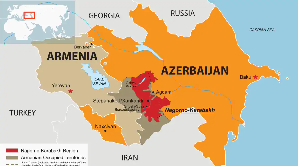
Armenia a new market for Iranian producers

During Armenia’s 44-day conflict with Azerbaijan in the Nagorno-Karabakh region, Turkey had heavily backed Azerbaijan, further deepening the historical conflict between the two neighbors. In retaliation, the Armenian government announced on October 20, 2020, a decision for banning the imports of Turkish goods as of December 31, 2020.

Following the mentioned decision, Armenia has now reached out to the Islamic Republic to replace Turkish commodities with Iranian products in its markets. This has presented a new opportunity for Iranian producers to have a strong presence in this market and turn the (probably) temporary opportunity into a permanent trade bond between the two countries.

 Turkey-Armenia trade

Although, the border between Turkey and Armenia has been closed since 1993, the trade between the two countries has never ceased. The trade transactions between the two neighbors have been historically carried out through third countries like Georgia.

According to the Armenian Statistics Institute, Turkey’s annual exports to Armenia amounted to over US$2 billion over the past 10 years. However, in reality, the total imports of Turkish goods by Armenian people considering the so-called ‘luggage trade’ is much more than the mentioned figure. In fact, Turkey has been dominating the Armenian market for a very long time.

Iran-Armenia trade

Despite having shared borders, and close cultural and historical relations, the trade between Iran and Armenia has not been at a favorable level over the past few decades.

However, Iran’s preferential trade agreement with the Eurasian Economic Union (EAEU) has changed the prospect of the country’s trade relations with Armenia, paving the way for a boost in the economic relations between the two sides.

Back in January 2020, the Head of Iran-Armenia Joint Chamber of Commerce and Industry Hervik Yarijanian said the preferential trade agreement between Iran and EAEU has had a significant impact on the country’s trade relations with Armenia.

According to the official, the volume of trade between the two countries has witnessed an outstanding rise since the agreement became effective in October 2019.

Iran mainly imports red meat from Armenia, while Armenia imports polymer raw materials, machinery, industrial gases, manufactured artifacts, leather and leather goods from Iran, he said.

New opportunity

With the Turkish products being wiped out of the Armenian market, Iranian producers are presented with a great opportunity to showcase the high quality of their products and benefit from the huge capacities of the mentioned market.

Last week, the Director-General of the Asia-Pacific Department of Iran’s Trade Promotion Organization (TPO) said that Armenia is willing to replace Turkish commodities with Iranian products. According to Mojtaba Mousavian, the Republic of Armenia plans to replace 2,250 Turkish commodity items with Iran-made products.

Later on Tuesday, a Board member of the Iran Chamber of Commerce, Industries, Mines and Agriculture (ICCIMA) told ILNA that Iran now has the advantage of exporting goods such as sweets and chocolates, ceramic tiles, detergents, shoes, flooring and carpets and textile and clothing to Armenia, in addition to the previously traded items.

“We may not have been able to make good use of regional agreements in the past, but this is an opportunity for us to enter the Armenian market with full force,” Ali Shariati said.

Establishing strong economic relations with other countries requires a united front by the government, which means it requires close coordination between various government bodies to set the scene for the private sector and traders to play their role.

In this particular case, the situation begs the immediate attention from a triangle consisting of the Trade Promotion Organization, the Iran-Armenia Joint Chamber of Commerce, and the Ministry of Foreign Affairs.

By mobilizing the facilities in the mentioned bodies, exporters will be able to fully showcase their capacities and capabilities and take advantage of this probably short-term opportunity.

Monday, 4 January 2021

Iran Seizes Korean Tanker

According to Bloomberg, Iran has seized a South Korean-flagged oil tanker in the Strait of Hormuz. The Islamic Revolutionary Guard Corps said it detained the Hankuk Chemi vessel on Monday “due to repeated violations of marine environmental laws.”

Concerns of further conflict have grown in the final weeks before Joe Biden takes over in Washington, especially around the recent assassination of a top Iranian nuclear scientist and this week’s first anniversary of the killing of the country’s leading general.

“In the short run, these tactics run the risk of turning into a just cause for war in the waning days of the Trump administration, and in the longer run can poison the well with Biden’s team,” said Ali Vaez, Director of the Iran Project at the International Crisis Group.

That announcement came shortly after Washington decided to keep the USS Nimitz in the Persian Gulf because of “recent threats” from Iran’s leaders against Trump. The aircraft carrier had been set to leave the region.

South Korea has sent an anti-piracy unit to the strait, the Seoul-based Yonhap News Agency reported, citing the country’s Defense Ministry. The Hankuk Chemi’s operator denied it had broken any environmental rules.

The vessel was carrying 7,200 tons of petrochemicals from Jubail in Saudi Arabia when it was intercepted, the IRGC said. The guard corps took it to Bandar Abbas port in Iran, the semi-official Fars News Agency said. Crew members from Korea, Indonesia, Vietnam and Myanmar were arrested, according to Iran’s Tasnim News Agency.

Relations between Tehran and Seoul have been strained since the United States re-imposed tough sanctions on Iran and banned countries, including major Asian customers, from buying its petroleum.

Iran says it has at least US$7 billion from oil sales trapped in South Korea and the money is needed to purchase humanitarian goods, including coronavirus vaccines. Seoul’s deputy foreign minister was scheduled to visit Iran to discuss the trapped funds, a spokesman for Iran’s Foreign Ministry said just before the tanker was seized.

South Korea is not a member of the International Maritime IMSC Security Construct (IMSC), a maritime force created in 2019 in response to Iranian attacks and to protect sea lanes in the Middle East. Seoul has previously indicated a willingness to work with, though it has not requested assistance from the alliance so far, said an IMSC spokesman.

The Hankuk Chemi was sailing to the United Arab Emirates port of Fujairah after loading at Jubail, according to ship-tracking data compiled by Bloomberg. It veered off course in the Strait of Hormuz, a narrow stretch of water between the tip of Oman and Iran, and headed toward Bandar Abbas.

UK Maritime Trade Operations, which serves as a link between the Royal Navy and commercial vessels operating in high-risk areas, said there had been “an interaction” between a merchant vessel and the Iranian authorities in the Strait of Hormuz between 6:15 a.m. and 7:33 a.m. London time.

The U.S. Fifth Fleet, which is based in the region, is “monitoring the situation,” spokeswoman Commander Rebecca Rebarich said.

Year 2020 has changed our lives for ever

It has truly been a year like no other, with the pandemic dominating not just every news cycle but each of our lives. From work to family life, where we went, and what we did, nothing was untouched by COVID-19. But as people got used to phrases like “self-isolate” and “social distancing”, there were plenty of other news too. 

Coronavirus

The year began with a new virus originating from Wuhan, China. Wei Guixian, a 57-year-old shrimp seller, is thought to have been the first person infected. “Every winter I always suffer from the flu,” she later told Chinese media. “So I thought it was the flu.” We now know it wasn’t. COVID-19, as it has since been named, first took hold in the Chinese city then swept the globe. In Wuhan, some citizens have decided to sue the government for what they believe was suppression of the news in the early days of the virus. By January, the first case was in the UK and by March the world witnessed lockdown, focused on maintaining distance and washing hands repeatedly. As cases mounted across the world, there were unexpected issues, like those who wanted to believe that Covid-19 was in fact a hoax. As well as the terrible human cost, with tens of thousands dead in Britain and more than 100,000 still suffering with long-term effects, the pandemic has delivered the largest economic shock to the UK in three centuries – and it isn’t over yet. But with a vaccine now being given to the most vulnerable, even with Christmas plans derailed by another surge, there is still hope for 2021.

Brexit

When Boris Johnson won last December’s election, he succeeded on a series of slogans. First up was to “Get Brexit Done”, which he did, taking Britain out of the European Union on 31 January. After that, it gets a bit more tricky. He pledged to “level up” the country, and, after coronavirus hit, suggested a “Rooseveltian approach”, invoking FDR’s New Deal, though there’s little sign much has changed yet in the “red wall” seats the Tories took from Labour. However, the most pertinent of his soundbites now appears to be the promise that he had an “oven-ready deal” with the EU over Brexit. With time running out, there’s still no trade deal in sight. In the pantheon of prime ministers, Johnson’s currently far from the top of the pile after a whirlwind 12 months. But falling at the final hurdle with Brexit could make things far worse for both the prime minister’s legacy and, more importantly, the country.

US politics

Even by the standards of Donald Trump’s presidency, 2020 has provided some eye-opening moments. Questionable presidential pardons were perhaps to be expected, as were outrageous election claims. Suggestions of injecting bleach into the body to stop coronavirus, on the other hand, were not something anyone expected of a president. As 2020 progressed, the protests in the wake of George Floyd and Breonna Taylor’s deaths took hold across the United States and with them questions over the response from heavy-handed police. Along with coronavirus, it became the big issue of American politics, neither of which Trump had any real solution too, other than to stoke flames. By summer, the Republicans were already preparing for life after Trump. Stuck in campaign mode, the president pressed on, maskless, with rally after rally, and even planned to go ahead with a Republican convention as normal. Now, with Joe Biden set to come into power in a few weeks, the question is how much havoc Trump can wreak before leaving the Oval Office – and what he does next.

Climate crisis

The year began with bushfires blazing across Australia, killing 500 million animals and more than a dozen people, with acres upon acres left scorched in their wake. But it could end on a hopeful note, as the UK looks ahead to hosting the Cop26 climate summit in November. Joe Biden’s election, and his pledge to sign the US up to the Paris Agreement again, will surely help – with climate an issue that could bring him together with British leaders. In the UK, the government’s independent climate advisers have put together recommendations for how the country can limit its carbon emissions to keep temperatures down, and it’ll take more than sending fewer emails. Instead, they say that by 2050 almost every element of our lives will have to change, from the cars we drive to what we eat, if we’re to reach net-zero emissions. But can it really be done while building a third runway at Heathrow airport?

Arabs Israel relations

Many countries have established diplomatic relations with Israel in quick succession. The decision to establish diplomatic relations by itself cannot create alliance. In case of the Arab world, the matter is different. Within each country, there are factions that are hostile to Israel. Any regime that opens relations with Israel will have to face this reality. Each state that has recognized Israel has broken a barrier. Among many Arabs, it is a violation of a fundamental principle. This process, which began with the UAE, is rooted partly in the US Middle Eastern policy that has played an important role in implicitly endorsing the process and occasionally adding a sweetener. The US also made it clear that it was withdrawing its forces from the region and reducing its commitments. That left the region without the power that held it together. These countries could and did work together, but only through secret contacts and US coordination. Without the United States, each state was left to either go it alone or form meaningful relations on the whole. The US policy forced the countries of the region to face a reality they had tried to hide.

Sunday, 3 January 2021

Iran may avenge Soleimani killing after Joe Biden takes over as US President, says Former Mossad Director Shabtai Shavit

Two former Mossad chiefs and a former national security council chief all said on Sunday that Iran had failed to avenge the assassination of one of its most senior officials in 2020 and likely would not do so prior to US President-Elect Joe Biden taking office. However, they all told The Jerusalem Post that the Islamic Republic would eventually find a moment to avenge the killing of Islamic Revolutionary Guard Corps Quds Force Chief Qasem Soleimani exactly one year ago. Former Mossad director Shabtai Shavit told the Post that, “the Iranians’ patience is never-ending.”

Shavit said that the killing of Soleimani in January 2020 along with the assassination of Iran military nuclear program Chief Mohsen Fakrhizadeh in November was “a double blow against its military activity in the Middle East” which it has not recovered from.

The Mossad Chief during 1989-1996 said that Esmail Ghaani who replaced Soleimani “isn’t at a level even close to the same capabilities and importance and managerial ability.”

Whereas Shavit said there is a continuous debate about whether assassinations make sense, he said in the cases of Soleimani and Fakrhrizadeh, there was no doubt.

“Some say they are not useful because one goes and the next one comes into line and replaces him…the level of talent of the one who entered his [Soleimani’s] shoes disproves that argument,” said the former spymaster.

In terms of retaliation, Shavit said that even though Tehran has not successfully retaliated in a big way so far (it did fire missiles on US bases and has failed at some other attempted plots), “we must take into account that they will respond. They will wait for an opportunity to attack a high quality target.” He gave the example of Iran and its proxies’ attacks on the Israeli Embassy and Jewish Community Center in Argentina in 1992 and 1994.

Questioned if his example meant he believed Iran would attack Israel or Jewish targets outside of the Jewish state, he responded, “When they do an operation, they use the strategy of deniability. This way, legally no one can bring them to court, but publicly everyone knows they did it.”

Former Mossad director Danny Yatom told the Post, “the assassination [of Soleimani] was a very impressive one of strategic value covering the full field with Iran.”

Yatom said, Soleimani, “was much more than just the leader of the Quds Force. He was more important than the commander of the IRGC who supposedly was his commander. He was very close to the supreme leader” Ayatollah Ali Khamenei.

The former Mossad chief from 1996-1998 said that the death of Soleimani was “a harsh blow to both morale and actual operations…the Quds Force is still licking its wounds.”

Yatom said that “since Ghaani relieved Soleimani, there is a feeling that the Quds Force still hasn’t returned to the status it had before the killing and I doubt if it can get back.”

“There are reports that Iran is looking for the chance to attack an Israeli target or an American target. I don’t say that it is impossible…but they have waited a full year and have not succeeded to avenge one of the most important people in Iran,” he said.

He explained that, “this teaches us about the weakness of the Quds Force and of the IRGC today now that they don’t have Soleimani.”

Yatom added that, “even under his [Soleimani’s] command, attempts directly against Israeli territory itself were not successful,” including years in which he tried to create a capability to attack Israel using Shi’ite militias on the Syrian side of the Golan.

Former National Security Council Chief and Maj. Gen. (res.) Giora Eiland said at a virtual Jerusalem Press Club event that Iran has, “no interest today in resuming a large-scale confrontation with anyone, especially not with the US in the next two weeks before the transition of the presidency.”

“So I don’t think anything dramatic will happen in the next few days or hours just because it is the anniversary of the death” of Soleimani, said Eiland. He continued, “But Iran feels that at some point, it will have to retaliate, if not against the US, then against Israel or Israeli interests.” Like Shavit, Eiland mentioned Iran’s proxies worldwide, including in South America, which could attack Israeli and Jewish targets that are less well-defended than Israel itself.

He added that, “They would probably prefer to do it after Biden takes over. Trump is unpredictable,” and the Islamic Republic is hoping they can lure Biden into rejoining the 2015 nuclear deal at a low price.

Despite heightened threats surrounding the one-year anniversary of Soleimani’s death, he said both sides have taken actions to reduce friction, such as the US moving an aircraft carrier out of the area.

Shavit concurred, saying that, “they won’t forget to retaliate. Maybe the timing will be not when they are in negotiations with the Americans…They would be foolish to carry out an attack [during negotiations] just because they have an opportunity. But they are very shrewd people, you can’t underestimate them.”

Further, Shavit warned that even if the assassination of Soleimani worked this tool for fighting enemies must not be overused.

He said it could only be used for a very high quality target whose removal achieves a major purpose or there could be a danger of Israel losing some of its own ethics and humanity as well as facing increased global criticism.

Eiland warned that Israel still needed to watch out for “a cloudy Saturday morning when [mainland] Israeli targets may be attacked by cruise missiles from Iran, Iraq, Yemen, or with ballistic missiles from Hezbollah.”