Tuesday, 13 June 2023

Iranian president meets Venezuela president

Iranian President Ebrahim Raisi and his accompanying delegation held several meetings with Venezuelan officials in a bid to deepen partnership between Tehran and Caracas. 

On Monday morning Iran’s local time, President Raisi left Tehran for a tour of three Latin American nations -Venezuela, Nicaragua, and Cuba- as the head of large politico-economic delegation. 

Upon his arrival in the Venezuelan capital, the Iranian president was accorded an official reception in which the national anthems of Iran and Venezuela were played. During the playing of the national anthem of the Islamic Republic of Iran, a group of Venezuelan children and teenagers sang the national anthem of Iran in Persian.

After the reception ceremony, President Raisi and his Venezuelan counterpart Nicolas Maduro held a meeting in which they discussed ways to boost bilateral cooperation. 

In the meeting, Raisi described the relations between the two countries as strategic. 

“Despite the expansion of relations between Iran and Venezuela in recent years, diverse mutual capacities require the agreements of the two countries to be implemented as quickly as possible and the relations between them to be upgraded to higher levels,” he said, according to the official website of the Iranian presidency. 

Raisi underlined the achievements that Iran made while being under US. sanctions. He said Iran can share these achievements with Venezuela.

“The Iranian nation has gained valuable experiences and achievements in the field of science and technology by standing up to the domination system and overcoming the sanctions, which can be shared with Venezuela,” Raisi noted.

The Iranian president also touched on the emerging new world order, saying that such a development can benefit Iran and Venezuela. Stating that a new system is being formed in the world, Raisi said that the future of these developments will benefit the freedom-seeking and independent countries of the world.

President Maduro, praised the history of strategic relations between Tehran and Caracas and announced his determination and the members of the cabinet of this country to start a new round of efforts and measures to expand relations with the Islamic Republic of Iran.

Maduro also hailed the emerging new world order. “In the new world that is being formed, imperialism is falling and the countries that have resisted the arrogance of the arrogant are on the verge of victory,” he said. 

Stressing the need for establishing a direct air link between the two countries and strengthening shipping lines to increase trade between Iran and Venezuela Maduro said, “The two countries have good capacities for cooperation in the fields of tourism, agriculture and animal husbandry.”

In the meeting of the high-ranking delegations of Iran and Venezuela, the presidents of the two countries called Martyr Haj Qassem Soleimani and the late Venezuelan politician Simón Bolivar as heroes of the fight against domination and imperialism.

Maduro praised General Soleimani. “I always remember General Soleimani and I pay tribute to him. In 2018, a brutal cyber attack from United States was launched on our energy infrastructure. He directed a team to investigate the cyberattack and helped us a lot. Many do not know about that,” Maduro said, according to Fars News. 

He added, “I also pay my respects and we will install his bust in the tomb of Simon Bolivar.”

In Caracas, President Maduro also awarded Raisi the national honor of Venezuela.

Raisi and Maduro also participated in Iran-Venezuela high-level joint commission meeting. After the meeting, the presidents of the two countries held a joint press conference.  

“Iran and Venezuela have common interests and views in the fields of independence, freedom and justice, which has brought the people of these two countries closer together,” Raisi said at the presser. 

He also stated that the people of Iran and Venezuela have common enemies who do not want them to live independently. 

“The Iranian nation has proven its friendship with the Venezuelan people over the past years and has always shown that it is their friend during their difficult times,” Raisi added.

Pointing out that the relations between Iran and Venezuela are not ordinary, but strategic, President Raisi said, “Having common interests, views and enemies have made cooperation deep and strategic.”

He added, “Today, the two countries are determined to develop relations in different fields.”

Raisi stated, “The Islamic Republic of Iran, thanks to the blessings of the Islamic Revolution, the pure blood of the martyrs, and the resistance of the Iranian people, has been able to turn the pressures and sanctions into opportunities, and in this way has provided various capacities that are ready to be shared with the resilient nation of Venezuela.”

At the end, Raisi once again paid tribute to the national heroes of Venezuela and honored the memory and name of the resistance martyr Haj Qassem Soleimani and saluted his noble soul.


Iraq releases Iranian US$2.7 billion

Trade Bank of Iraq (TBI), an Iraqi bank, has released Iranian funds. According to a TBI statement the Funds have been released in accordance with a trilateral mechanism between Iran, Iraq and the United States. 

The Iranian assets that were recently released pertain from February to June 2023. This was according to the mechanism agreed upon between the three countries (Iraq, Iran and the United States of America) in force since 2018, said Aqeel al-Showeili, the communications specialist of TBI. 

The chairman of the Iran-Iraq joint chamber of commerce has recently announced that Iraq has released US$2.7 billion worth of Iranian assets.

Yahya Al-e Es’haq said a part of Iran’s frozen assets in Iraq has been allocated for the provision of funds needed by Iranian Hajj pilgrims.

Another part of the assets has been used to pay for the provision of basic commodities, he added.

In addition to the Iranian funds in Iraqi banks, there have been reports about the possible release of Iranian funds by South Korea. Officials from the United States and South Korea are holding talks over unfreezing Iranian funds held in South Korean banks, according to a South Korean daily.

The talks are focused on releasing the US$7 billion Iranian funds that have long been blocked in South Korean banks due to US sanctions on Iran. The funds are oil revenues dating back to the period prior to the re-imposition of US sanctions on Iran in May 2018.

Citing diplomatic and government sources, The Korea Economic Daily said in late May, “Korean and the US government officials are involved in working-level discussions under Washington’s leadership to unfreeze the Iranian funds.”

The newspaper said the funds, if released, would only be used for public and humanitarian purposes such as UN dues and COVID-19 vaccines.

“If all goes to plan, we expect our strained relationship with Iran to improve significantly,” said a Seoul government official.

If talks turn out to be successful, the frozen money will be allowed to be transferred to Iranian bank branches in neighboring Middle Eastern countries, not directly to Iran, to monitor the flow and use of the funds, sources said.

The Korean newspaper also pointed to media speculation over the concessions that Iran is expected to make in exchange for getting its money unfrozen.

It said that media reports alleged that Iran would release US prisoners and limit uranium enrichment levels to 60% in return. These speculations have so far not been confirmed by officials.


Syrian foreign minister inspects embassy premises in Riyadh

Syrian Minister of Foreign Affairs and Expatriates Dr. Faisal Mekdad made an inspection tour of the headquarters of his country’s embassy in Riyadh. The foreign minister’s visit to the embassy premises, the first of its kind in over 11 years, was to personally review the ongoing preparations for the reopening of the embassy.

Mekdad and his accompanying delegation arrived in Riyadh on Monday in response to an invitation from his Saudi counterpart Prince Faisal bin Farhan to attend the second joint ministerial meeting of the Arab countries and the Pacific Islands Group.

The Syrian Ministry of Foreign Affairs stated that Mekdad visited the headquarters of the Syrian embassy to see the readiness of the building and the ongoing preparations for the reopening of the embassy, especially in terms of resuming the provision of consular services to the Syrian community in Saudi Arabia in the near future.

The inspection was part of the ongoing preparations by the two countries to reopen their diplomatic missions in both countries at the earliest possible. The Saudi technical delegation made an inspection tour of the Saudi embassy premises in the Syrian capital at the end of last month.

Speaking to Okaz/Saudi Gazette, well-informed sources revealed that the Syrian Foreign Ministry will give final shape to its embassy staff in Riyadh, and that the Syrian ambassador likely to arrive in Riyadh after the Eid al-Adha holidays.

According to the sources, Damascus is yet to appoint it’s ambassador-designate to Riyadh, though it was taken the decision to send new ambassador to Saudi Arabia.

The Saudi technical delegation has completed the procedures for the return of the Saudi ambassador to Syria.

The Syrian Ambassador Mahdi Dakhlallah left Riyadh in February 2012 following Saudi Arabia’s severing of diplomatic relations with Syria.

It is noteworthy that Dr. Mekdad paid an official visit to Riyadh in April this year after a hiatus of 12 years. The minister’s visit was in response to an invitation extended by Minister of Foreign Affairs Prince Faisal Bin Farhan.

During the visit, the foreign ministers held wide range of talks focusing mainly on the efforts to reach a political solution to the Syrian crisis in a way preserving Syria’s unity, security and stability.

Issues such as the return of Syrian refugees to their homeland and ensuring the access of humanitarian aid to the affected areas in Syria also figured high in their talks.

Germany resumes oil imports from Iran

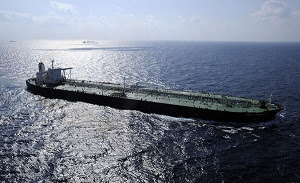
Germany has imported a significant shipment of crude oil or petroleum products from Iran for the first time in five years, according to the latest data by Eurostat, the statistical office of the European Union.

Germany imported 69,737 tons of crude oil or petroleum products from Iran in March 2023 despite the US sanctions that ban any trade of energy products with Iran, IRNA reported.

The country's last import of Iranian crude was a 10,000 tons shipment in October 2018.

Germany's move comes at a time when the US government has yet to make any changes to its unlawful sanctions policy against Iran despite its claim of seeking a diplomatic solution to ease tensions.

Bulgaria, another EU member, also imported 147 tons crude oil or petroleum products from Iran in the first quarter of the year 2023, although the figure is relatively small, according to Eurostat.

The European Union’s total oil imports from Iran during this period, based on data by Eurostat, was 69,884 tons, a figure not seen since 2018 when the US withdrew from the historic nuclear deal with Iran, known as the Joint Comprehensive Plan of Action (JCPOA).

Now after five years, European refineries seem increasingly inclined to disregard U.S. sanctions, particularly in the wake of Russia’s military campaign in Ukraine.


US foreign policy driven by military complexes

It is believed that the top think-tanks operating in the United States, active in foreign policy sphere, receive financial support from the top US military complexes that include Lockheed Martin, Boeing, and Northrop Grumman etc.

For Years, the US administration has been claiming that the country’s foreign policy is centered on human values like democracy, peace, freedom, and respect to other nations.

However, Quincy Institute for Responsible Statecraft recently published a detailed report which concluded that the US arms companies play a substantial role in shaping the country’s foreign policy.

The Institute suggests that of 10 top American think-tanks which are active in foreign policy sphere, all of them receive financial support from American firms including Lockheed Martin, Boeing, and Northrop Grumman etc.

In this regard, Atlantic Council and Center for Strategic and International Studies receive more than a million US dollars from these companies annually. 

The issue clarifies why most of American well-known think-tanks support the selling of arms to Ukraine, which is not the whole story.

According to the Quincy Institute report, more than 85% of the US media is in the long list of the recipients of the funds. The issue which unveils the fact that the US arms firms justify their inhuman aims by using the research and media tools.

Although different reports also refer to the fact that US arms’ firms use lobbyists for every member of the US Congress to advance their agendas in a desired way.

In this vein, it is not surprising to see that the US foreign policy has created historical catastrophes like the Iraq and Afghanistan wars.

It is noteworthy that in the midst of the Ukraine war, the executive manager of the US firm Raytheon Technologies clearly said, “Geopolitical tensions of Eastern Europe carry profitable income opportunities for the company”.

From this perspective, it is fair to say that behind the well-designed foreign policy are the policy carvers which meet their goals at the expense of US citizens.

This once again confirms the fact that the distance between declared and practical goals of the US foreign policy is from the earth to the sky.      


Monday, 12 June 2023

Pakistan pays Russian crude price in Chinese currency

According to a Reuters report, Pakistan has paid for its first government to government import of discounted Russian crude in Chinese currency. It is a significant shift in its US dollar dominated export payments policy.

Discounted crude offers respite as Pakistan faces an acute balance of payments crisis, risking a default on its debt obligations. The foreign exchange reserves held by the central bank are scarcely enough to cover four weeks of controlled imports.

The first cargo of discounted Russian crude oil arranged under a new deal struck between Islamabad and Moscow earlier this year arrived in Karachi on Sunday. It is currently being offloaded at the port in the southern city of Karachi.

Petroleum Minister Musadik Malik, talking to Reuters by phone, did not disclose the commercial details of the deal, including pricing or the discount that Pakistan received, but said the payment was made in Chinese currency.

He said the purchase, Pakistan's first government-to-government (G2G) deal with Russia, consisted of 100,000 tons, of which 45,000 tons had docked at Karachi port and the rest was on its way. Pakistan made the purchase back in April.

Pakistan's purchase gives Moscow a new outlet to add to growing sales to India and China, as it redirects oil from western markets because of the Ukraine conflict.

Despite being a long-standing Western ally and the arch-rival of neighbouring India, which historically is closer to Moscow, analysts say the crude deal also presents a new avenue for Pakistan at a time that its financing needs are great.

Pakistan's Refinery Limited (PRL) will initially refine the Russian crude, the minister said. He had earlier referred to the purchase of the shipment as a trial run to judge financial and technical feasibility.

Malik on Monday played down concerns around the financial viability and concerns about the ability of local refineries to process Russian crude given the South Asian country's historical importation of Middle Eastern petroleum products.

"We've run iterations of various product mixes, and in no scenario will the refining of this crude make a loss," Malik said, adding, "We are very sure it will be commercially viable."

"No adjustments (were) needed at the refinery to refine the Russian crude," the minister told Reuters.

Energy imports make up the majority of the Pakistan's external payments. Islamabad imported 154,000 bpd of oil in 2022, around steady with the previous year, data from analytics firm Kpler showed.

The crude was predominantly supplied by the world's top exporter Saudi Arabia followed by the United Arab Emirates. The 100,000 bpd from Russia in theory greatly reduces Pakistan's need for Middle Eastern fuel.


Iran emerges second largest sponge iron producer in the world

According to an IRNA report, the World Steel Association (WSA), in its latest annual report, has ranked Iran second among the world’s top sponge iron-producing countries for the year 2022.

Islamic Republic managed to produce 32.9 million tons of sponge iron in 2022 to stand at second place after India with 42.3 million tons of production.

According to WSA, Iran also kept its place as the world’s 10th largest steel producer last year, with 30.6 million tons of crude steel output.

Iranian Mines and Mining Industries Development and Renovation Organization (IMIDRO) was also reported to be the world’s 20th largest company based on the WSA ranking.

The total global production of crude steel in 2022 was 1.301 million tons while the consumption of this product in the world was 1.301 billion tons.

Earlier, WSA in its monthly report for April 2023 ranked Iran eighth among the world’s top steel-producing countries for the mentioned month, indicating a one-place rise compared to the previous month.

The April report showed that Iran’s crude steel output increased 5.9% in the mentioned month while the global average growth rate stood at negative 2.4%.

Based on the WSA data, Iran produced 3.1 million tons of crude steel in April.

Meanwhile, the Islamic Republic produced 9.7 million tons of steel in the first four months of 2023, registering a nominal growth of 0.1% as compared to the same period in the previous year.

WSA report said that the world’s 64 steel producers managed to produce 161.4 million tons of the commodity in April, 2.4% less than the figure for the previous year’s same period.

The steelmakers produced 622.7 million tons of steel in the first four months of this year, which indicates a 13% drop as compared to the same period last year.

According to the WSA report, China, India, Japan, the United States and Russia were the world’s top steel producers respectively.

The Iranian steel industry has been constantly developing over the past years despite all the pressures and obstacles created by outside forces like the US sanctions and the coronavirus outbreak that has severely affected the performance of the world’s top producers.