Friday, 13 January 2023

Ukraine-Russia Grain Deal: Success or Failure

On October 29, 2022 Russia announced it had quit the grain deal brokered by the UN and Turkey in July 2022 to allow Ukraine to export grain by the Black Sea. Moscow’s move was in response to an attack by Ukraine on the Russian fleet around Sevastopol city. Despite Russia’s warnings, a group of ships loaded with grain nonetheless exited through the safe corridor, exporting grain that had been loaded in Ukrainian ports.

Shortly thereafter, Russia made a U-turn and announced it would return to the agreement after negotiations with Turkey. Moscow cited written guarantees from Ukraine that Kyiv would not use this corridor for military purposes or attacks against Russia.

This brief spat over the deal, which to that point had worked for all parties, left a mixed impression. On the one hand, Russia’s actions underscored that the agreement was vulnerable and weak, and made clear Moscow’s readiness to abandon it at any moment it saw fit. On the other hand, Turkey’s intervention, which secured the continuation of the deal and convinced the Kremlin to rejoin it, illustrated the significant influence Ankara wields in the Black Sea, both as a key interlocutor between parties and as a counteracting player to Russia.

Russia’s move was inevitable. From the very beginning Moscow has seen the grain deal as affording it leverage over Ukraine and the West. Grain exports are one of the few sources of hard-currency income for the Ukrainian economy. What is more, being a security guarantor of the agreement allows Russia to raise the stakes with minimal effort every time it wants to pressure the West by destabilizing world food prices, which in turn has an impact on inflation worldwide. Indeed, Russia’s brief suspension of its participation in the grain deal caused a spike in wheat prices across the globe.

The most obvious goal of the deal was to ensure food security. Russia’s invasion of Ukraine caused a surge in global food prices, dealing a heavy blow to countries already at risk of food insecurity. Ukraine has been one of the world’s largest exporters of grain, contributing 42% of the global share of sunflower oil, 16% of maize, and almost 10% of wheat. Not only are Ukraine’s exports essential for the stability of world markets, but Ukraine’s grain exports have also contributed greatly to the World Food Program’s humanitarian stocks, shipped regularly to such war-ridden countries as Yemen, Ethiopia, Somalia, and South Sudan.

The July agreement between Russia and Ukraine allowing grain and fertilizers to return to the market probably averted a humanitarian catastrophe and economic meltdown. Since the signing of the deal, around 9.5 million tons of grain products have left Ukraine by sea. More than 100 ships have sailed from Ukraine, with 47% of the grain cargoes going to Turkey and Asian countries, 36% going to the EU, and 17% to Africa. Immediately after the agreement went into effect, food prices fell by 7.90 percent since March 2022. After hitting an all-time high immediately after Russia’s invasion in February 2022, world wheat prices dropped by 14.5% and cereal prices dropped by 11.5%. Prices for those grains are still higher than they were in 2021, but the deal certainly eased pressure on the market. In terms of stabilizing markets, the deal has proved to be effective.

However, the agreement was not designed to save conflict-affected communities around the world, which for the most part continue to suffer critical food shortages. Particularly, Russia has constantly criticized the agreement, alleging that the grain is not reaching countries that need it the most.

Indeed, contrary to popular perception, the majority of grain exports that were shipped out of Ukrainian Black Sea ports didn`t go to the poorest and most needed countries but rather to Europe and Turkey. Over the past five months, more than 12.3 tons of grain was shipped from Ukraine, with 44% of it being corn rather than wheat. The main destinations of the cargoes were Spain, China, Turkey, Italy, and the Netherlands.

Most of the grain that had been held up in Ukrainian silos after February 24 was corn, contracted by international companies, not necessarily to feed people but, for example, to use as biofuel or animal food. Therefore, the agreement wasn’t designed to immediately avert famine in countries like Yemen or Somalia but rather to stabilize the market and contain prices, which in turn hurt countries’ ability to purchase food.

From the Ukrainian perspective the agreement has positive implications. It allowed Ukraine to return to almost prewar amounts of exports, increasing its share from 1–1.5 million tons to almost 4 million tons.

In addition, the deal freed up some space for Ukraine to store the next harvest, which is expected to amount to 53 million tons, far exceeding domestic needs. The deal allows Ukrainian farmers to start planting crops for next year.

The deal also ensures that Ukraine’s farming sector is not totally destroyed. Because of the war, Ukraine’s farming industry has lost 50% of its 2021 gross output, which has led to serious liquidity problems for farmers. The grain had to be moved out of storage silos to avert a storage crisis, and if the whole goal of the deal was to move grain out of Ukraine, then the treaty made it possible.

Any hope that the grain deal might serve as a basis for the slow build-up of a potential compromise between Russia and Ukraine/the West has been dashed.

Ukraine and Russia don’t trust each other and are not ready to negotiate. Russia’s attempt to abandon the deal demonstrated that Moscow doesn’t see it as a trust-building measure but rather is trying to instrumentalize it as part of its war effort. Nor does Ukraine see the agreement as part of a potential peace process. President Zelensky insists that Russia should leave all Ukrainian territory occupied since 2014, including Crimea, no matter whether there is a grain agreement in place or not.

If the agreement is thought of as a means of stabilizing the Black Sea situation and localizing the war in Ukraine, then one could argue it has partially succeeded. Although Russia didn’t stop its indiscriminate attacks against energy, military, and civilian infrastructure in Ukraine’s South, it did show restraint toward foreign ships, which started shipping grain out of Ukraine through the Turkey-supervised safe corridor. In some way, the agreement has contributed to the creation of certain rules.

Finally, if the agreement was about strengthening Turkey’s geopolitical leadership in the region, then it has definitely succeeded. Ankara boosted its diplomatic image by presenting the agreement as an achievement aiding food-dependent African and Asian countries. Moreover, Turkey cemented its role as a key mediator in the Russia-Ukraine war, capable of talking to both sides. President Erdoğan in particular has been able to capitalize on the deal by placing Turkey at the heart of any potential follow-up agreements between Kyiv and Moscow.


Pakistan Stock Exchange benchmark index dips 1.67%WoW

The benchmark index of Pakistan Stock Exchange (PSX) lost 684 points during the week ended on January 13, 2023, registering a 1.67%WoW drop to close at 40,323 points. Overall, participation improved with average trading volumes rising to 183 million shares, from 176 million shares traded in the earlier week, posting an increase of 4%WoW.

The index witnessed an overall volatile week, as news flows of reserves falling below US$4.5 billion dampened overall sentiment, alongside the obvious political noise.

Some respite was witnessed on the back of pledges obtained in the Climate conference in Geneva, as Pakistan succeeded in soliciting commitments of over US$10 billion from the friendly nations and multilateral donors.

Volume leaders of the week were: PPL, WTL, PRL, CNERGY and KEL.

On the currency front, the PKR weakened further, depicting a depreciation of 0.44% with the interbank quote ending at PKR228.15/US$ on Friday.

Other major news flows during the week included: 1) foreign exchange reserves held by State Bank of Pakistan (SBP) sinking to three weeks’ worth of import cover, 2) UAE committing to lend US$1 billion and rolling over an existing US$2 billion loan, 3) Signing of deal signed with SFD to finance oil derivatives worth US$1 billion, 4) CM Punjab sending a dissolution summary of Punjab Assembly to Governor and PTI also announcing to dissolve KPK Assembly on Saturday, and 5) Finance Minister, Ishaq Dar reiterating the country’s commitment to complete the IMF program.

Sector-wise Vanaspati & Allied Industries, Close-End Mutual Fund and Miscellaneous were amongst the top performers, while Leather & Tanneries, Leasing Companies and Pharmaceuticals were amongst the worst performers.

Flow wise, major net selling was recorded by Mutual Funds (US$4.7 million). Individuals absorbed most of the selling with a net buy of US$6.5 million.

Company-wise, top performers during the week were: MTL, PSEL, LOTCHEM, JVDC, and NESTLE, while laggards included: INIL, SRVI, ABOT, NRL, and TRG.

The market is expected to remain under pressure in the near future due to the concerns regarding the country’s external position and uncertainties stemming from the political situation brewing in Pakistan.

Furthermore, the upcoming Monetary Policy Committee meeting scheduled for January 23, 2023 would remain in the limelight.

Any news regarding foreign exchange inflows, whether from the IMF or other bilateral and multilateral sources, would support the market trajectory.

Additionally, clarity on the political landscape in the country would alleviate investor concerns.

Analysts expect the market to remain range-bound until there is further clarity on the economic and political fronts. They continue to advise a cautious approach while building positions in the market.

Peeping into the commodities market

After starting the year on weakness, crude oil prices have rebounded, driven by fears regarding China’s subdued demand easing off.

Brent futures rebounded by 7% on China announcing enhanced import quotas for 2023. This signaled that the country would continue to ramp up its demand, whether for inventory replenishment or heightened demand for petroleum products.

The second round of quotas enhancing allowed imports to 108.78 million tons of crude oil for 2023, corresponding to 60.6% of the ceiling, as compared to the earlier quota of 58.4%.

The developments out of China were enough to overshadow the inventory data from the US, where crude oil stocks in the country increased by a mammoth 19 million barrels during the week ended January 06, 2023.

Additionally, the latest CPI reading from the US led to expectations of the pace of rate hikes in the US to slow down. As a knee-jerk reaction, the US$ showed weakness, with the US Dollar Spot Index dropping by 0.9% on Thursday, making the dollar-denominated crude oil futures more attractive for investors trading in other currencies.

Moreover, a slowdown in the rate hike has led to expectations of demand not dropping by as much as earlier anticipated.

Global refining margins have continued to tick upwards amidst drop in refinery utilization due to snow storms in Texas, offsetting demand lows from holiday season resulting in larger than anticipated fuel inventory declines. Overall, snow storm in Texas has halted nearly 2.4 million bpd of refining capacity.

On the European front, shortage of natural gas exacerbated by the conflict in Ukraine, and western sanctions on Russian fuel supplies has resulted in overall power/heating demand turning towards diesel/fuel oil, exacerbating heating oil prices further. On the flipside, stronger-than expected economic data from China may result in refined-product exports from the Asian powerhouse to begin rolling out soon, weighing on margins/cracking spreads in the near term.

Overall, EIA’s January outlook expects combined gasoline, diesel and jet inventories to rise 9% in 2023, led by a 2.8% jump in refining throughput, with weaker economic activity pressuring diesel and gasoline consumption going forward. To note, gasoline/gasoil spreads currently stand at US$12.4/30.5 per barrel.

Richard’s Bay coal prices have continued to decline, currently hovering at US$167/ton compared to December 022/2QFY23 average of US$231/239/ton.

 Lower than anticipated heating demand due to milder winters in Europe and buildup of coal stockpiles in anticipation of winters has resulted in laggard demand for coal, leading to a decline in prices, particularly since mid-December 2022.

Coal prices had risen significantly during the past year amidst the global commodity super-cycle, peaking at US$460/ton in March 2022. Going forward, analysts expect coal prices to trend downwards to hover around US$160/ton in the near term. In the long run, coal prices are expected to settle around US$120/ton, although still higher as compared to pre-COVID averages of US$80/ton.

This may be attributed to delays in green energy conversion plans by developed countries, with several EU countries extending the life of coal plants which previously were scheduled for closure and reopening previously shut plants last year to address the shortage of Russian gas.


Even with the winter season beginning to settle (seasonal construction slowdown), scrap has rallied 22% from lows of US$340/ton in November 2022, to currently hovering around US$418/ton as compared to FYTD/ CYTD average of US$377- US$402/ton.

The said rise is majorly attributable to Chinese lockdown pullbacks, evident by 4.3% increase in purchase managers index (PMI) in December 2022 as compared to November 2022 (although still in a contractionary phase below 50).

The decision to move away from restrictions include a reduction in the overall mandatory quarantine period, which has been causing a myriad of problems for the world’s second largest economy. The said rally was not only driven by easing of restrictions but also by the abandoning of zero-COVID policy entirely, as protests against lockdowns have been running rampant in the country’s capital.

Although, the said bull-run may be short lived as routine virus controls, the ongoing property crisis, and the winter pollution curbs are expected to keep the construction/ engineering on the back foot in the near term. On the flipside, demand may pick up from a stimulus package (aimed at the housing sector) to be announced soon by the Chinese government targeting domestic industries and consumer spending.

Overall, Asian scrap demand is unlikely to be on a firm footing in the near term, as rising energy costs and a depressed outlook in Asia/ Europe are expected to dictate the production and procurement decisions of steel companies going forward.

Pakistan: Bank deposits reported at PKR22.5 trillion at end December 2022

According to State Bank of Pakistan (SBP) data, banking sector deposits increased by slightly more than 7%YoY to RKR22.5 trillion by end December 2022.

Analysts cited multiple plausible explanations for the rise in bank deposits, the biggest being, increase in the rate of return on deposits on the back of persistent hike in the policy rate.

In the face of difficult macroeconomic circumstances, such as bearish stock market activity, keeping surplus funds in the banks remained one of the preferred choices.

Analysts also attribute the increase to robust inflow of remittances on the back of depreciating Pak rupee (PKR).

Roshan Digital Accounts also helped in attracting funds, supporting banking sector’s deposits.

Due to consumers' increasing preference for using digital payment methods, cash was allowed to remain in the bank accounts.

Since the policy rate remains on the higher side, banks remained focused on mobilizing current accounts and extend their branch networks in order to protect net interest margins.

Banking sector succeeded in maintaining asset quality despite uncertain politico-economic landscape, according to analysts, which is despite that banks have indicated in recent briefings that they have provided enough for any unforeseen event.

Banks’ advance-to-deposit ratio increased by 463 basis points (bps) to 53%, while the investment-to-deposit ratio rose by1,233 bps to 79.7% in December 2022..

Banks’ advances were up 17%YoY to PKR11.9 trillion as of December 31, 2022. The advances rose by 7.4%MoM.

The investments by banks jumped 26.7%YoY to PKR18 trillion.


Thursday, 12 January 2023

Su-Nav committed to having cadets on every ship

Su-Nav is a relatively new name to the world of third-party ship management but has a strong commitment to training for the future including having cadets on board all vessels it manages.

Founded in 2019 Su-Nav is headquartered in Chennai, India with another office in Singapore, and new office opening in Dubai. Su-Nav, CEO, Sachit Sahoonja comes a lengthy career both at sea and ashore with the world’s largest ship manager V.Ships before striking out his own with a couple of former colleagues in July 2019.

Taking this step Sahoonja says he believes there was a space for smaller, alternative manager that would stick to the basics.

The company’s name SuNav reflects this back-to-basics approach and means good ship in Sanskrit. “We want a good ship and that's all I think every owner is wanting is just a good ship,” he tells Seatrade Maritime News in a recent interview.

Despite enduring the difficulties of the pandemic and the company’s offices being closed for six months early in its existence Su-Nav has today grown its fleet to 33 ships under management. Something that certainly marks Su-Nav out from the crowd in the third-party management business is that it has a policy of having cadets on all the vessels it manages.

It is a common complaint from managers that they want to have cadets onboard vessels but principals don’t want to pay for having trainees on their ships, so how has Su-Nav been able to achieve this?

Sahoonja explains that all the ships under its management have two cadets onboard equating to around 60 – 70 trainees at one time. To date 75 have completed their training and nine who are now officers on board its ships and over the next two years the manager will have 60 more junior officers.  

“So, you can imagine we have 60 – 70 cadets all the time on our ships and these people will come back and work for us,” he explains.

By doing this he says there are trying to provide a future solution for their owners that they are not hunting in the market for seafarers.

In terms of persuading owners of the requirement to have cadets on board the disruption brought about to the crewing sector by the Covid pandemic and more recently the war in Ukraine helped Su-Nav’s cause in convincing them that need their own cadets for the future.

“Now the owners are getting used to this idea that anything can happen. You need your own crew, you need people who have been with you, you need people who know your culture,” he explains.

As result Su-Nav has been able to convince owners that in 3-year time they will have officers for their ships, and be paying first year wages, rather than second or third year wages if sourcing crew from the market. In the longer-term he believes these officers will stay with the company becoming chief officers and captains.

Sahoonja says that seafarers will be the people who allow them to continue expanding the company in the future so are most important building block at this time.

Speaking of expansion Su-Nav plans to have its Dubai office up and running by the first quarter of this year a location that Sahoonja believes managers cannot be ignore at this time.

“Whoever was in Singapore and Hong Kong will definitely be in Dubai as well,” he says.


Wednesday, 11 January 2023

Russia faces no problem in selling oil

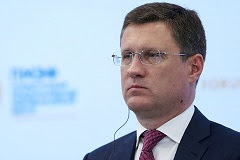
Russian oil producers have had no difficulties in securing export deals despite Western sanctions and price caps, Russian Deputy Prime Minister Alexander Novak told a televised online government meeting on Wednesday.

"We've been in constant contact with the companies, the contract making for February has been completed, and on the whole, the companies are not saying they have problems as of today," Novak told the meeting led by President Vladimir Putin.

Russian oil production has so far shown resilience in the face of the sanctions, imposed after Moscow sent troops into Ukraine on February 24, 2022 and of the price caps, introduced by Western countries in December 2022.

Putin in December 2022 signed a decree that banned the supply of crude oil and oil products from February 01, 2023 for five months to nations that abide by the cap.

Novak said the main problem for Russian oil was a high discount to international benchmarks as well as rising freight costs.

Russian oil traditionally sells at a discount to international benchmarks such as Brent. The discount, has widened since the imposition of sanctions and now stands at up to US$30/barrel to Brent.

"But I hope that the situation will be temporary and it (discount) should decrease over time, as we saw in 2022," Novak said.

Putin, who has long advocated the idea of reversing the price differentials in favour of Russian oil, told Novak that the state budget should not suffer as a result of the discount.

Putin struck an upbeat tone about the wider Russian economy.

"We can state with assurance that the financial and banking system of the country, the economy as a whole, is in a stable state, and is actively developing," Putin said. "We have every reason to believe these tempos will be maintained in 2023."

Russian Economy Minister Maxim Reshetnikov told the meeting that domestic inflation was 11.9% in 2022. He said inflation was likely to be substantially lower by the end of the first quarter, with the second quarter figure below the targeted 4%.


PSO earning to plunge due to inventory losses

Pakistan’s largest oil marketing company, operating in the public sector, Pakistan State Oil (PSO) is expected to announce its 2QFY23 financial result. The Company is expected to post profit after tax of PKR2.4 billion (EPS: PKR5.1). The said increase can be attributed to increase in HSD offtakes (up 53%QoQ), owed to the sowing demand in the rabi season during October and November 2022.

Recovery in offtakes was imminent as compared to the severely dampened fuel demand (floods/price hikes) during 1QFY23, resulting in total offtakes rising by 26%QoQ during 2QFY23.

The company’s revenue is expected to rise to PKR880.6 billion, changing by 2.1%QoQ/69%YoY, mainly on the back of the rise in fuel prices as compared to the last year (2QFY22: PKR140/124 per liter for MS/HSD).

The company is anticipated to record inventory losses of PKR12.2 billion (PKR26/share) for 2QFY23, as ex-refinery prices for MS/HSD fell by 18%/11% during the period as compared to the previous quarter.

Subsequently resulting in gross margins for the quarter to end at 0.7% as compared to 0.2% 1QFY23.

The effective tax is expected to rise to 56% for the period (vs 1QFY23: 70% ET), as minimum turnover tax (0.5% on gross POL sales) hampers the already beat-down bottom-line.

At a normalized tax rate of 33%, the earnings per share would have clocked in at PKR7.76/share.

Finally, analysts expect the topline from LNG segment to clock in at PKR232 billion, majorly on the back of rising LNG prices globally (energy crunch in Europe/ Asia) coupled with increased volumes (new LNG deal with Qatar @ 10.2% slope, signed last year).

To note, PSO’s average DES price for the quarter stood at US$11.39/mmbtu as against US$13.43/mmbtu in the previous quarter.

The liking for PSO is due to: 1) gas & power tariff adjustments may prove to be cash-positive, 2) modernization plans in refinery subsidiary (PRL) to enhance productivity, and 3) phasing out of RFO coupled with increasing share of retail fuels, resulting in stable margins to drive unhampered future cash flow.

For this reason, our December 2023 price of PKR215/share provides a total return of 53%, with forward dividend yields of 7% for FY23 and /10%for FY24.