Wednesday, 16 November 2022

US Centcom alleges Iranian made drone hit tanker off Oman

An attack on a tanker off the coast of Oman on Tuesday was carried out by an Iranian-made drone, US Central Command said in a statement, adding that a multilateral maritime operation led by a British Royal Navy frigate had responded to the area.

An Israeli official had blamed Iran for the strike on the Pacific Zircon tanker managed by Israeli-controlled Eastern Pacific Shipping. The company said there was minor damage to the hull but no injuries or spillage of the gas oil cargo.

A White House official earlier said the United States was confident that Iran likely conducted the hit using an unmanned aerial vehicle. Iran's Nournews, which is affiliated with the country's top security body, blamed Israel for the attack.

US Central Command said in a statement late on Wednesday that debris reveals that it was a Shahed-series one-way attack drone that hit the vessel, identifying it as Iranian-made.

This unmanned aerial vehicle attack against a civilian vessel in this critical maritime strait demonstrates, once again, the destabilizing nature of Iranian malign activity in the region," the Central Command statement said.

It said a multilateral operation responded to the scene led by the British Royal Navy's HMS Lancaster. US Navy guided-missile destroyer USS The Sullivans and a US Navy patrol coastal ship and patrol craft were involved in the operation.

Attacks on tankers in Gulf waters in recent years have come at times of heightened regional tensions with Iran.

In July 2021, a suspected drone attack off Oman's coast hit a petroleum product tanker managed by an Israeli firm. Iran denied the accusations that it was responsible.


US rail strike looms again

The possibility of a rail strike in United States is started looming again as three unions members reject a tentative deal hammered out in September.

In mid-September, the Association of American Railroads (AAR), representing the large ‘Class 1’ railroads in the US, had tentatively agreed with a group of 13 labour unions on a deal, that would have averted a threatened work stoppage. These unions represent more than 100,000 workers.

The agreement allowed for a months-long period in which the unions could vote to ratify the agreement- or not. With less than a month until that deadline, a third union, the International Brotherhood of Boilermakers has rejected the agreement. While it has a relatively small member count, they perform vital repair work on locomotives.

Last month, two unions with much larger headcounts- representing track maintenance and signal maintainers, had both voted to reject the deal hammered out during September.

While negotiations with these unions continue, the threat of a strike is looming and this could come during the first week of December. As is the custom with labour matters, other unions (even those that had voted yes on approval) would respect the picket lines of the naysayers.

Two large unions, representing the actual employees on the trains, now whittled down to two person crews in many cases- on trains in excess of a mile in length, are scheduled to vote, just prior to the Thanksgiving holiday at end November. While the agreed upon wage increases are viewed as hefty, the sticking point continues to be work rules- labor practices impacting a workforce stretched thin.

Early in the pandemic, with slumping demand, there were many worker retirements; as demand ratcheted back in late 2020/ early 2021, hiring of workers did not keep pace- so the existing workforce has been stretched thin. Practices such as ’Precision Railroading, which has led to increased scrutiny of the carriers, have added to the pressure on workers.

The impact of a strike, which would quickly back up in the supply chain to warehouses, distribution centers, and storage facilities, is what is on the minds of cargo shippers, ports, and vessel operators alike. Though numbers are imprecise, analysts estimate that roughly 30% of US freight would find its way onto the rail network; rail industry insiders suggested that a strike would have a cost, initially, of US$2 billion per day on the US economy.

The timing is tricky; it comes shortly after the US midterm elections- with the make-up of Congress, including committees that interface with transport matters, set to shift gears. In a media interview with the CNN network, the Secretary of Labor, Marty Walsh, appointed by the President, so he stays in his job for another two years, or longer- if the Democrats prevail in 2024, had said if, “for some reason [one of the unions] doesn’t get to an agreement with the companies then … Congress will have to take action to avert a strike in our country”.

The labour and rail management are continuing to talk; indeed, for one of the bigger unions, it pushed back its previous deadline for calling a strike from late November into early December. The good news, for those thinking optimistically- is that they are still talking.


Tuesday, 15 November 2022

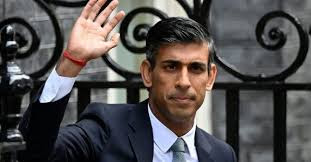
British PM Sunak extends support to Ukraine

British Prime Minister Rishi Sunak on Tuesday extended his support for Ukraine at the G20 summit while confirming a long-planned order for warships from BAE Systems.

The announcements come as Britain prepares for a budget on November 17, 2022 in which the government will lay out spending cuts and tax rises.

Russian President Vladimir Putin's regime would hear the chorus of global opposition to its actions, Sunak said.

"Russia's actions put all of us at risk," he said at the summit in Bali, Indonesia. "As we give the Ukrainian people the support they need, we are also harnessing the breadth and depth of UK expertise to protect ourselves and our allies."

Sunak also announced a 4.2 billion pound (US$4.94 billion) contract to BAE Systems to build five ships for the Royal Navy, a government statement said.

This contract, in addition to the three ships already under construction, comes as the next phase in the Type 26 frigate program and all the eight of the Type 26 frigates are expected to be completed by the mid-2030s, the statement said.

The British government has planned to build a total of eight Type 26s since 2015, when it cut the program from 13 ships.

Ships of the class will be advanced warships to be used in anti-submarine warfare to protect the British nuclear deterrent at sea, according to the government.

The prime minister and fellow leaders would stress at this week's meeting that Russia's role in the international system would never be normalized while the war in Ukraine continued, the statement added.

Sunak arrived at the summit in Bali, Indonesia, on Monday for a meeting that Russian Foreign Minister Sergei Lavrov will also attend.

In support to Ukraine, Britain said last week it would soon complete delivery of 1,000 additional surface-to-air missiles to the Ukraine's armed forces. Britain also announced delivery of a further 12,000 sleeping kits for extreme cold weather.


Monday, 14 November 2022

United States shuns Iran nuclear talks

Iran's crackdown on protesters and the sale of drones to Russia have turned the United States focus away from reviving a nuclear deal, Washington's special envoy for Iran said.

Speaking to reporters in Paris, Robert Malley insisted that the United States would leave the door open to resume diplomacy when and if the time came, but for now Washington would continue a policy of sanctions and pressure.

Talks to revive a 2015 accord between Iran and world powers have been at a stalemate since September. 

Western states accuse Iran of making unreasonable demands after all sides appeared to be nearing a deal.

"If these negotiations are not happening, it's because of Iran's position and everything that has happened since September," Malley said.

"Our focus is not an accord that isn't moving forward, but what is happening in Iran ... this popular movement and the brutal crackdown of the regime against protesters. It's the sale of armed drones by Iran to Russia ... and the liberation of our hostages," he said referring to three American nationals held in Iran.

Anti-government protests broke out in September over the death of 22-year-old Mahsa Amini while she was in police custody. The European Union, the United States, Canada and Britain have imposed sanctions over human rights abuses in Iran as well as for its drone sales to Moscow.

Iran has continued its nuclear program, installing hundreds more advanced centrifuges. The machines enrich uranium, increasing the country's ability to enrich well beyond the limits set by the 2015 deal. Iran began breaching those terms in 2019 in response to a US withdrawal in 2018 under then-President Donald Trump.

The 2015 agreement limited Iran’s uranium enrichment activity to make it harder for Tehran to develop nuclear arms, in return for lifting international sanctions. Iran denies wanting to acquire nuclear weapons.

Malley declined to give a timeframe on how long Washington would accept the status quo, but said if diplomacy failed the United States was ready to use other tools.

"If Iran takes the initiative to cross new thresholds in its nuclear program, then obviously the response will be different and coordinated with our European allies," Malley said, without elaborating.

"There is no magic in which we will find a new formula." Diplomats said Malley would hold talks in Paris with French, German and British counterparts on Tuesday.


Iran Emerging Regional Transit Hub

For thousands of years, Iran has been an important route for the transit of foreign goods due to its geopolitical position. The country played a significant role in transporting commodities from west to east as one of the main stations along the ancient Silk Road.

In the modern day, this huge capacity became dormant due to war, political conflicts, and sanctions and consequently lack of infrastructure. Now the global conditions are changing in Iran’s favor and new opportunities have appeared on the horizon.

The Ukraine war, despite its grave consequences for many countries, has presented Iran with a golden opportunity to realize the long-awaited goal of becoming the global transit hub it once was.

The row between Europe and Russia over the Ukraine war, which resulted in harsh sanctions being imposed on the country, cornered the Russian government economically and many European countries closed their borders on Russian goods making it very hard for its traders to be able to access their destination markets. As a result, the country started looking for new ways for distributing its goods across the world, especially in Asia and the International North-South Transit Corridor (INSTC) once again came under the spotlight.

The agreement for launching INSTC was signed by Iran, India, and Russia in 2000. Despite all the interest and hype, the attention to the route faded due to geopolitical hurdles including the global economic stagnation, the US sanctions on Iran, the conflict in Karabakh, and the pandemic.

Now the multi-modal network of ships, rail, and roads is once again gaining its importance, as the most important trade link between Asia and Europe.

According to official data, one of the major advantages of this transportation route is that the cost of transporting goods through this corridor is 30% cheaper. It also halves the time it takes to transport Indian goods to Russia via the Suez Canal.

Iran can use this transit route to distribute European commodities in the shortest possible time and at a lower cost than other routes to the Indian Ocean and the Persian Gulf.

It is predicted that after the full operation of INSTC, Iran will be able to earn US$20 billion in transit profits annually, something helping it reduce its dependence on oil revenues amid the American ban on the sector.

Iran has been taking serious measures for the development of its railway network as well as its ports and shipping infrastructure in order to encourage more countries to join the project.

Using the capacities of INSTC, Iran will be able not only to expand the volume of trade with Russia and the countries of the region; it can also gain a huge share of the mentioned countries’ annual transit.

Currently, Russia has proposed to take part in some railway projects in Iran in order to accelerate the development of the Islamic Republic’s railway network along the mentioned route.

Last week, Igor Yevgenyevich Levitin, aide to the president of the Russian Federation, visited Iran on top of a high-ranking delegation to meet with Iranian Transport and Urban Development Minister Rostam Qasemi and discuss the expansion of transport ties.

According to the Iranian Transport Ministry, Levitin was tasked by Russian President Vladimir Putin to take the necessary measures for the implementation of Iran’s Rasht-Astara railway and the signaling of the country’s Incheh Borun-Garmsar railway line (both of which are along the INSTC route).

Besides linking India to Europe via this corridor, Iran can connect Central Asia to the Indian Ocean and the Persian Gulf. Landlocked countries in Central Asia can use the corridor's railway to access the high seas. Over time, Iran's place in the corridor would become known to all.

Kazakhstan, Turkmenistan, Turkey, Iraq, and Afghanistan have also shown interest in joining the huge project by linking their railways to that of Iran.

Earlier this month, Kazakhstan reached an agreement with the Islamic Republic of Iran for using the country’s rail network and the southern Shahid Rajaee Port for transiting goods to the Central Asian and Commonwealth of Independent States (CIS) regions.

Iran has also been seeking to join its railway with Iraq in order to use the Arab country to facilitate access to the Syrian market, this way Syria can also be somehow linked to the INSTC.

The rail and sea route can also join the Chinese Road and Belt project, which seeks to revive the ancient Silk Road. As one of Iran’s major trade partners China has also shifted to Central Asia and the Caspian Sea to transit its goods to Europe after the eruption of the Ukraine crisis and Iran could play a significant role in delivering Chinese goods to their destinations.

The current international conditions have presented Iran with a proper opportunity to play a bold role in the broader implementation of the INSTC and to transform into a regional trade hub by developing its rail and transit infrastructure.

Given the lower costs and shorter time of trade via this route, Iran can become the main trade link between Asia and Europe and effectively neutralize the US measures aimed to isolate Iran from the global economy.


Sunday, 13 November 2022

Disconnect in US foreign policy

The Ukraine war is just one symptom of a bigger disease. The war in Ukraine began with the 2014 US-backed coup d’état in Kiev and the weaponzing by the United States and NATO of an anti-Russian regime over eight years.

Absurd disconnect in US foreign policy, extraordinary provocations toward Russia, the scam of nuclear weapons and US military defense doctrine, and the stunning hubris of American national myth-making propaganda invoking a God-given right to control the world. This is the scope of US problems that threaten world peace.

Former Marine Corps intelligence officer Scott Ritter served as a United Nations weapons inspector in Iraq during the 1990s following the First Gulf War. He controversially challenged the official US and British narrative back then claiming Iraq had weapons of mass destruction.

Those claims were later exposed as lies and fabrications but they were used to launch the Second Gulf War in 2003. A criminal war with massive repercussions that still haunts today.

In this interview, Ritter calls out the absurdity of the United States voicing concerns about the danger of nuclear conflict with Russia while at the same time fueling a war in Ukraine on Russia’s doorstep.

“One has to question who is the power seeking to turn this into a nuclear conflict. Because I don’t think it is Russia.”

He says the US has abandoned diplomacy and respect for other nations. “We view Russia as a defeated enemy from the Cold War… we want to dictate to Russia” and others.

Ritter compares the Cuban Missile Crisis in 1962 and the present tensions and dangers between the United States and Russia. He says it’s like comparing a knife fight with a machine-gun battle in the present. “We had a handful of nukes back then which would have destroyed cities. We now have nation-destroying nuclear arsenals that would end the planet”.

Ritter says the US leadership no longer fears or respects Russia as the John F Kennedy administration and previous administrations did. The stunning hubris in Washington makes the danger of war spinning out of control.

He also calls out the policy of ambiguity about under what circumstances the US would use nuclear weapons as a form of terroristic behavior.

Unlike Russia or China, the US deliberately refuses to adopt a sole-use purpose for defense and deterrence. This preemptive-use option is a form of blackmail on the rest of the world. Ultimately, the logic being used is, “Do what we say or we’ll nuke you”.

Ritter says a major structural problem is the money-making scam of the US nuclear and military-industrial complex where American politicians are bought and paid for to lobby for military profits; and therefore never adopt a more sane, peace-making and democratic policy in the interests of the majority of American citizens.

If the United States were to align its policy with that of Russia and China, that is, to adopt a sole-use purpose of defense then that would transform international relations, lower tensions and make eventual disarmament possible.

Ironically the United States is a hostage of its own nuclear blackmail against the world. It can’t adopt a saner, peaceful policy because of the propaganda narrative of depicting the world as full of enemies and because of the vested interests of the military-industrial complex and its politicians in Washington.

Ritter warns that America has to shed its supremacist thinking in the same way it has struggled for generations to overcome systematic racist attitudes. “Until we stop viewing ourselves as the exceptional people and start viewing ourselves as just another person, there isn’t going to be peace and harmony in the world.”

IRISL sets up offices in India

The Islamic Republic of Iran Shipping Lines (IRISL) has opened representative offices in various regions of India in order to facilitate shipping activities along the International North-South Transit Corridor (INSTC), Mehr News Agency reported.

Transit Trade

As reported, IRISL will ship India’s export products that have been transported from the east via railway to the western ports of the country, to deliver them to Russia and Commonwealth of Independent States (CIS) markets.

Considering that the Indian government and businessmen are very interested in developing business activities with Russia, CIS and Iran through the INSTC, the Islamic Republic of Iran Shipping Lines has launched regular container shipping lines from the western ports of India to the southern ports of Iran.

In the meantime, executive and marketing measures have been also taken to strengthen and develop cooperation with the Indian sides to transport the country's export and import goods to Russia and the CIS markets.

IRISL has taken effective steps in recent months to strengthen its shipping activity along the North-South corridor by managing the Russian port of Solyanka on the shores of the Caspian Sea as well as making huge investments in developing this port.

In early April, IRISL formed an operational working group for the development of transportation along INSTC and the company allocated 300 vessels to the transportation of goods through this corridor.

Currently, most of the commodities that are transported through Iran along the INSTC are shipments from Russia for India.

To be transited through the north-south corridor, cargos enter northern Iranian ports on the Caspian Sea shores and then transferred by road to the southern ports of the country on the Persian Gulf. From there they are loaded onto a ship and sent to their destinations in East Asia.

Trade between Iran and India

The value of Iran’s export to India increased by 40% in the first eight months of 2022 as compared to the same period in 2021, IRNA reported citing the data released by the Indian Ministry of Commerce and Industry.

As reported, Iran exported commodities worth US$407 million to India in the eight-month period of this year as compared to US$290 million in the same period.

Petroleum products and fruits were the major products Iran exported to India. Iran exported US$102 million worth of petroleum products and US$101 million of fruits to India.

During January-August of the present year, India’s export to Iran also increased by 56% to US$1.384 billion, while the figure was US$886 million in the first eight months of 2021.

Rice and tea were India’s major products exported to Iran, these included US$913 million worth of rice and US$63 million worth of tea to the Islamic Republic.

According to the Indian Ministry of Commerce and Industry, the value of trade between Iran and India was reported at US$1.791 billion during January-August 2022, rising 52% from US$1.176 billion.

Based on the mentioned data, India's imports from Iran in August doubled compared to the same month in 2021 reaching US$46 million. India imported US$23 million worth of goods from Iran last August.

Indian exports to Iran in August 2022 also increased by 80% to US$141 million from US$78 million in August 2021.

In late May, Iranian Ambassador to India Ali Chegeni said that Iran and India are trying to diversify the channels of payments to expand bilateral trade.

In an exclusive interview with Financial Express Online, Chegeni said, “We are trying to diversify the channels of payments and accordingly wish to extend and expand an already existing mechanism in order to cover all of the goods and services including all of the non-oil goods and to achieve this”.

“During the past two years, because of Covid restrictions, we pursue the issue via virtual dialogues and currently, our officials are following the matter through the exchange of delegations”, the envoy stated.

“We want to develop our economic and trade relations beyond energy and petrochemical products. Due to the complementarities of Iran and India's economies, an extensive range of non-oil trade exists between the two sides including trade on goods and services, investment, tourism, education, and … which may pave the way for multiplying our economic relations ten times more than current relations in mid and long terms”, Chegeni said.