Monday, 17 March 2025

Houthis ban US vessels from entering Red Sea

According the Seatrade Maritime News, Houthis have banned the entry of the US vessels from navigation of the southern Red Sea, Arabian Sea, and Gulf Aden, and that it will target US Navy ships in response to US airstrikes on Yemen.

US attacks on Yemen on March 15 have claimed 53 lives, according to the Houthis, as US President Trump increased military action to reopen the Red Sea to commercial shipping.

Posting on Truth Social, the US President said, “The Houthis have choked off shipping in one of the most important Waterways of the World, grinding vast swaths of Global Commerce to a halt, and attacking the core principle of Freedom of Navigation upon which International Trade and Commerce depends.”

US Secretary of Defense Pete Hegseth said the US would continue to target the Houthis until their threats to shipping were withdrawn.

The White House posted an article listing Houthi attacks on international shipping and their impact on world trade, including the drop in Red Sea and Suez Canal transits.

Ships continue to avoid the southern Red Sea due to the risk of escalation at short notice in the region, although no Houthi attacks on merchant ships have been reported this year.

The announcement of the Houthis’ ‘ban’ on US vessels follows a statement issued by the group last week that it was resuming a ‘ban’ on Israeli vessels in the Red and Arabian Seas, Bab al-Mandeb strait and the Gulf of Aden until Israel allows aid to flow into Gaza.

In January this year, the Houthis lifted its ‘ban’ on international shipping transiting the Red Sea as the ceasefire between Israel and Hamas progressed, but warned that aggression against its forces in Yemen by the US or Britain would make the nations’ vessels subject to attack once again.

A further signal of progress was seen in January when the crew of car carrier Galaxy Leader were released after 14 months in Houthis captivity.

The US strikes and Houthi response are in line with expectations when the Israel-Hamas ceasefire was announced - security experts said at the time that the region remained volatile, the ceasefire was fragile, escalation could happen quickly, and Israeli, US and UK ships were particularly at threat.

Since November 2023, there have been 112 incidents recorded in the Red Sea and Gulf of Aden, including six serious incidents, 42 minor incidents, 46 attempted attacks, and four hijackings, according to the Joint Maritime Information Centre (JMIC).

Four mariners have been killed and two seriously injured in Houthi attacks on merchant ships.


Sunday, 16 March 2025

Who is the terrorist: United States or Yemen?

According to media reports, the death toll from Saturday night’s joint airstrikes by United Stat and Britain on multiple Yemeni cities has risen to 31, with 101 others injured, mostly women and children.

Anis Al-Asbahi, the ministry’s spokesperson stated, “The massacres committed by the US aggression targeting civilian and residential areas in Sanaa, Saada, Al-Bayda, and Rada’a on Saturday resulted in 132 civilian casualties, including 31 martyrs and 101 wounded, mostly children and women.”

He added that the figures remain preliminary, as search efforts continue to recover victims following a series of US airstrikes targeting civilian sites.

Asbahi condemned the attacks, calling them a “full-fledged war crime” and a “blatant violation of all international laws and conventions.”

On Saturday, Yemen had initially reported that 24 people were killed and 23 others wounded in the strikes.

The Yemen had previously warned Israel on March 07 to allow humanitarian aid into Gaza within four days or face renewed maritime operations against Israeli-linked vessels.

The US launched the latest airstrikes on Yemen as President Donald Trump warned that “hell will rain down” if the group continued attacks on Red Sea shipping.

Since late 2023, Yemen has targeted Israeli-linked vessels in the Red Sea using missiles and drones, citing solidarity with Gaza.

The attacks were halted when a Gaza ceasefire was declared in January between Israel and Hamas but later threatened to resume operations when Israel blocked all aid into Gaza on March 02.

Saturday, 15 March 2025

United States: The True Godfather of Terrorism

Once again, Washington plays its old game: accusing others of terrorism while fueling it to serve its interests. US Secretary of State Marco Rubio’s recent statements in Al-Quds with Benjamin Netanyahu are part of a longstanding American policy aimed at hiding its role in destabilizing West Asia through support for terrorist groups.

This isn’t just an accusation from US rivals—it’s a reality acknowledged by American officials. In 2016, Donald Trump declared, “Obama is the founder of ISIS, and Clinton is his co-founder,” a statement backed by evidence.

During the Syrian crisis, the CIA funneled financial and logistical aid to extremist groups under the pretext of supporting “moderate opposition.” Reports from The Washington Post repeatedly exposed this strategy. John Kerry, in a leaked recording, admitted the US allowed ISIS to grow in Syria, hoping to pressure Damascus into concessions.

In 2019, Congresswoman Tulsi Gabbard revealed the US was directly arming al-Qaeda in Syria. Former Senator Richard Black recently reaffirmed this, exposing continued US backing of groups like al-Qaeda and ISIS. United Nations reports over the last decade confirm US support for Jabhat al-Nusra (al-Qaeda’s Syrian branch) via Turkey and Qatar to overthrow Assad.

Rubio talks about Syrian “instability” while ignoring US backing for Abu Mohammed al-Julani, leader of Hay’at Tahrir al-Sham (formerly Jabhat al-Nusra). Once on America’s terrorist list, al-Julani now controls Syria’s northwest with American support, rebranded as a "moderate opposition leader."

US media, like PBS, have even given him a platform, whitewashing his extremist history. A RAND Corporation report exposed that Washington considers him a “potential partner” — a shocking display of double standards. Al-Julani, now known as Ahmad al-Sharaa, orchestrated massacres of over 22,000 Alawites along Syria’s coast. Instead of facing justice, he receives political and media backing from the US, ensuring Syria remains unstable and under Western influence.

Rubio’s remarks can’t be separated from unwavering US support for Israel, which engages in daily state terrorism. Since the latest Gaza aggression began, Israeli forces have killed tens of thousands of civilians, including children, while destroying hospitals and schools — all with Washington’s cover.

The US shields Israel in the UN, using its veto to block resolutions condemning war crimes, making it complicit. Washington labels groups resisting Zionist occupation as “terrorists” while backing extremist factions in Syria, Iraq, and Afghanistan, revealing its hypocrisy.

The US narrative — branding Iran a “terror sponsor” for supporting Palestinian and Lebanese resistance — is bankrupt. Is defending one’s homeland terrorism? Washington’s twisted equation labels those who fight occupation as “terrorists” and those enabling occupation as “defenders of democracy.”

This propaganda no longer fools the world. The Zionist entity’s crimes are broadcast live, and America’s ties to the terrorists it claims to fight are increasingly exposed.

If Rubio seeks the “greatest source of instability,” he needn’t look far — Washington itself fuels terrorism while pretending to oppose it. History won’t forget who created terrorism, nor will people forget who stood for justice and who conspired against them.

US Attack on Yemen May Spark War With Iran

In a dramatic escalation of Middle Eastern tensions, US President Donald Trump has ordered decisive military strikes against Houthi forces in Yemen. He declared that the United States would deploy overwhelming lethal force until its strategic objectives were achieved.

Trump justified the campaign by accusing the Houthis of engaging in piracy, violence, and terrorism against American and allied ships, aircraft, and drones in the region. He vowed that no terrorist group would be allowed to interfere with global shipping routes, asserting that American commercial and naval vessels must sail freely through international waterways without fear of attack.

Western media reports have extensively covered the Houthis’ ongoing attacks on shipping vessels in the Red Sea. It is alleged that the Houthis are backed by Iran. They claim their actions are a direct response to Israel’s military campaign in Gaza. They argue that their attacks are acts of solidarity with Palestinians suffering under Israeli bombardment. The group previously stated they would halt hostilities in the Red Sea if Israel agreed to a ceasefire with Hamas.

Trump’s rhetoric left no room for negotiation. "Support for the Houthi terrorists must end immediately," he declared. "Do not threaten the American people, their President, or worldwide shipping lanes. If you do, beware, because America will hold you fully accountable, and we won’t be nice about it."

His statements signaled a stark warning to regional powers, particularly Iran, which has long been accused of arming and financing the Houthis.

The strikes on Yemen are increasingly viewed not just as an attack on the Houthis, but as the opening of a larger, more dangerous proxy war between the United States and Iran.

While the Houthis themselves are a localized force, their ties to Tehran position them as a key player in the broader struggle for influence across the Middle East.

Iran insists its nuclear program remains peaceful, yet tensions with Washington and its regional ally, Israel, continue to escalate.

Iran’s support for groups like the Houthis, Hezbollah in Lebanon, and various militias in Iraq and Syria are seen by Western powers as efforts to project power and undermine US and Israeli interests.

International condemnation of Israel’s military actions in Gaza continues to grow, with many accusing the country of committing genocide against Palestinians.

The humanitarian crisis in Gaza has fueled anger across the Middle East, amplifying support for groups like the Houthis who present themselves as defenders of the Palestinian cause.

This complex web of conflicts — Israel’s actions in Gaza, Iran’s regional influence, and US intervention — is increasingly pulling global powers into a dangerous confrontation.

Trump’s military stance is not likely to secure shipping routes in the short term, but it risks inflaming an already volatile region.

With Iran’s deep-rooted influence in Yemen and beyond, the US may find itself drawn further into an extended, unpredictable conflict — one with consequences that could reverberate far beyond the Middle East.


China and Russia reject US maximum pressure

Lately, China, Iran, and Russia held talks in Beijing, urging diplomacy over “pressure and threats” and calling for an end to “illegal unilateral sanctions” on Iran.

The meeting, led by deputy foreign ministers from the three nations, comes as China positions itself as a key player in resolving Iran’s nuclear issue.

This follows US President Donald Trump’s statement that Iran faces two options: a deal or military action.

China’s Executive Vice Foreign Minister Ma Zhaoxu emphasized eliminating the root causes of the crisis, rejecting sanctions and force.

The joint statement called for avoiding escalation and fostering a diplomatic resolution. The urgency grows as the UN nuclear watchdog warns of Iran’s expanding uranium stockpile, though Iran maintains its program is peaceful.

Beijing opposes US sanctions and the Trump administration’s “maximum pressure” campaign, which began after the US withdrew from the 2015 Iran nuclear deal — the Joint Comprehensive Plan of Action (JCPOA).

The deal’s looming October deadline could trigger a “snapback” of UN sanctions unless a new agreement is reached.

China, alongside European powers, hopes to salvage the JCPOA or craft a new deal. Trump remains open to negotiation but maintains pressure through sanctions, while Iran’s leadership rejects talks under US duress.

China’s diplomatic push aligns with its goal of emerging as a global leader, especially as Trump’s "America First" policy shifts US foreign strategies. The Beijing meeting also showcased non-Western approaches to global issues.

For Iran, the talks offered a chance to reinforce ties with China and Russia — key allies amid Western sanctions. Tehran and Moscow have deepened cooperation, particularly through military support in Ukraine, while China remains a vital economic and diplomatic partner.

China seeks to balance its relationships across the Middle East, including ties with Saudi Arabia, and mitigate potential risks to its businesses from US pressure on Iran.

Analysts note that China’s limited experience in Middle Eastern diplomacy and Iran’s independent stance could restrict its role as a deal broker. Despite this, China’s efforts signal growing influence and alignment with Russia and Iran against Western pressure.

Trump launches strikes against Houthis

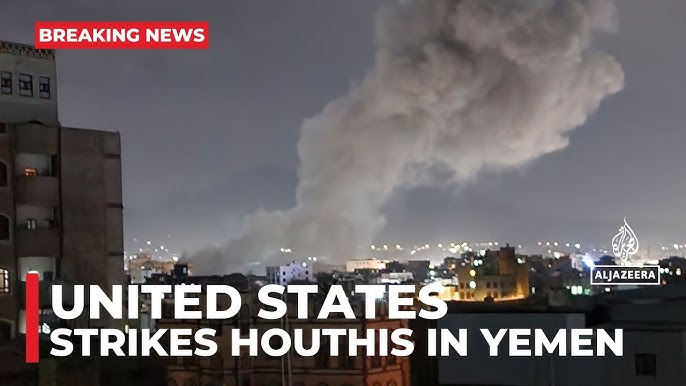
US President Donald Trump launched military strikes against Yemen's Houthis on Saturday over the group's attacks against Red Sea shipping, warning "hell will rain down upon you" if the Houthis do not abandon their campaign, reports Reuters.

Trump also warned Iran, the Houthis' main backer, that it needed to immediately halt support to the group. He said if Iran threatened the United States "America will hold you fully accountable and, we won’t be nice about it!"

At least nine civilians were killed and nine injured in US strikes on Yemen's Sanaa, according to the Houthi-run health ministry.

Residents in Sanaa said the strikes hit a building in a stronghold of the militant Houthi group.

"The explosions were violent and shook the neighborhood like an earthquake. They terrified our women and children," one of the residents, who gave his name as Abdullah Yahia, told Reuters.

The Houthis launched more than 100 attacks targeting shipping from November 2023, saying they were in solidarity with Palestinians over Israel's war with Hamas in Gaza. During that period, the group sank two vessels, seized another and killed at least four seafarers in an offensive that disrupted global shipping, forcing firms to re-route to longer and more expensive journeys around southern Africa.

The previous US administration of President Joe Biden had sought to degrade the Houthis ability to attack vessels off its coast but limited the US actions.

US officials, speaking on condition of anonymity, say Trump has authorized a more aggressive approach, which appeared to match his rhetoric on Saturday.

"The Houthi attack on American vessels will not be tolerated. We will use overwhelming lethal force until we have achieved our objective," Trump wrote.

The attack marks the first strikes to hit Yemen since the Gaza ceasefire deal took effect in January, this year.

It also came a few days after the Houthis said they would resume attacks on Israeli ships passing through the Red and Arabian seas, the Bab al-Mandab Strait and the Gulf of Aden, ending a period of relative calm starting in January with the Gaza ceasefire.


Iranian crude oil meets global standards

National Iranian Oil Company (NIOC) has dismissed claims in some media outlets about the production of low-quality crude, stating that Iran's oil exports meet global standards and urging biased media to prioritize national interests.

According to a report by the Islamic Republic of Iran Broadcasting (IRIB), NIOC emphasized that it consistently prioritizes crude oil quality to maintain its brand and meet the expectations of its customers.

The company stated that refineries—both domestic and international—are the primary consumers of Iranian crude, and maintaining quality is essential, as any decline would disrupt export and transportation operations.

NIOC further noted that during periods of peak production or when output expansion is a policy focus, fluctuations in crude oil’s water and salt content may occur. However, the company stressed that such variations are not a cause for concern and do not impact the global price of Iranian crude.

Iran’s oil exports have risen significantly in recent months, driven by increased shipments to China and other Asian buyers.

According to OPEC’s latest monthly report, the Islamic Republic’s crude oil production increased by 37,000 barrels per day (bpd) in February.

China remains the top destination for Iranian crude, with independent refiners in Shandong province being key buyers.

Iran has also strengthened its energy ties with Russia and Venezuela, engaging in barter trade and joint refining projects to expand its market reach.

Tehran has ramped up oil production while navigating sanctions through intermediaries and alternative payment mechanisms.

The increased output has positioned Iran as a more prominent supplier in global energy markets, with analysts noting that its crude remains competitively priced compared to other West Asian producers.