Tuesday, 11 October 2022

Trump pushes for Russia-Ukraine talks

Former President, Donald Trump has emerged as the most prominent advocate in the United States of negotiations between Ukraine and Russia to broker a cease-fire as hostilities between the two sides ratcheted up over the weekend.

The former president’s public pushes for some kind of truce cuts against the public views of many Republicans, who have backed support for Ukraine in the war, and reflect some of the schisms within the party between Trump and his staunchest defenders and other prominent conservatives.

Trump has used his social media platform, Truth Social, and recent public appearances to broadly criticize the Biden administration’s handling of the war. Trump has not offered many specifics on how he would approach the situation differently, other than to declare Russian President Vladimir Putin would not have invaded if Trump were still in office.

While Biden administration has been adamant that it will not push for negotiations that Ukraine does not support, Trump has been vocal that the two sides should broker a cease-fire, even suggesting at one point that he could be involved in the talks.

“With potentially hundreds of thousands of people dying, we must demand the immediate negotiation of the peaceful end to the war in Ukraine, or we will end up in World War III and there will be nothing left of our planet all because stupid people didn’t have a clue,” Trump told supporters Saturday at a rally in Arizona. “They really don’t understand … what they’re dealing with.

Those comments came days after Trump claimed during a speech in Miami that his relationship with Putin would have prevented the Russian invasion of Ukraine in February.

“You would never in a million years — they wouldn’t be there. So sad,” Trump said at an event organized by the America First Policy Institute. “When I see all these people being killed, it’s got to stop. They’ve got to negotiate a deal. It’s got to stop.”

 “Be strategic, be smart (brilliant!), get a negotiated deal done NOW,” Trump wrote. “Both sides need and want it. The entire World is at stake. I will head up group???”

While it is easy to dismiss Trump’s remarks, he remains a favorite for the GOP presidential nomination, a contest expected to intensify after the midterms. If he doubles down on some of his positions, it could have unpredictable consequences on the politics of arming and aiding Ukraine next year.

One GOP strategist said Trump’s views won’t be a major factor in the midterms for Republicans with domestic issues dominating the campaign. But if Republicans retake majorities in both chambers of Congress, Trump could turn up pressure on lawmakers to adopt some of his rhetoric.

For now, experts believe the former president’s views are not widely shared given public support for Ukraine remains high, and the US and its allies have been unwilling to budge on ceding Ukrainian territory to Russia as part of any negotiation.

“What I can tell you is that Mr. Putin started this war and Mr. Putin could end it today — simply by moving his troops out of the country,” John Kirby, a spokesperson with the National Security Council, said Sunday, adding that Putin has shown “no indications” that he’s willing to sit down and negotiate an end to the war.

Other prominent Republicans have also shied away from direct calls for negotiating an end to the war in the way Trump has, instead focusing on recent missteps by President Biden and reinforcing the need to support Ukraine.

“The destruction today in Kyiv is horrific — allies and partners must get Ukraine the missile defenses and long-range weapons it has asked for,” GOP members of the House Armed Services Committee tweeted Monday. “Arbitrary red lines by the Biden admin that hinder lethal aid shipments will only prolong this conflict.”

Mike Pompeo, who served as Secretary of State under Trump and is viewed as a potential 2024 presidential candidate, focused on “Fox News Sunday” on Biden’s warnings of nuclear “Armageddon,” saying the focus should be on quiet diplomacy and public pressure on Putin.

“America has always pushed back against our adversaries by showing enormous resolve, executing quiet diplomacy in the same way that we did during our time in office,” Pompeo said.

“Making very clear to Vladimir Putin that the costs of him using a nuclear weapon will bring the force of not only the United States and Europe, but the whole world against Vladimir Putin. We ought to be doing that. I hope that they’re doing this quietly.”

Dozens of House Republicans voted against a $39 billion aid package in May. Rep. Madison Cawthorn drew blowback for calling Ukrainian President Volodymyr Zelensky a “thug.”

Eight months after Russia first invaded Ukraine, the war has ratcheted up considerably in recent weeks. Following a series of successful Ukrainian counteroffensives to push back the Russian military, Putin sought to illegally annex four Ukrainian regions and mobilize hundreds of thousands of Russian men into the military.

An explosion over the weekend damaged a critical bridge linking Russia to the occupied Crimean Peninsula that was a key supply chain route and a personal point of pride for Putin. The Russian leader personally drove a truck over the bridge when it opened in 2018.


French call for NATO exit

Thousands of angry French protesters have gathered in the French capital to call for the country’s withdrawal from the US-led NATO military alliance. The protesters have also called for the resignation of the country’s President Emmanuel Macron.

The demonstration reflects similar rallies being held across Europe in opposition to their respective government’s support for the war in Ukraine. The constant supply of arms by mainly NATO members has prolonged the conflict in Eastern Europe, leading to the suffering of civilians caught up in the cross fire.

When Russia expressed legitimate concerns about the NATO military’s eastward expansion toward its border, it opened the door to discussion, negotiation and proposals on security guarantees. However, these were ignored which many critics said, at the time, will lead to a military confrontation that will hurt ordinary Europeans. In this case, Ukrainian civilians are suffering from the human cost and ordinary civilians are falling into poverty.

Russia’s sense of insecurity in the face of the North Atlantic Treaty Organization seemed quite genuine, but critics say the media coverage has dismissed Moscow's initial concerns.

Opposition to NATO has been strong in Europe. The military alliance’s summits are always met with anti-war demonstrations. In June this year, protesters marched during an anti-NATO rally ahead of the summit that was held in Madrid. The organizers said the American-led military alliance is not the solution to the war in Ukraine. US arms manufacturers have made lucrative profits from the war.

Last month, an estimated 70,000 people protested in Prague against the Czech government, calling on the ruling coalition to do more to control soaring energy prices and voicing opposition to the European Union and NATO.

For many years, the Kremlin has made it clear that if NATO continued to mass troops and weapons on the Russian border, the expansion would likely be met with serious resistance by the Russians, even with military action. That view was not just limited to Russian officials. Even some prominent American foreign policy experts backing the same possible scenario. The current director of the CIA, William Burns, has been warning about the provocation and consequences of NATO’s expansion on Russia for more than 20 years now.  

On the other hand, Europe’s decision to cave into American pressure and impose unprecedented sanctions on Moscow has heavily restricted the gas supplies to the continent which have instead pushed energy prices up, leaving many in poverty. Europe relied on 40% of Russian gas before the conflict erupted.

The shortage of energy on the continent and rising prices for the fuel has been met with angry voters bringing down governments at the polling stations.

A recent poll by Elabe reveals that support for anti-Russian sanctions is on the decline across France. The survey shows only 40% of the French population are in favor of the anti-Russian sanctions. The poll also reveals that 32% of French people think the anti-Russia sanctions must be restricted to diminish their effect on the livelihoods of the French people.

The opposition French Patriots party again called for the demonstrations after the initial protests that took place on September 3rd. The protesters want Macron to leave office and withdraw from both NATO and the European Union.

The French government, like others in Europe, is adopting or considering various emergency measures ahead of the winter, such as the possibility of three-hour power outages in the United Kingdom.

As inflation levels are biting, a group of French intellectuals, including Nobel literature prize winner Annie Ernaux, have urged people to join the protests being organized by the left for next week. They accuse President Macron of not doing enough to help the poor cope with high prices while the profits of some companies are spiking.

The group of 69 signatories, including writers, film directors and university teachers, said in a text published in the Journal Du Dimanche that "Emmanuel Macron is using inflation to widen the wealth gap, to boost capital income at the expense of the rest." 

"It is all a matter of political will," said the text, co-signed by Ernaux, who on Thursday became the first French woman to win the Nobel Prize for Literature.

The statement also said the government has not done enough to fight the skyrocketing energy prices and declined to raise taxes on companies making enormous profits as a result of high inflation.

The signatories have also urged the public to join the protest march planned for October 16, which is being organized by the political movement of the France Unbowed party, which this year struck an alliance with more moderate leftwing parties to form France's largest opposition bloc.

Next week’s protest is being promoted as "against the high cost of living and climate inaction". It comes as Macron faces stiff resistance from unions over a planned pensions reform and as strikes by workers demanding a pay rise from retail to refineries have disrupted parts of the economy.

There is more misery for the French government as a number of fuel service stations are grappling with supply problems amid strike action at refineries run by major oil companies TotalEnergies and ExxonMobil. The walkout by members of the national trade union center CGT mainly over pay has disrupted operations at refineries and storage facilities. The industrial action has forced the government to tap into the country’s strategic reserves.

Environment Minister Christophe Bechu earlier told French media the government will, for the time being, not be rationing petrol for drivers or restrict the use of service stations in response to supply problems. "We haven't reached this point yet," Bechu said when asked if the government would impose any national measures beyond the bans already in place in some regions on filling large flat-sided metal containers for storing or transporting petrol.

The strikes at the refineries of ExxonMobil and TotalEnergies will continue, union officials at both companies have said. “It is continuing everywhere,” a CGT representative said, adding that there had been no contact from TotalEnergies since Saturday’s call by the union for the company’s managers to begin talks on pay.

In some areas, the share of affected petrol stations is much higher than the national average. An interactive map compiled by the website mon-essence.fr, where more than 100,000 users have reported outages in recent days, shows a large majority of petrol stations in and around Paris were marked out of service.

Across France, long queues have been seen outside fuel stations. "The waiting line will take you at least one-and-a-half hours or two", motorist Jean Galibert said as he entered the last stretch of a 700-metre tailback in front of a Paris service station. Another motorist, Franck Chang, said, "This situation right behind me reflects the state of France. We're struggling."

Reports say the strikes have reduced France's total refinery output by more than 60% which will be seen as another blow to the French government. On Sunday, TotalEnergies claimed to have offered to bring forward wage talks, in response to union demands, as it strongly seeks to end the industrial action that has disrupted supplies to almost a third of French petrol stations.

Amid warnings that energy shortages and rising inflation are set to extend in coming winter, further protests and anger at governments’ economic policies across Europe are expected to expand.


Monday, 10 October 2022

Young Americans turning against Israel

A new extensive research has revealed American public views toward Washington’s foreign policy with the majority of younger American opposing Washington's arms sales to the Israeli regime. The study also reveals massive support among the Americans toward a return to the Iran nuclear deal.

The survey conducted by the Eurasia Group Foundation suggests that the younger American generation is becoming politically more aware of Israeli atrocities and the insecurity it brings to West Asia. The majority of those surveyed (18-29 years old) disapprove the ongoing arms assistance to Israel. Albeit Americans of older age groups (above 60 years of age) are more supportive of the US military assistance to the occupying regime.

The United States provides Israel with some US$4 billion in annual military aid. That makes the regime the largest recipient of American military aid. However, the money comes from the pockets of American taxpayers, many of whom are not aware that their money is funding genocide and ethnic cleansing of the indigenous people of Palestine. 

Nearly 80% support the Biden administration negotiating a return to the Iran nuclear deal. There has been strong regional and international debate over how much ordinary Americans support their government's military assistance to authoritarian, occupying, apartheid regimes and dictatorships. Washington regularly claims security reasons for the assistance it provides but very few buy this argument. 

Mark Hannah, a senior fellow at Eurasia Group Foundation said, "We began this survey five years ago because we believed lawmakers and foreign policy leaders conducting foreign policy on behalf of the American people would benefit from a window into their opinions and priorities." 

Hannah expressed hope, "Those inside the Beltway use this survey to make the activities they pursue more sensitive to — and informed by — the opinions of their constituents, and to bridge the gap between the concerns of policymakers and those of ordinary Americans."

Just last month, the US aviation giant Boeing revealed that it will be providing the Israeli regime with four Boeing refueling military aircrafts in the coming years as part of the free military aid it receives from Washington.

The contract between Boeing and the US Defense Department is to the tune US$927 million for the four KC-46A aircraft. In essence, that means the US taxpayer will pay the price by footing the bill of US$927 million. Boeing will make a considerable profit and the regime will find more opportunities to create regional instability.

The Israeli war minister, Benny Gantz said, "This is yet another testament to the powerful alliance and strategic ties between the defense establishments and governments of Israel and the United States."

As per the norm the war minister and other regime’s officials alongside their counterparts in Washington cite Iran as the pretext for the massive military aid budget. 

US military aid to Israel has mostly bipartisan backing in Congress and continues to be approved by a majority of lawmakers each year.

The University of Maryland found less than one percent of respondents viewed Israel as one of Washington's top two allies. Over the years there have been other polls that reflect the findings by the Eurasia Group Foundation. Earlier this year, a Pew Research poll also showed critical views toward Israel among younger Americans - respondents (under 30 years of age) 61% of this age group had favorable views of the Palestinian people.

Also this year, the University of Maryland found less than one percent of respondents viewed Israel as one of Washington's top two allies.

Zuri Linetsky, a research fellow at EGF, told Middle East Eye, "We asked the question about ranking why you would stop selling [arms] and specifically respondents who were against selling arms to Israel said that it violates human rights through its enduring occupation of Palestine. So that resonates with people."

The latest poll also shows American opposition to the ongoing US arms sales to Saudi Arabia, with nearly 70% of respondents disapproving the massive sale of US weapons to Riyadh. Saudi Arabia has used Western-supplied weapons, especially Americans, to level Yemeni infrastructure to the ground.

This is despite growing concern among rights groups that more arms sales to countries, such as Saudi Arabia bombing Yemen or Israel attacking other nations, continue to be approved by the Biden administration. In August, President Biden approved a massive US$5 billion weapons sale to Saudi Arabia and the UAE for missile technology.

The study also shows how respondents are in favor of curbing US military adventurism overseas and the increasing support of more efforts by the US administration towards diplomacy, even with American adversaries.

Among the top takeaways of the Eurasia Group Foundation findings in the West Asia region are:

On the Iran Nuclear Deal:

Regardless of the partisan leanings, Democrat or Republican, most Americans are in favor of negotiations with Iran. Nearly 80% support the Biden administration negotiating a return to the Iran nuclear deal. That support is notably bipartisan; more than 70% of Republicans believed the US should continue to pursue these negotiations.

"We found that there are vocal critics on both sides of the political aisle in Congress, against pursuing an agreement with Iran, but those views don't necessarily reflect what we're finding amongst the survey respondents," Lucas Robinson, an external relations associate at the foundation, told MEE.

The Biden administration has continued with his predecessor's policies on Iran; the so-called maximum pressure campaign that have led to the death of children with rare diseases and cancer patients alongside a whole range of other humanitarian issues that have hurt ordinary Iranian people.

On War Powers:

Roughly 80% believe the president's war-making abilities should be more restricted by Congress, representing a consecutive two-year increase. The US has waged numerous invasions of countries, most notably Afghanistan and Iraq. It continues to occupy parts of West Asia illegally and is invoked in secret military programs without the consent of Congress. 

On Afghanistan:

Nearly two-thirds of respondents think the most important lesson from the war in Afghanistan was that the United States should not be in the business of nation-building or that it should only send troops into harm's way if vital national interests are threatened.

With regards to the issue of nuclear weapons, nearly 75% are concerned with nuclear weapons. Respondents who have served or are currently serving in the military are significantly less concerned than those without military experience.

"For the vast majority of the 21st century, the United States has been involved in conflicts and in far-flung parts of the world. So the question is, is this what the American people want? Does this represent their interests?" Linetsky asks.

"This is very much a test to see where people who take surveys fall down on what American policy is towards the world and what they think their leaders' priorities should be, be they international or domestic."

The White House is at odds with most respondents - a diverse group of Americans across the country from different religions, political affiliations, age groups and income levels.

The foundation surveyed more than 2,000 voting-age Americans online with detailed questions about US foreign policy and America's global role.


Gold losing glitter

Gold is losing its shine. The precious metal, whose price neared a record high at the onset of the war in Ukraine, has come back to earth in the second half of the year after a string of US interest rate increases and a surge in the value of the dollar.

Benchmark gold futures prices in New York are at US$1,729 per ounce as of early October, down 15% from early March. At one point in late September the benchmark fell to US$1,626, the lowest since April 2020.

Gold's strength early in the year was a reflection of its reputation as a haven in times of insecurity. But its subsequent fall is exposing the close inverse relationship between demand for gold and dollar strength.

The fall in gold prices came on the back of accelerating US interest rate hikes. In September, the Federal Reserve raised the benchmark rate by 75 basis points (0.75%) for the third consecutive time. Since March, Fed has raised rates five times to tame inflation. 

The dollar index -- which measures the US dollar's strength against a basket of six influential currencies such as the euro -- soared to 114 in late September, hitting the highest in two decades. A strong dollar weighs on gold, as the yellow metal is often described as a "stateless currency" that investors buy when there is little trust in traditional currencies.

Furthermore, since gold earns no return for its owner, higher interest rates increase the incentive to switch from holding gold to holding dollars.

The Fed is expected to maintain its hawkish approach this year amid continued inflation. In August, the US Consumer Price Index registered an 8.3% increase compared to the same month last year, up from a market consensus of an 8% increase. In the September meeting, the Fed increased its year-end rate forecast to 4.4%, from the 3.4% it had previously expected in the June meeting.

Despite the headwinds for gold in the short term, analysts say the current price level is at the lower end and forecast a rebound next year. 

Itsuo Toshima, a Japan-based financial market analyst for Toshima & Associates, expects gold to range between US$1,800 and US$2,200 per ounce next year. "Amid persistent inflation, investors will soon start fretting over stagflation," said Toshima. He argued that even though inflation can somewhat be tamed, there is a limitation because some costs, such as rent, are unlikely to fall immediately.

Toshima expects the currently strong dollar to peak this year, as it lacks additional bullish factors for next year. "When there are no more bullish factors to strengthen the dollar further, the dollar index will reverse course to fall sharply," he added. 

Internationally, Citi is broadly bullish on gold, expecting prices to rebound above US$1,900 by mid-2023. Goldman Sachs in August forecast gold prices 12 months later at US$1,950. 

Amid continued uncertainty over geopolitical risks and the Ukraine war, gold market analyst Koichiro Kamei at Tokyo's Market Strategy Institute argues that there will be stable gold demand. The sharp fall in cryptocurrencies such as bitcoin on the back of US monetary tightening was alarming for investors, whereas gold prices remained relatively firm, Kamei added. 

The direction of gold prices is being closely watched in India and China, where demand for purchases of physical gold is traditionally strong. The two countries jointly account for around 60% of global demand for gold jewelry, bars and coins.

Ahead of Diwali, one of Hinduism's most popular festival seasons, which falls in October, demand for gold jewelry, bars and coins is expected to increase. The wedding season also comes between November and February, during which gold jewelry sells well. Analysts say despite the headwinds of a weak rupee, traditional demand for gold will still be strong. Gold prices are around 139,000 rupees per ounce as of early October, up 1.2% from three months ago, while gold prices in dollars fell 3% over the same period.

In China, the depreciation of the yuan is acting as a headwind for retail investors. In late September, the yuan plunged to the lowest level against the dollar since 2008. According to the World Gold Council, gold prices in yuan are 4% higher compared with three month ago.

Still, consumer demand for physical gold has little impact on international bullion prices, analysts say. The bigger determinant is how investors manage funds in the gold futures market while taking interest rates and the global economic outlook into account. 

Tatsufumi Okoshi, senior economist at Nomura Securities, expects the Fed to start cutting rates in September next year, a tailwind for the yellow metal, which yields no interest. "As fears over recession loom over and demand for safe-haven assets continues, we will see gold bounce back," said Okoshi.


Sunday, 9 October 2022

OPEC Plus production cut decision attracts opposite reactions

US Treasury Secretary Janet Yellen said a decision by the OPEC Plus to cut oil production was unhelpful and unwise for the global economy, especially emerging markets, the Financial Times quoted on Sunday.

"We're very worried about developing countries and the problems they face," Yellen told the newspaper in an interview.

As against this, Kremlin praised OPEC Plus for agreeing production cuts that had successfully countered the ‘mayhem’ sown by the United States in global energy markets.

The OPEC Plus decision to cut oil production despite stiff US opposition has further strained already tense relations between President Joe Biden and Saudi royal family, Reuters reported on Saturday.

The White House pushed hard to prevent the output cut. Biden hopes to keep US gasoline prices from spiking again ahead of midterm elections in which his Democratic party is struggling to maintain control of the US Congress.

Kremlin spokesman Dmitry Peskov said it was very good that such balanced, thoughtful and planned work of the countries, which take a responsible position within OPEC, is opposed to the actions of the United States.

"This at least balances the mayhem that the Americans are causing," Peskov said, according to Russian news agencies.

Peskov said that the United States had begun to lose its composure over the OPEC decision and was even trying to push additional volumes of its reserves into the market.

"They are trying to manipulate with their oil reserves by throwing additional volumes into the market. Such a game will not lead to anything good," Peskov said.

The worry for those tracking Europe's energy transition commitments is that these accumulated costs of LNG imports, alongside other expenses already incurred, drain both the funds available for de-carbonization projects and the level of ambition of the governments responsible for them.

There's an irony in that this potential diminished firepower comes when the appetite in society and government for weaning Europe off fossil fuels has likely never been greater.

But funding has always been a critical component of every energy transition plan, and the reality is that if government and commercial budgets have already been drained by imports of fossil fuels to keep the economy going, there may be little left in the kitty to finance the transition to a greener energy system.


Iran State run live TV hacked by protesters

According to a BBC report, Iran’s state-run broadcaster was apparently hacked on air Saturday, with a news bulletin interrupted by a protest against the country’s leader. A mask appeared on the screen, followed by an image of Supreme Leader Ali Khamenei with flames around him. The group called itself “Adalat Ali”, or Ali’s Justice.

It comes after at least three people were shot dead when protesters clashed with security forces in new unrest over the death of Mahsa Amini. She was detained in Tehran by morality police for allegedly not covering her hair properly.

The 22-year-old Iranian Kurd died in custody on September 16, 2022, three days after her arrest. Her death has sparked an unprecedented wave of protest across the country.

Saturday’s TV news bulletin at 21:00 (17:30 GMT) was interrupted with images, which included Iran’s supreme leader with a target on his head, photos of Amini and three other women killed in recent protests.

One of the captions read “join us and rise up”, whilst another said “our youths’ blood is dripping off your paws”.

The interruption lasted only a few seconds before being cut off.

Such displays of rebellion against Ayatollah Ali Khamenei are historically rare, and he wields almost complete power within Iran.

But following Amini’s death, there has been widespread open dissent.

Also on Saturday, social media videos emerged which seemed to show female students at a university in Tehran chanting “get lost” during a visit by President Ebrahim Raisi.

Earlier in the day, two people were killed in Sanandaj, including a man shot in his car after he sounded his horn in support of protesters.

A video shared online also showed a woman shot in the neck lying unconscious on the ground in Mashhad.

In Sanandaj, a police official said a man had been killed by “counter-revolutionaries”, the state-run news agency IRNA reported.

On Friday, Iran’s Forensic Medicine Organization said Amini had died from multiple organ failure caused by cerebral hypoxia — and not from blows to the head, as her family and protesters contend.

Rights groups say more than 150 people have been killed since the protests in the Islamic Republic began on September 17.

Shops in several cities have shut in support of the protesters, including in Tehran’s bazaar where some set fire to a police kiosk and chased the security forces away.

The protests reaching the bazaar in Tehran will ring alarm bells with Iranian leaders who have counted the merchants as among their supporters.

Saturday, 8 October 2022

Bridge linking Russia and Crimea damaged

The bridge, commonly known as Crimean Bridge was built by Russia after it declared Crimea to be Russian territory in 2014. Russia uses it to move military equipment, ammunition, and personnel from Russia to battlefields in southern Ukraine. The bridge is particularly hated by Ukrainians as it is seen as a symbol of Russian occupation. However, Ukraine has not accepted responsibility of attack on the bridge.

Russian authorities said that a massive explosion involving a truck on Saturday caused a fire and destroyed a section of a bridge linking Russia and Crimea, killing at least three people. The bridge is regarded as a key supply route for Russian troops in southern Ukraine.

The Crimean Bridge, a US$3.69 billion (230 billion rubles) project, was constructed following the annexation of Crimea. Russia opened the first part of the span to car traffic in May 2018. The parallel bridge for rail traffic opened the following year. Before the bridge’s existence, the Crimean Peninsula could only be reached from Russia by sea or air.

The Crimean Bridge—also called Kerch Strait Bridge or Kerch Bridge—is a structure 19 kilometers (12 miles) in length that passes across the Kerch Strait and links southern Russia to the Crimean Peninsula. The Kerch Strait links the Black Sea and the Sea of Azov.

A truck exploded on the bridge. Russia’s National Anti-Terrorism Committee announced that the explosion caused a fire on the parallel rail section, where seven railway cars carrying fuel caught fire. The blast also caused a “partial collapse of two sections of the bridge.”

The Russian Investigative Committee said in a statement that the incident killed at least three people, “presumably the passengers of a car that was driving by the truck that exploded on the bridge.”

‘The bodies of a woman and a man were recovered from the water, their identities are being established,” the statement reads, according to Russian state-owned news agency TASS.

The Crimean Peninsula is the key to sustaining Russia’s military operations in the south. If the bridge is made inoperable, it would make it significantly more challenging to ferry supplies to the peninsula. While Russia seized the areas north of Crimea early during the invasion and built a land corridor to it along the Sea of Azov, Ukraine is pressing a counteroffensive to reclaim them.

The explosion on the Crimean Bridge took place hours after multiple explosions early Saturday hit the eastern Ukrainian city of Kharkiv, which triggered a series of secondary explosions.

While no one has yet to explicitly claim public responsibility for the attack, Ukrainian President Volodymyr Zelenskyy’s aide, Mikhail Podoliak, posted on Twitter saying the explosion is “the beginning.”

Podoliak previously in August threatened the bridge, telling The Guardian that the bridge is “an illegal construction and the main gateway to supply the Russian army in Crimea” and that “such objects should be destroyed.”

Armageddon Warning by Joe Biden, Desperation or Insanity

This morning I posted a blog, who is the Biggest Satan? Within few hours I am obliged to share President Joe Biden’s warning about the possibility of ‘Armageddon’. Over the last eight months, I have been saying that in this proxy war Ukrainians are the biggest losers. One point is sure that the US considers Putin a ‘bad guy’ and all US policies seem to be touching insanity.  

President Joe Biden’s warning about the possibility of ‘Armageddon’ rumbling from the battlefields of Ukraine has scrambled an already complicated picture in the eight-month conflict. He raised this warning during a recent appearance at a Democratic fundraiser. 

But White House press secretary Karine Jean-Pierre, asked Friday if there were any new intelligence assessments that had caused Biden to “ratchet up the level of concern,” responded, “No.”

Jean-Pierre sought to cast the president’s words as a general warning about the dangers of an escalation and as a riposte to Russian President Vladimir Putin’s saber-rattling — not as an actual prediction that there would be a nuclear attack.

“We have not seen any reason to adjust our own strategic nuclear posture, nor do we have indications that Russia is preparing to imminently use nuclear weapons,” the press secretary told reporters on board a short Air Force One flight to Hagerstown.

The debate over Biden’s comments is in many ways a classic Washington back-and-forth, focused on the question of whether the president’s words were out of whack with intelligence assessments and whether the White House will now have to walk them back.

Ukraine has made startling gains against Russian forces in recent weeks, taking back enormous swathes of territory that Putin’s troops once held. Ukrainian President, Volodymyr Zelensky claimed late Thursday night that his forces had liberated more than 500 square kilometers of territory since the beginning of this month alone, after having run up much bigger gains throughout September.

But the Ukrainian gains have had the grimly ironic effect of making Putin more desperate— and more willing to countenance the kinds of tactics that have not previously been used since the Kremlin launched the invasion in February.

In a speech last week, Putain said that the United States had created a “precedent” for the use of nuclear weapons by its atomic bomb attacks on the Japanese cities of Hiroshima and Nagasaki during the Second World War.

The idea that Putin might use nuclear weapons causes outrage for obvious reasons. But it has also stirred discussion as to what the United States and its allies might do in response.

The Biden administration has been adamant that it will not put American boots on the ground in Ukraine, even as it backs Kyiv with billions of dollars in military aid. 

National security adviser Jake Sullivan said last month that the US had warned Russia that there would be “catastrophic” consequences in the event of such a move.

But it’s simply not clear what those consequences might be. Experts advance various different ideas, most of which stop short of a direct American military attack.

“I would expect NATO would respond through the Ukrainians,” said Robert Wilkie, who served as Under Secretary of Defense during the Trump administration and is now a distinguished national security fellow at the America First Policy Institute. 

He suggested this could be done by using weapons supplied by the US and other Western powers to complete the encirclement of Putin’s troops in Crimea — meaning weapons would be used to take out their lines of retreat there, but NATO forces would never touch the ground in Ukraine.”

Joel Rubin, who served as a deputy assistant secretary of State during the Obama administration, cautioned against the idea that the use of nuclear weapons by Putin would necessarily be expected to bring a symmetrical and instant response.

“There is a narrative from some folks that if he uses nukes, we have to use nukes. But there is no winner in a nuclear war — everyone loses,” Rubin said. 

Instead, he suggested, “all options would be available and nuclear would be one of them, but that is not the preferred choice. There would certainly be new moves to completely cut Russia off from every actor on the planet, whereas now China and Saudi Arabia are still giving oxygen to this leader.”

“Maybe that would be enough,” Rubin added of such isolation. “Who knows?”

In some ways, it is the kind of scenario for which Biden is well-prepared. He was steeped in foreign policy throughout his decades in the Senate, including a stretch as Chairman of the Foreign Relations Committee. His career has been long enough to encompass an era when there were real worries about nuclear war with the Soviet Union.

Biden’s handling of the Russian invasion of Ukraine has won a degree of approval even from some ideological opponents, especially regarding his effectiveness in assembling and maintaining an international coalition.

On the other hand, there is a legitimate question of whether he overstepped with the “Armageddon” remark, perhaps raising the very tensions he is seeking to ease.

Wilkie, the Trump administration veteran, called it “very disturbing” that Biden would make such a remark apparently off-the-cuff at a fundraising dinner.

The gravity of the situation, Wilkie argued, “Demands going to the American people and explaining what’s at issue and what’s at stake — instead of these off-script, ‘I’m a tough guy’ moments.”

Friday, 7 October 2022

Who is the Biggest Satan?

I have often written that Saudi Arabia and Iran must end their animosity and find out who is their common enemy. Over the decades United States has brainwashed Saudis by propagating “Iran is a bigger threat as compared to Israel”. I am sure if, Russia, Iran and Saudi Arabia join hands and develop a common currency to trade oil; it could bring US hegemony to an end. I want all my readers to read the following content and find out “The biggest Satan”.

The decision by OPEC Plus nations to reduce oil production is a foreign policy black eye for President Biden after his July visit to Saudi Arabia. It’s also prompting calls from congressional Democrats to rethink the Washington-Riyadh alliance, particularly on the subject of weapons and defense technology sales.  

Human rights advocates have long criticized what is sometimes a rocky relationship between the US and Saudi royals, particularly after the 2018 murder of Washington Post columnist Jamal Khashoggi. 

When Biden met with Saudi Crown Prince Mohammed bin Salman in July, it was viewed by many as a necessary evil that could potentially lead to increased OPEC output and lower gas prices. Since Wednesday’s announcement, a number of Democratic lawmakers have called for the US to respond by ending arms sales and military assistance to the kingdom.

“From unanswered questions about 9/11 and murder of Jamal Khashoggi, to conspiring with Russian President Vladimir Putin to punish the US with higher oil prices, the royal Saudi family has never been a trustworthy ally of our nation. It’s time for our foreign policy to imagine a world without their alliance,” Sen. Dick Durbin, the number two Democrat in the Senate, tweeted Thursday.

Sen. Bernie Sanders, meanwhile, called the cutback “a blatant attempt to increase gas prices at the pump” and called for an end to military assistance to Saudi Arabia. 

On the House side, Reps. Tom Malinowski, Sean Casten and Susan Wild have introduced legislation to withdraw US troops from the kingdom, calling the cutback “a turning point in our relationship with our Gulf partners.” 

Another vocal House critic of the Saudis, Rep. Ro Khanna, has also called for the nation to be dealt with “harshly” and for an end to weapons sales. 

“The Saudis need us more for weapons than we need them. President Biden should make it clear that we will cut off weapons if OPEC Plus doesn’t reverse the decision to make drastic cuts in production,” Khanna said in a statement to The Hill. “In Congress, we should also explore ways to rein in OPEC Plus control over energy prices worldwide.” 

Sen. Bill Cassidy, a vocal critic of Biden’s energy policies, told The Hill that critics of the Saudi government are “upset because having consciously made ourselves dependent upon them, they’re not bending to our will” despite Biden taking office “promising an adversarial relationship.”  

Sarah Leah Whitson, Executive Director of the nonprofit Democracy for the Arab World Now, was skeptical that the cuts would lead to a lasting schism in the relationship. In an interview with The Hill, Whitson said much of the public anger at Saudi Arabia was likely “performative,” but added that “some of it is real, because publicly, this is so humiliating to Biden.”  

Ahead of Biden’s Saudi trip over the summer, the White House was careful to portray the president as not meeting directly with bin Salman, who the intelligence community determined approved Khashoggi’s killing in Istanbul in 2018. But upon arrival in Jeddah in July, Biden was met by bin Salman outside the royal palace where the two men fist-bumped, a casual gesture critics viewed as elevating Salman on the world stage despite Biden’s campaign pledge to make the kingdom a pariah.

American military support for Saudi Arabia dates back to World War II, when President Franklin Roosevelt and King Abdul Aziz reached an agreement under which the US would provide security backing in exchange for access to Saudi oil. In 2015, the Saudis led a coalition to intervene in Yemen’s civil war against Iran-backed Houthi rebels. Over the next four years, US arms sales to the Saudis increased 130 percent, according to data from the Stockholm International Peace Research Institute.  

Biden was a vocal critic of Saudi Arabia on the campaign trail and early in his presidency, pledging to end US backing for the Saudis and the United Arab Emirates in Yemen. However, in August his administration allowed the sale of more than US$5 billion in arms to the two OPEC nations. The administration also caught the ire of Saudi critics by failing to call for an end to its blockade of Yemen. 

In the meantime, Whitson said, despite the calls to sever the business relationship with the Saudis, the American defense industry is likely to stiffly resist any attempts to unwind it. In the meantime, she said, the Saudis would likely find alternate sellers to replace much of the lost arms sales to the US. 

An end to arms sales “is not just a punishment for Saudi Arabia. It’s a punishment for a very powerful defense industry that has extremely close ties to Biden administration,” she said. “So I think there will be countervailing pressures on taking the actions that are being threatened.” 

“The painful reality that we see over and over and over again, is that our policymakers … are not actually in a position to make the decisions that are in the best interests of the American people because they are beholden to so many interests,” she said.  


Israel-Lebanon maritime deal

The Israel-Lebanon maritime deal is in the interests of both countries. The deal can help unlock energy security for both states at a time when the world needs new and secure natural gas supplies.

Israel has much to gain from the current talks, but it does not mean Israel must make a deal at any price. Lebanon appears to be pushing for last-minute changes to a US-backed deal that President Joe Biden’s energy envoy, Amos Hochstein, has worked on for the past year.

Prime Minister Yair Lapid said Israel will not compromise on its security and economic interests. Several entwined issues are at stake.

Israel wants the Karish gas field to begin production, and Energean, which developed the field, is ready to move ahead. 

Hezbollah is openly threatening the field – not only launching drones, but prodding Lebanon to increase rhetoric against Israel’s exploitation of these resources off its coast.

The deal that has been worked on with US support would see Israel receive royalties from gas that Lebanon extracts in the disputed area of the Mediterranean Sea, but Israel would concede a triangle of economic waters. 

Lebanon only recently asserted more claims to these waters. Lebanon also wants to develop a field called Qana that extends into areas Israel claims.

The current deal would preserve a line of buoys that extends some five kilometers off the coast into the sea. 

Then the line would deviate slightly and give Lebanon more of the area it wants. It appears that this would be in the interests of other countries as well, such as France.

Lebanese block 9 of its offshore concessions could lead to exploitation of the Qana field, but Lebanon does not want Israel receiving any share of profits from that field. 

This creates complexity. In the past, it was assumed that trade and economics could underpin peace in the region. Lebanon needs investment, and Hezbollah is busy siphoning off money from the state. 

The upcoming Israeli election also hangs over the current discussions. Opposition leader Benjamin Netanyahu has opposed Lapid’s decisions and has openly said the deal, which he views as surrender to Hezbollah threats, would not bind a new government that he seeks to establish after the November election.

This could create another strange situation in which one Israeli government accepts the deal and the next tears it up, the way the US shifted tactics on the Iran deal. 

This would lead to tensions and accusations that Israel is then crossing the line and give Hezbollah an excuse to resist by firing rockets.


Thursday, 6 October 2022

Israel snubs Lebanese request for changes in maritime deal

Lebanon said US-brokered talks to demarcate its maritime border with longtime foe Israel were at a make or break point on Thursday after Israel rejected revisions to a draft deal requested by Beirut, throwing years of diplomatic efforts into doubt.

The draft, which has not been made public, had a warm preliminary reception from the Israeli and Lebanese governments. But amid domestic opposition in both countries, Lebanon on Tuesday sought amendments from the US envoy.

On Thursday, Israeli Prime Minister Yair Lapid was updated on the details of the substantial changes Lebanon is seeking to make and instructed the negotiating team to reject them, an Israeli official said.

A spokesperson for the US embassy in Jerusalem said the parties were at a critical stage in the negotiations and the gaps have narrowed.

According to Israeli media, a main sticking point was over recognition of a line of demarcation buoys Israel has strung out to sea from its coast. Lebanon worries about any action that may connote formal acceptance of a shared land border.

Lebanon, which has never recognized the state of Israel, with any broader peace deal beyond the horizon - has also said Israel will earn no royalties from the Lebanese share of gas in the Qana prospect.

Top Lebanese negotiator Elias Bou Saab told Reuters on Thursday that he would only respond to official statements and not to media reports on Israel's stance.

He said the deal is 90% done but the remaining 10% could make it or break it, adding that he was in constant contact with US mediator Amos Hochstein.

Israel has been preparing to activate a gas rig, Karish, which is outside Qana. Lebanon's Iran-backed Hezbollah made veiled threats about Karish that lent urgency to the talks.

Israel previously presented the draft deal with Lebanon, if finalized, as securing Karish. But on Thursday, it changed tack.

Israel is now pressing ahead with Karish, regardless of progress or no progress in the talks, whereas before it cast a successful deal as a means of securing Karish.

"Israel will produce gas from the Karish rig as soon as it is possible to do so," the Israeli official said, adding that negotiations will "stop immediately" in the face of any threats.

Defence Minister Benny Gantz further hardened the tone, saying in a speech that "Lebanon will bear a heavy military price" if Hezbollah attacks, and he put forces on alert.


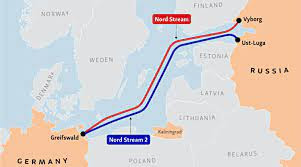
Nord Stream investigation finds evidence of detonations

A crime scene investigation of the Nord Stream 1 and 2 gas pipelines from Russia to Europe has strengthened suspicions of gross sabotage involving detonations, Sweden's Security Service said on Thursday.

Swedish and Danish authorities have been investigating four leaks from the pipelines in Swedish and Danish exclusive economic zones in the Baltic Sea since they were first spotted at the beginning of last week.

Europe, which is a facing an energy crisis is investigating what caused the damage as Moscow seeks to pin the blame on the West, suggesting the United States stood to gain.

Washington denies any involvement as a stand-off between Russia and European countries continues over supplies of gas that have stopped flowing or been put on hold as a result of the conflict in Ukraine.

The Nord Stream operators said this week they were unable to inspect the damaged sections because of restrictions imposed by Danish and Swedish authorities who had cordoned off the area.

"After completing the crime scene investigation, the Swedish Security Service can conclude that there have been detonations at Nord Stream 1 and 2 in the Swedish economic zone," the Swedish Security Service said in a statement.

The security service said there was extensive damage to the gas pipelines and they had retrieved some material from the site that would now be analyzed. The evidence has strengthened the suspicions of gross sabotage, they said.

Sweden's Prosecution Authority said in a separate statement that the area, where gas spewed into the sea for almost a week, was no longer cordoned off.

Russia said on Thursday it had been informed via diplomatic channels that it was not able to join the investigation.

"As of now, there are no plans to ask the Russian side to join investigations," Kremlin spokesman Dmitry Peskov told reporters, adding that Moscow replied it was not possible to conduct an objective investigation without its participation.

Swedish prosecutors had on Monday cordoned off the area of the leaks for a crime scene investigation conducted by the Swedish Coast Guard and Navy.

On Wednesday, Sweden's Justice Minister said in response to the Kremlin that it was not possible to let others take part in a Swedish criminal investigation.

Denmark's Foreign Minister Jeppe Kofod told Reuters on Thursday that his Ministry had not told Russia to stay out of the investigation, but that a police-led taskforce between Denmark, Sweden and Germany was in charge of the investigation.

Maria Zakharova, spokeswoman for the Russian Foreign Ministry, said separately on Thursday that Moscow would insist on a comprehensive and open investigation that includes Russian officials and Gazprom.

"Not to allow the owner (of the pipelines) to witness the investigation means there is something to hide," Zakharova said.


Wednesday, 5 October 2022

Can the US impose sanctions on Saudi Arabia?

The United States is all critical of the latest decision of the OPEC Plus to cut oil production. Interestingly the hike in oil and gas prices is due to the US imposing sanctions on Russia, earlier on Venezuela and Iran. It is feared that out of desperation the US may impose some sanctions on Saudi Arabia, often termed de-fecto leader of oil cartel. I invite all my readers to carefully read a Reuters news dated May 05, 2022.

According to the details, a US Senate committee passed a bill that could expose the Organization of the Petroleum Exporting Countries (OPEC) and partners to lawsuits for collusion on boosting crude oil prices.

The No Oil Producing or Exporting Cartels (NOPEC) bill sponsored by senators, including Republican Chuck Grassley and Democrat Amy Klobuchar, passed 17-4 in the Senate Judiciary Committee.

White House spokesperson Jen Psaki said the administration has concerns about the potential implications and unintended consequences of the legislation, particularly amid the Ukraine crisis. She said the White House is still studying the bill.

Versions of the legislation have failed in Congress for more than two decades. But lawmakers are increasingly worried about rising inflation driven in part by prices for US gasoline, which briefly hit a record above US$4.30 a gallon.

"I believe that free and competitive markets are better for consumers than markets controlled by a cartel of state-owned oil companies ... competition is the very basis of our economic system" Klobuchar said.

NOPEC would change US antitrust law to revoke the sovereign immunity that has long protected OPEC and its national oil companies from lawsuits.

The bill must pass the full Senate and House and be signed by President Joe Biden to become law.

If passed, the US Attorney General would gain the ability to sue OPEC or its members, such as Saudi Arabia, in federal court. Other producers like Russia, which works with OPEC in wider group known as OPEC Plus to withhold output, could also be sued.

Saudi Arabia and other OPEC producers have rebuffed requests by the United States and other consuming countries to boost oil production beyond gradual amounts, even as oil consumption recovers from the COVID-19 pandemic and Russian supply falls after its invasion of Ukraine.

OPEC Plus, which cut production when oil prices crashed to historic lows when the pandemic slashed oil demand, had agreed to stick to its existing plans to reverse the curbs with modest increases for another month.

NOPEC is intended to protect US consumers and businesses from engineered spikes in the cost of gasoline, but some analysts warn that implementing it could also have some dangerous unintended consequences.

In 2019, Saudi Arabia threatened to sell oil in currencies other than the dollar if Washington passed NOPEC, a move that could undermine the dollar's status as the world's main reserve currency, reduce Washington's clout in global trade and weaken its ability to enforce sanctions on nation states.

Senator John Cornyn, a Republican from the top US oil producing state Texas, opposed the bill, saying it could prompt OPEC to restrict shipments to the United States.

"If we really want to deal with price at the pump we ought to produce more oil and gas here in America," Cornyn said.

The bill is also opposed by the American Petroleum Institute, the top US oil and gas lobbying group. In a letter to the committee's leaders, API said, NOPEC creates significant potential detrimental exposure to US diplomatic, military and business interests while likely having limited impact on the market concerns driving the legislation.

Some analysts have cautioned that NOPEC could ultimately harm domestic energy companies if it pressures Saudi Arabia and other OPEC members to flood global markets with oil, because they produce oil much more cheaply than US companies do.


OPEC Plus agrees deep oil production cuts

OPEC Plus agreed steep oil production cuts on Wednesday, curbing supply in an already tight market, causing one of its biggest clashes with the West as the US administration called the surprise decision shortsighted.

The de-facto leader of the cartel, Saudi Arabia said the cut of 2 million barrels per day (bpd) of output - equal to 2% of global supply - was necessary to respond to rising interest rates in the West and a weaker global economy.

The kingdom rebuffed criticism it was colluding with Russia, which is included in the OPEC+ group, to drive prices higher and said the West was often driven by "wealth arrogance" when criticizing the group.

The White House said President Joe Biden would continue to assess whether to release further strategic oil stocks to lower prices.

"The President is disappointed by the shortsighted decision by OPEC+ to cut production quotas while the global economy is dealing with the continued negative impact of (Russian President Vladimir) Putin’s invasion of Ukraine," the White House said.

Biden faces low approval ratings ahead of mid-term elections due to soaring inflation and has called on Saudi Arabia, a long-term US ally, to help lower prices.

US officials have said part of the reason Washington wants a lower oil price is to deprive Moscow of oil revenue. Biden travelled to Riyadh this year but failed to secure any firm cooperation commitments on energy. Relations have been further strained as Saudi Arabia has not condemned Moscow's actions in Ukraine.

Saudi Energy Minister Abdulaziz bin Salman said OPEC Plus had needed to be pro-active as central banks around the world moved to "belatedly" tackle soaring inflation with higher interest rates.

Wednesday's production cuts of 2 million bpd are based on existing baseline figures, which means the cuts would be less deep because the cartel fell about 3.6 million barrels per day short of its output target in August.

Under-production happened because of Western sanctions on countries such as Russia, Venezuela and Iran and output problems with producers such as Nigeria and Angola.

Analysts from Jefferies said they estimated the figure at 0.9 million bpd, while Goldman Sachs put it at 0.4-0.6 million bpd saying cuts would mainly come from Gulf OPEC producers such as Saudi Arabia, Iraq, the United Arab Emirates and Kuwait.