Tuesday, 8 August 2023

Four months of war in Sudan

According to an article by Zeinab Mohammed Salih, the war between Sudan’s generals is entering its fourth month with no deal in sight. The conflict has receded from the headlines while negotiations have stalled. Without a resolution soon, war and displacement threaten to destabilize the entire region.

Sudan’s war between the regular army and the paramilitary Rapid Support Forces (RSF), currently raging in the capital city Khartoum and the Darfur and Kordofan regions, has entered its fourth month with no sign of a deal to stop it.  

The war has already claimed the lives of thousands of people who have died from direct fire, and some from hunger—trapped inside their houses and unable to find food due to intense street fighting. Many buried their loved ones inside their own homes.  

Some international and regional peace efforts took place at the war's start but with insignificant effect on the situation on the ground. Most notably, in the first few days, the United States and Saudi Arabia tried to secure ceasefires to create humanitarian corridors. However, of the 12 ceasefires declared, none were successful. The fighting has never stopped, leaving millions of civilians with zero access to lifesaving aid.  

Sudan quickly fell out of the news cycle a few weeks after the war began when foreign nationals were successfully evacuated—resembling Afghanistan in August 2021 when the United States pulled out its troops after 20 years.

Stories of Sudanese and their suffering have become far less interesting to international audiences than the war in Ukraine and the quick response by the West.  

Sudan typically only makes it into the headlines if the story is attached to Wagner Group and Russia. Though some reports suggested that the Wagner group has links with the RSF, no evidence supports that claim. 

Intelligent sources in Libya say that the RSF is getting support from the United Arab Emirates through Wagner-controlled areas in the Central African Republic.

This may be correct, especially after the RSF captured the strategic army base of Om Dafoug on the border between the two countries. The RSF now has control all the way from Om Dafoug to Omdurman, the twin city of Khartoum on the west bank of the Nile River. 

This control makes it easy for them to smuggle weapons to the capital city, Khartoum. A media report suggested that at least 28 flights between the UAE and CAR took place within two weeks in May, with stops at the Entebbe airport in Uganda.  

The US and Saudi Arabia, with their huge sway over the fighting generals, Abdulfatah al-Burhan, head of the Sudanese army, and Mohamed Hamdan Daglo (better known as Hemti), head of the RSF, seem not to be bothered about the struggle of millions of us who are now trapped in the cities of Khartoum, Darfur and al-Obied. This was demonstrated very clearly when they announced they would be pausing talks in Jeddah for Eid al-Adha festivals while the Sudanese people remained under constant bombardment by the army’s air force and heavy artillery and attacked in their houses by the RSF in the capital and by its militias in Darfur.  

Some economic sanctions have been imposed on both warring parties by the United States, freezing the assets of some companies that are known to support them financially. A similar step was taken by the United Kingdom last week but had no effect. The warring parties have maintained their businesses all along, as did the former regime of Omar al-Bashir, which survived 20 years of sanctions by the US by forming alliances with China and Russia. The army’s supporters here in Khartoum suggest the same to alleviate pressure from these sanctions.  

With its strong connections to Russia, the army sent a delegation to Moscow earlier this month headed by Malik Agar, the new deputy head of the sovereign council. The army showed its potential to follow in the footsteps of Bashir by attacking Western representatives. Its delegates declared the head of the United Nations mission in the country, Volker Perthes, “persona non grata” two weeks after the army chief accused him of inflaming the conflict and called for his removal. After that, they refused the initiative from the regional body, the Intergovernmental Authority on Development (IGAD), currently headed by Kenya, instead accepting Egypt’s initiative, the summit on Sudan, despite producing the same recommendations.  

Eighty percent of hospitals have been forced to close, with very few pharmacies still functioning. Food prices have increased sharply, and many have limited access after the army hit many markets in Khartoum and Omdurman, killing dozens of civilians, including women and children. Many people have died of avoidable diseases for lack of healthcare. Furthermore, the RSF bombed people inside their medical facilities. 

About 50% of the city’s population has fled. Those who remain are here for financial or health reasons, and many more who stay hail from provinces where fierce fighting is ongoing, like Kordofan and Darfur in Western Sudan.  

The city and all its strategic locations have been occupied by RSF fighters, except three, the Wadi Saeedna airbase, the engineer corps, and the al-Shajara artillery corps in Khartoum.

It was not difficult for them to take control despite being only half the size of the regular army, which controls 80% of the economy.

All the income goes to the pockets of the generals, while the soldiers only earn about $16 a month. Despite this leverage, the RSF seems more willing to negotiate, while army leaders refuse.  
 Many media reports suggest that former regime elements have been fighting alongside the army. It seems that they have influenced decisions within the army to the point where the former rulers, the National Congress Party, issued a statement warning General Shams al-Din Kabashi, who announced the potential start of negotiations with the RSF in Jeddah and that the army is open to have a civilian government until upcoming elections, against such a move.  

In order for the United States and the international community to make the army and the RSF sit down and talk seriously to end the misery of the Sudanese people, they need to use their leverage over the UAE, Egypt, and Saudi Arabia.

According to some reports from Chad, the UAE managed to send military equipment through Amdjarass airport near the Sudanese border to the RSF. Many reports have suggested that Egypt has also intervened militarily using its air force to hit two RSF convoys, one coming from Libya and the other from Kordofan to Omdurman. Unless pressure is put on the UAE and Egypt to stop supporting the two warring sides, the prolonged conflict will destabilize the whole region from the Sahel to the Horn of Africa.  

The Kenyan president, William Ruto, has been the only public leader to warn against crimes in Darfur that might reach the level of genocide after the killing of thousands of civilians from the Massaleet community, including the governor and the brother of the traditional leader, in one city by Arab militias backed by the RSF. This has led to the displacement of hundreds of thousands more people to neighboring Chad.  

Monitoring the ceasefire needs on-the-ground mechanisms that can be established through sending peacekeeping forces to Khartoum and Darfur with a limited mission—all past ceasefires have been violated by the two sides for lack of monitoring. The suggestion of the IGAD to send eastern African forces might lead to huge resistance from the former regimes’ military elements, which could lead to resurfacing of jihadist groups such as Boko Haram and ISIS; all have cells in Khartoum and some of their members have broken out of Sudanese prisons.  

The best solution would be to exert pressure on both sides—as the United States did when the Comprehensive Peace Agreement between North and South Sudan was signed in 2005. In order to do so, it must get all the rebel groups in South Kordofan and Darfur and the civilians in Khartoum to participate.  


Monday, 7 August 2023

Iran working to get frozen assets released

The Iranian government is making efforts to repatriate its frozen assets in some countries, including Japan, the Iranian Foreign Ministry spokesperson stated on Monday.

Speaking to reporters in a regular news briefing, Foreign Ministry spokesman Nasser Kanaani emphasized that Japanese Prime Minister Fumio Kishida and Iranian President Ebrahim Raisi had also discussed the matter of the financial claims on the sidelines of the October 2022 United Nations General Assembly session in New York.

He continued by pointing out that the Japanese government has frequently stated that it is willing to pay off its obligations and that it is now making an effort to do so.

Iranian Foreign Minister Hossein Amir Abdollahian landed in Tokyo, the capital of Japan, late on Sunday. He held talks with the country’s leaders on global, regional, and bilateral concerns on Monday. 

During a news conference on Monday in Japan, Amir Abdollahian stated that Iran wants Japan to support measures to secure security in the West Asia region by utilizing the potential and capabilities of nations in the region.

The Foreign Ministry spokesman also said that Amir Abdollahian took part in two meetings of foreign ministers of BRICS and BRICS Plus in South Africa in June during which the participants held bilateral meetings.

The issue of Iran’s bid to join BRICS was discussed in South Africa, Kanaani said. 

During the same trip, Amir Abdollahian announced that Tehran planned to convene a conference to study collaboration between the Islamic Republic and BRICS the currently consists of the five economically emerging countries of Brazil, Russia, India, China and South Africa.

On the US decision to deploy new fighter jets and destroyers in the Persian Gulf, Kanaani said, “Our position is quite clear and, in our opinion, the Persian Gulf countries are fully capable of guaranteeing their security and there is no need for the presence of foreign forces in the region.” 

He added the security of the Persian Gulf and the Sea of Oman is one of Iran’s top concerns, emphasizing that regional security should be supplied by collaborative partnership among the Persian Gulf and Sea of Oman’s coastline nations.

In response to a question that Britain's Home Secretary Suella Braverman has said the IRGC poses threat to UK’s national security, the Foreign Ministry spokesman described the United Kingdom as a backer of terrorists in the region.

The UK is unable to blame the IRGC because of its track record in West Asia, which has resulted in long-term instability in the region, as well as its involvement in directly and indirectly supporting terrorism, Kanaani said.

“The IRGC has provided significant services not only to regional countries but also to European states,” he added. 

He went on to say that the IRGC is a branch of the Islamic Republic’s official military in charge of protecting national interests and security.


US presence in Persian Gulf unjustifiable

The security of the Persian Gulf, Sea of Oman, and northern Indian Ocean, according to a top Iranian military commander, has nothing to do with the United States.

The statements were made by Abolfazl Shekarchi, the spokesman for the Iranian Armed Forces, when addressing reporters on Saturday in reaction to the United States’ decision to place guards on commercial ships passing through the Persian Gulf and the Strait of Hormuz.

“What the security of the Persian Gulf, the Sea of Oman and the Indian Ocean has to do with America? What are you US forces doing here?” the commander asked, adding, “All the countries in the region are capable of establishing security in these waters.”

The US recently announced that it is preparing to send its marines along with jet fighters and warships into the Persian Gulf in yet another act of intrusion far from their borders in an effort to deter Iran on its own territory despite repeated Iranian declarations opposing foreign military presence in the strategically important waterway.

According to the Associated Press, Washington’s forceful economic and diplomatic measures against Iran have failed, and the US is now sending troops, the USS Bataan aircraft carrier, advanced F-35 fighter jets, and other warplanes to the Persian Gulf in an effort to concentrate its resources on China and Russia, which are Iran’s nuclear rivals.

Shekarchi responded to the US action by asserting that Washington has a policy of blaming foreign countries for regional unrest and using it as an excuse to increase its military presence in regional waterways.

The commander slammed the US for stealing the resources of Muslim countries to produce weapons and reselling those weapons to the neighboring states.

He added that although the US and Europe provide the weapons that are now used against people in the region, they accuse Iran of meddling in the internal affairs of the neighboring nations.

Shekarchi further warned those who cast a covetous eye on the three Iranian islands in the Persian Gulf to heed the Islamic Republic's power in order to avoid any miscalculation.

The top military official urged neighboring nations to place their faith in Iran, reiterating “We guarantee the establishment of security in regional waters.”

Shekarchi referred to the August 02 drills by the IRGC Navy in the Persian Gulf, saying it was intended to demonstrate to the other nations in the region that they do not need to rely on foreigners to maintain regional security.

In order to demonstrate its strength and preparedness to safeguard the security of the Persian Gulf and all of the Iranian islands there, IRGC Navy conducted large-scale war games on several Persian Gulf islands with the purpose of increasing readiness to defend them. 

The exercises spanned the Iranian islands of Abu Musa, Naze'at, the Greater Tunb, and the Lesser Tunb islands.
Various units of the IRGC Navy, including the combat, naval, missile, drone, rapid reaction, electronic warfare and airborne units, backed by the IRGC Aerospace Force, exercise a range of military tactics in the war game.

Also, drones and sail-drones equipped with artificial intelligence (AI) were employed in the exercises.


Sunday, 6 August 2023

Ukraine peace talks in Jeddah

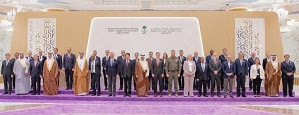
According to Saudi Gazette, National security advisers and representatives of foreign ministries of more than 40 countries concluded their meetings on resolution of the Ukrainian crisis in Jeddah on Sunday.

The Jeddah meetings came as a continuation of discussions on peace, hosted by the Danish capital Copenhagen last June, with the participation of senior officials from Ukraine, the G7 countries, the European Union, Saudi Arabia, Brazil, India, South Africa and Turkey.

During the meeting, the Ukrainian president proposed holding a peace summit that would endorse principles to support a settlement to end the war, most notably the full restoration of Ukraine's territorial integrity, the complete withdrawal of Russian forces, ensuring food and energy security, nuclear safety, and the release of all prisoners.

At the end of the very fruitful and open consultations, they agreed on the importance of continuing international consultations and exchanging opinions in order to build a common ground that will pave the way for peace. They also emphasized the importance of benefiting from views and positive suggestions made during the meeting.

On his part, Director of the Office of the Ukrainian President Andrei Yermak, who headed his country's delegation to the Jeddah meetings, said that the participants held very fruitful consultations on the basic principles on which a just and lasting peace should be built. In the meeting, representatives of each country were able to express their position and opinion.

Saudi Minister of State and Member of the Cabinet and National Security Advisor Musaed Al-Aiban chaired the meeting, which was also attended among others by the officials of the United Nations.

Saudi Arabia's hosting of the meeting comes as a continuation of the humanitarian initiatives and efforts being made in this context by Crown Prince and Prime Minister Mohammad bin Salman since March 2022. It is noteworthy that the Crown Prince made contacts with the Russian and Ukrainian leaderships since the early days of the crisis, and reiterated his country's willingness to carry out its good offices to contribute to reaching a solution, leading to lasting peace, and supports all efforts and initiatives aimed at mitigating the effects of the crisis and its humanitarian repercussions.

According to Saudi sources, the heads of the participating delegations concluded their main meetings on Saturday evening, while technical meetings of state representatives continued on Sunday for the purpose of upcoming coordination and cooperation.

The Ukrainian official Yermak said that the participants held very fruitful consultations on the basic principles on which a just and lasting peace should be built, during which representatives of each country were able to express their position and opinion. "The second meeting was held on the main principles for restoring sustainable and just peace for Ukraine, which began last June in Copenhagen," Yermak said in a statement published by the Ukrainian presidential website.

He pointed out that the Jeddah meetings were attended by more than 40 countries, which represent three times what was represented in the Copenhagen consultations, and this indicates the extraordinary interest of the world in establishing a sustainable and just peace.

“We had very fruitful consultations on the basic principles upon which a just and lasting peace should be built, and we held very honest and open talks, during which representatives of each country were able to express their position and opinion. There were different opinions, but all participants emphasized their countries’ commitment to the principles of peace, as well as to the Charter of the United Nations, international law, respect for the sovereignty of states and the inviolability of their territorial integrity,” he said.

Yermak pointed out that the meeting held in Jeddah was a step towards the practical implementation of the peace initiatives proposed by Ukraine, and each country participating in the consultations had the opportunity to show leadership in the global efforts for peace, and most of them have already defined their role in implementing certain points of the formula.

He also indicated that the parties agreed to continue working at various representative levels to bring about a just and comprehensive peace. In parallel, the Ukrainian delegation held a series of bilateral meetings on Sunday, in which it discussed with its partners the details of implementing peace and cooperation initiatives in this field.


Pakistan: Growing uncertainty about election

The developments on the weekend have introduced an element of uncertainty by bringing up the prospects of a delay in national elections.

It is believed that Pakistan may find it easier to comply with the ongoing IMF program under a caretaker setup, which is a plus. However, inordinate delays in holding elections may risk timely entry into a successor program which would be a key dampener.

Prime Minister Shehbaz Sharif has proposed to dissolve the National Assembly on August 9, 2023 three days before the government’s term will end. The timing is important as early dissolution allows for elections to be held within ninety days, instead of sixty days if assemblies complete their tenure. The members of the coming caretaker government have yet to be announced.

It has also been decided that elections will be held as per the new census which concluded earlier in the year (Pakistan’s population is now 241.49 million).

The initial reaction by the law minister as well as the Election Commission points towards a potential delay in elections, perhaps by a few months, subject to how quickly new constituency boundaries can be drawn up under the 2023 census. This brings up the prospects of an extended caretaker setup, as continues to be the case in Punjab and Khyber Pakhtunkhwa provinces.

The weekend developments include Imran Khan’s arrest following a lower court ruling in a graft case. Unlike in May, when Khan’s arrest was followed by public uproar, there has barely been any protest this time around.

Although, the ruling is likely to be challenged in higher courts, and may well be overturned, the writing is on the wall - Imran Khan is unlikely to be allowed to participate in elections whenever they do take place, with the next government likely to be led by either the PML-N or the PPP. 

The developments on the weekend have introduced an element of uncertainty by bringing up the prospects of a delay in national elections.

It is believed that Pakistan may find it easier to comply with the ongoing IMF program under a caretaker setup, which is a plus. However, inordinate delays in holding elections may risk timely entry into a successor program which would be a key dampener.

Prime Minister Shehbaz Sharif has proposed to dissolve the National Assembly on August 9, 2023 three days before the government’s term will end. The timing is important as early dissolution allows for elections to be held within ninety days, instead of sixty days if assemblies complete their tenure. The members of the coming caretaker government have yet to be announced.

It has also been decided that elections will be held as per the new census which concluded earlier in the year (Pakistan’s population is now 241.49 million).

The initial reaction by the law minister as well as the Election Commission points towards a potential delay in elections, perhaps by a few months, subject to how quickly new constituency boundaries can be drawn up under the 2023 census. This brings up the prospects of an extended caretaker setup, as continues to be the case in Punjab and Khyber Pakhtunkhwa provinces.

The weekend developments include Imran Khan’s arrest following a lower court ruling in a graft case. Unlike in May, when Khan’s arrest was followed by public uproar, there has barely been any protest this time around.

Although, the ruling is likely to be challenged in higher courts, and may well be overturned, the writing is on the wall - Imran Khan is unlikely to be allowed to participate in elections whenever they do take place, with the next government likely to be led by either the PML-N or the PPP. 


Khamenei representative meets Nasrallah

Seyed Hassan Ameli, the representative of the Leader of the Islamic Revolution to Ardebil Province, traveled to Lebanon and met with the Secretary General of Hezbollah, Sayyid Hassan Nasrallah. 

Ayatollah Ameli was accompanied by a group of clerics who are members of the Assembly of Experts. 

Iran’s Ambassador to Lebanon, Mojtaba Ameli, also attended the meeting, according to Tasnim. 

In the meeting, the historical relations between the two brotherly countries were discussed. 

Ayatollah Ameli has been rising to prominence in recent years as a result of tensions between Iran and the Republic of Azerbaijani over Israel’s presence in the South Caucasus nation. Ameli has also been at the center of Tehran’s messaging efforts to Baku over the latter’s relations with Israel. 

The Israeli Ambassador to the Republic of Azerbaijan, George Deek, has caused several uproars by taking controversial actions such as visiting the Iran-Azerbaijan border or alluding to Iran’s Azeri population.

Ayatollah Ameli responded in kind, visiting the Israel-Lebanon border.  In mid-July, Ayatollah Ameli, an ethnic Azeri, posed for a photo right on the Lebanon-Israel border.

“I greeted the martyrs of the Resistance by coming to an Israeli border area that is overlooking a settlement in the occupied territories,” he said. 

He also said that his move was a response to the Israeli ambassador to Azerbaijan. “The Israeli ambassador to Azerbaijan came close to our borders to tell us that ‘we’ve come very close to you.’

For me, that was difficult to tolerate. So, on my trip to Lebanon, I went to Maroun al-Ras and stood near the border area overlooking a Zionist settlement. And I cursed the killer of the Palestinians who has been shedding Muslims’ blood for 75 years,” Ayatollah Ameli said in a tweet. 

Later, when he came back to Ardebil, Ayatollah Ameli said he visited the Lebanon-Israel border so that the Israeli ambassadors to Azerbaijan know that his action does not go unanswered. 


Saturday, 5 August 2023

Saudi Arabia asks its citizens to leave Lebanon

Saudi Embassy in Lebanon has warned the Saudi citizens from being present or approaching the areas that are witnessing armed conflicts in the country.

The embassy has asked Saudi citizens to leave Lebanon quickly, in addition to the importance of adhering to the decision of banning travel there.

In the event any emergency occurs, the embassy advised the citizens to contact them through the following numbers: The Embassy number: 009611762711; 009611762722 — Saudis affairs number: 0096178803388; 0096176026555 — the unified number for the Saudi affairs abroad: 00966920033334 — the embassy account on X app: @KSAembassyLB