Sunday, 7 March 2021

Iran must not ignore Senator Robert Menendez

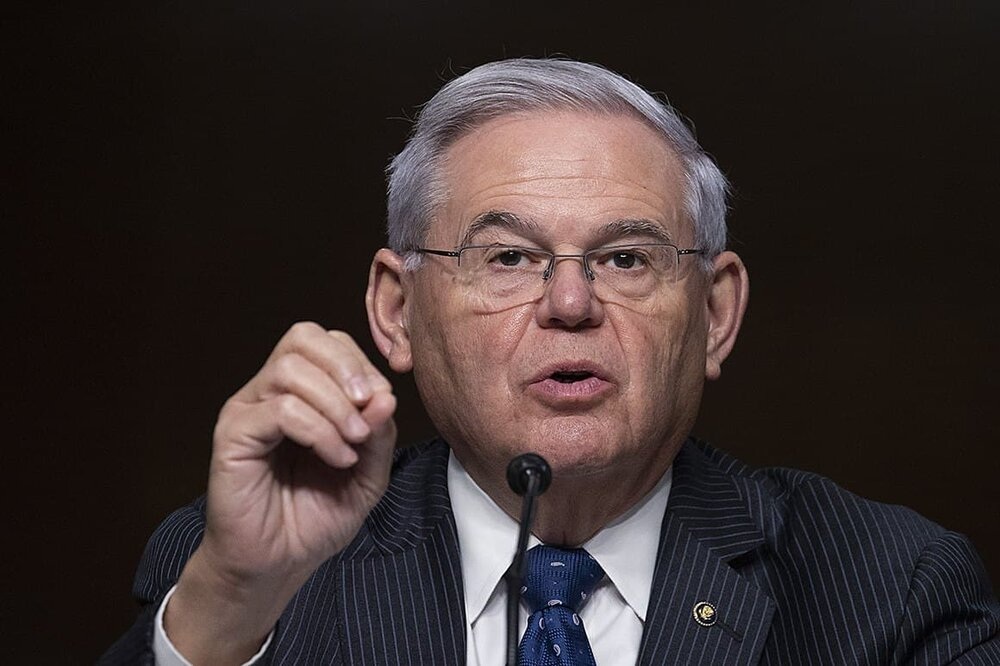
Ever since Joe Biden has become President of United States, his administration has bombed Syria, imposed sanctions on Saudi Arabia and Myanmar, and taken steps to rejoin the Iran nuclear deal. However, analysts warn, “If Biden thinks he can make foreign policy decisions without consulting Robert Menendez, he’s got another thing coming”.

Menendez has been in this role before, and criticized the way the Obama administration conducted international affairs. In Menendez’s view, Obama treated foreign policy as if it were the sole discretion of the White House. Consequently, he often made things more difficult for himself, especially in areas that needed congressional approval.

The 67-year-old third-term senator and former longtime House member told Politico that he was often frustrated by Obama, who would simply notify Congress of his decisions rather than consulting with lawmakers in advance. Menendez came down on opposite sides of the White House on several issues, including the Joint Comprehensive Plan of Action, (JCOPA) the common name for the 2015 Iran nuclear deal.

“Beyond the realities of a 50-50 Senate, when we talk about foreign policy, whenever we can get a bipartisan basis for something — maybe not absolute, 100 members — we are stronger in the world,” Menendez said. “And I believe President Biden believes that.”

Menendez quickly registered his dissatisfaction last week when the Biden team did not give him a heads up about the president’s retaliatory strikes against Iranian installations in Syria; and he and other Democrats are already calling for more severe punishments against Saudi Arabia after a US intelligence report officially pinned the blame for journalist Jamal Khashoggi’s murder on the Kingdom’s crown prince and de facto leader, Mohammed bin Salman.

In a statement, Menendez stressed, “I am hopeful it is only a first step and the administration plans to take concrete measures holding Crown Prince Mohammed bin Salman personally responsible for his role in this heinous crime.” 

Politico reminded it is critical for Biden’s foreign policy to keep Menendez in the loop and wrote, “It’s not surprising, then, that there is an ongoing White House campaign to curry favor with Menendez, who hasn’t been afraid to break with his party and has a history of making matters difficult for presidents who try to strong-arm Congress.”

“That makes all the difference in the world,” Menendez said. “It doesn’t mean that we’re going to agree 100 percent of the time. But it does mean that we will understand each other, where we’re coming from — and more likely than not, we will agree.”

The American publication admitted the hawkish Menendez and the Biden administration disagree on a handful of key areas including the Iran nuclear deal, US relations with Cuba, the use of US military force overseas, and what to do in regard to Nicolas Maduro, the Venezuelan president.

Generally, Menendez opposes negotiations or deals that seem to give any concessions to them. He likely won’t take it easy on the Biden team, many of whose members served under Obama, as they try to revive agreements like the Iran deal, or reestablish ties with Cuba — relationships that were damaged under former President Donald Trump. He’ll also insist on greater congressional say if and when the United States uses military force in abroad.

The Biden team is “right to want to have a good relationship with him. They’re going to agree with him on a lot of things,” said Ben Rhodes, who served as a key force behind diplomatic openings with Cuba and Iran during the Obama years.

 “But at a certain point, there’s a Senate view and an administration view, and unless you want [Menendez] to be in charge of your Cuba policy, your Venezuela policy or your Iran policy, you’re likely going to reach a point where you have to have a difficult conversation,” Rhodes remarked.

Menendez said that Biden’s team is already discarding the Obama model — which he asserted did not always value Congress’ role in determining US foreign policy — and instead of working closely with the Senate to coordinate and seek input.

Nevertheless, Senators have reasons to be optimistic because Biden is a former chair of the Foreign Relations Committee, and Secretary of State Antony Blinken is the former Staff Director for the panel.

 “You haven’t had an administration as populated with people who understand the role of the Senate, and also how helpful the Senate can be,” said Sen. Tim Kaine, a senior member of the Foreign Relations Committee who is close with Menendez. “I think they have a huge opportunity with Bob as the chair, given who the players are in the administration, to really have a very good working relationship.”

However, Kaine has been among the outspoken critics of Biden’s airstrikes in Syria last week, insisting that the president should have had authorization from Congress. Kaine is seeking for years to scrap the 2001 and 2002 war authorizations that presidents from both parties have used to justify the US military activity in West Asia.

Biden’s top deputies, apparently eager not to repeat the perceived mistakes of the Obama administration, are already working to keep Menendez happy. 

Jake Sullivan, National Security Adviser, described Menendez “a sounding board, a source of advice, and a leading voice on the most important national security issues of our time. My team and I are making it a personal priority to reach out and engage regularly with him and his team, and we will continue to do so.”

Also, Blinken promised similar engagement, saying Menendez “has proven himself to be both principled and effective.”

“Menendez’s allies say the Biden administration would cross him at its own peril — especially when Biden is looking for lawmakers’ support for a major foreign policy initiative. Menendez’s penchant for working closely with Republicans can be an asset to an administration that came into office emphasizing bipartisanship. And in a 50-50 Senate, every vote counts.” 

“I would encourage the Biden administration to pick his brain because if Bob can get onto something, Republicans are going to take it seriously,” Sen. Lindsey Graham underlined.

Pointing to Menendez’s promise to conduct vigorous oversight of the Biden administration’s foreign policy, the American publication wrote, “Something that was sorely lacking under former President Donald Trump, whose administration routinely flouted Congress, ignored the law, and was openly hostile to both Democrats and Republicans.”

 “When things aren’t going as well as they should, don’t expect Menendez to lay back. I expect he’ll be pretty aggressive,” said Ben Cardin, the second-highest-ranking Democrat on the Foreign Relations Committee.

The US presidents have long tried to blunt efforts by Congress to disable the executive branch and underscored, “Cardin experienced that hostility first-hand when he led the charge in 2012 for the Magnitsky Act, which imposed sanctions on Russian human rights violators. Obama ultimately signed the bill into law, but Cardin said his White House was “hostile toward Congress” because lawmakers were seeking to address an issue that was traditionally controlled by the executive branch.

 “There’s been, historically, under-performance by every administration on dealing with Congress. There is a view that they can do this without us,” Cardin noted.

Obama aides were worrying that Menendez would draw red lines that would box in their options and said, “Menendez, in particular, is loath to appear soft on governments like Cuba and Iran.” If Biden administration keeps Menendez looped into his satisfaction, he may ultimately disagree with some of their initiatives. 

 “I think it is important to include [us], as long as people are engaged in good faith, not just in being obstructionists at the end of the day,” Menendez asserted.

The Obama administration had agreed that keeping Menendez engaged early on was significant. It believed everyone understands the consequences of a Senate split 50-50 between the two parties. Menendez won’t want to be seen as a politician who hurt Democratic Party.

Menendez thought that the Obama administration did not consult enough with him forehand of adopting key foreign policy approaches and said, “They didn’t consult enough on the Iran deal. They just didn’t,” said a person close to Menendez. “They knew it was his No. 1 issue.”

Saturday, 6 March 2021

Online Conference on boosting trade between Iran and Afghanistan

An online conference is scheduled on opportunities and strategies for trade between Iran and Afghanistan on Monday. This has been stated at the portal of Iran Chamber of Commerce, Industries, Mines and Agriculture (ICCIMA). The online event will be attended by Hossein Salimi, the chairman of Iran-Afghanistan Joint Chamber of Commerce.

In this conference, the security and political situation of Afghanistan and the perspective of economic and political relations between the two countries, trade opportunities and goods and services needs of Afghanistan, investment opportunities in Afghanistan, how to participate in the Afghan market, Afghanistan and Iran credit lines and financial transfer will be reviewed.

Back in January, the Director General of the Asia-Pacific Office of Iran’s Trade Promotion Organization (TPO) had said that a preferential trade agreement with Afghanistan was going to be signed in the near future.

Speaking in the fourth meeting of Khorasan Razavi-Herat Joint Trade Committee in Mashhad, Reza Seyed-Aqazadeh said, “Necessary coordination has been made with the Ministry of Commerce of Afghanistan.”

He mentioned previous tariff agreements between the two countries and said, “Previously, in 2015, the tariffs for the imports of five commodity items from Afghanistan including the imports of sesame were reduced; the tariffs on sesame imports were reduced from 10 percent to five percent.”

According to the official, balancing international trade, especially with Afghanistan is one of the major strategies of Iran in foreign trade, and TPO’s goal is to establish a balanced trade between the two countries.

Special strategies have been adopted by the Trade Promotion Organization for balancing trade with Afghanistan and for resolving problems in this field, he said, adding that the issues and demands of Afghan businessmen will also be reviewed in a special working group in this organization to take the necessary measures and resolve their issues.

Having shared historical, cultural, political, and economic backgrounds, Iran and Afghanistan have been allies for many years and the strategic cooperation between the two countries has been broadened especially over the past two decades.

The value of Iran’s exports to Afghanistan is anticipated to reach US$3 billion in the current Iranian calendar year, according to Hossein Salimi, the chairman of Iran-Afghanistan Joint Chamber of Commerce.


Iran and Pakistan to develop joint border markets

Iran and Pakistan held an online meeting to discuss issues related to developing border trade and reached an agreement to establish the first joint border market of the two countries, said an official of Iranian Trade Promotion Organization (TPO).

“A virtual meeting was held to discuss a memorandum of understanding (MOU) on the establishment of joint border markets between Iran and Pakistan, and agreements were reached in this regard,” IRNA quoted Reza Seyed Aqazadeh as saying.

According to the official, following the preparation of the draft for the mentioned MOU in December 2020, additional negotiations were made for finalizing the memorandum in the online meeting which was held at the level of deputy ministers.

Referring to the 950-kilometer border between Iran and Pakistan, as well as the interest of two countries in developing trade, Seyed Aqazadeh noted, "Border markets have so far been created unilaterally by Iran or Pakistan, and a joint market will be established between the two countries for the first time."

The development of the joint border markets is expected to improve the business activities of border residents, he added.

“Based on the agreements reached, the two sides have appointed technical teams to determine the location and size of the joint markets and to prepare a list of the items that would be traded in the markets,” the official explained.

He stated that joint markets will be set up in Kuhak and Pishin (Saravan) in the near future, and specified, “Pakistan has proposed six points on the border to create joint markets, and the Iranian side is interested in setting up joint markets as much as possible in place of existing approved markets.”

Currently, border markets of Saravan-Jaleq, Saravan-Kuhak, Sarbaz-Pishin and Chabahar-Rimdan in Sistan-Baluchestan province are active on the border with Pakistan, and the Mirjaveh market has been merged with Mirjaveh customs, according to Seyed Aqazadeh.

Earlier in December 2020, Pakistan’s Advisor to Prime Minister on Commerce and Investment Abdul Razak Dawood had said his country was seeking to enhance ties with the Islamic Republic of Iran, especially in economic areas.

Considering Pakistan’s relatively large consumer market, expansion of trade with the country and boosting exports to its market has become one of Iran's priorities in recent years.

Iran's exports to Pakistan in the past Iranian calendar year was reported at US$1.18 billion, but in the meantime, financial and banking problems have created obstacles in the trade between the two countries.

Friday, 5 March 2021

What United States loves the most? Saudi Crown Prince or US$134 billion arms sale

At present, the United States and Saudi Arabia are experiencing a new era in their 76-year relationships. The priorities have changed after the release of the CIA findings. The report says Crown Prince Mohammed bin Salman (MBS) had ‘approved’ the 2018 murder of prominent Saudi journalist, Jamal Khashoggi.

Historically, an American president has never cut off personal links to the Saudi heir apparent, who has often served as de facto ruler of the kingdom. But the White House declared his intention to make that very heir a ‘pariah’ in Washington and internationally as well.

The State Department has also set a new precedent by issuing visa restrictions on 76 Saudis believed to have been engaged in threatening dissidents overseas’ under a new ‘Khashoggi ban’ created in memory of the Saudi journalist murdered inside the Saudi consulate in Istanbul in October 2018.

MBS has been deliberately spared from the Khashoggi ban, or any other sanction, to preserve a minimum communication and cooperation between the two governments. Former Saudi ambassador to Washington, Prince Turki al-Faisal noted, MBS is destined to live under a lifetime ‘stigma’ for his role in the affair. He is unlikely to be invited to the White House for years to come.     

Biden has said that from now on, he will only talk to King Salman, Mohammed’s father and the American President’s official counterpart. But the king is 85 years old and in failing health. When he dies, would Biden refuse to communicate with the kingdom’s new monarch? It will be an unprecedented situation in the history of US-Saudi relations dating back to World War II.

In the past, the personal relationship between the US President and reigning Saudi monarch has been a key determinant in setting both the tone and substance of ties between the two countries. At this point, the only senior US official authorized to talk to Crown Prince Mohammed, who is also minister of defense, is his counterpart, Secretary of Defense General Lloyd Austin III.

What impact the new Biden doctrine toward the crown prince will have on the overall US-Saudi relationship remains to be seen? It seems likely that the relationship will be reduced mostly to formal state-to-state transactions and to avoid an open break which neither side wants.

It is believed that the focal point of the relationship will remain the massive US arms sales to the Saudi kingdom and covert cooperation in demolishing Iran. Since 2010, the US Defense Security Cooperation Agency has notified Congress of US$134 billion arms sales to Saudi Arabia, which has been the most important foreign market for the American defense industry for decades.

The Biden administration has reiterated its commitment to defending Saudi Arabia from foreign aggression and will continue to provide ‘defensive’ arms. However, it has already announced the suspension of ‘offensive’ weapons being used against Houthi rebels, who have seized control of most of Yemen. Forthcoming arms sales to the Kingdom are now under review, presumably to determine which are defensive and which are offensive.

Other than MBS, the most divisive and immediate issue in US-Saudi relations is how to deal with Iran, the kingdom’s arch rival for regional primacy. Iran has proven itself to be the most serious military threat after demonstrating its ability to amass drones and cruise missiles to knock out nearly half of the kingdom’s oil production for several weeks in September 2019.

Biden has begun charting a diplomacy initiative to entice Iran back into the 2015 Joint Comprehensive Plan of Acton (JCPOA). This will certainly lead to even more discord in the fraught US-Saudi relationship. The two countries no longer see the personal ties bonding US and Saudi leaders had enjoyed in the past.

Thursday, 4 March 2021

Could Iran be blamed for ecological terrorism against Israel?

The ability of a ship to purposely dump oil so that, two weeks later, it harms a country’s coastline appears very complex. The story of the ship – like many things at sea that involve the shipping industry look diabolic. This is because ownership of ships is often murky and involves shell companies and ships registered in one place, flying the flag of a different place, owned by a third party and captained by people from a fourth nation.

A shocking claim by Israel’s environmental protection minister, Gila Gamliel on Wednesday that a Libyan ship dumped containers of crude oil off Israel’s coast, causing one of the country’s worst environmental disasters, is making waves. This is because Gamliel accused that Iran was responsible for the environmental harm.

“This is a crude oil tanker called Emerald, owned and operated by a Libyan company,” Gamliel said. “It was illegally carrying cargo from Iran to Syria. The ship was flying Panama’s flag. Iran is waging terrorism not only by trying to arm itself with nuclear weapons or trying to establish a base near our borders. Iran is waging terrorism by harming the environment.

The ship was allegedly going from Iran to Syria where it was smuggling crude oil, Israel claims. Ships trying to get to Syria from Iran in the past have been interdicted so the transit can be illicit. The vessel also turned off its automatic identification system, a kind of transponder.

Can a ship purposely dump containers of crude oil to harm Israel’s environment? It is not out of the realm of possibility. In the past, Israel has had friction with Syria over water issues, including fishing, and the Jordan River was a cause for conflict in the early years of the state. Disputes over a dam in Ethiopia have led to a war of words in northeast Africa.

However, the ability of a ship to purposely dump oil so that, two weeks later, it harms a country’s coastline appears very complex. That would require study of the currents off the coast and knowledge of where cargo needs to be dumped and at what time to end up in a certain place.

It leads to further questions about why such activity wasn’t judged to be suspicious when it was happening, rather than almost a month later.

The chance that Iran would risk damaging the coastline of Gaza or its Hezbollah friends in Lebanon – they all share a coastline with Israel – would appear to be a major risk for Tehran.

Israel accuses Iran of ecological terrorism

Iran intentionally polluted the Mediterranean Sea and Israel’s shores in an act of ecological terrorism, causing the greatest environmental disaster in Israel’s history, Environmental Protection Minister Gila Gamliel said.

“This pollution has people who are responsible for it and have to pay the price. Our nature is damaged, our animals are harmed, thanks to merciless environmental criminals,” Gamliel added.

Gamliel explained, following a two-week investigation, the Environmental Protection Ministry found that the ship that leaked the crude oil, called the Emerald, was owned by a Libyan company and sailed from Iran to Syria. It departed Iran, turning off its automatic identification system (AIS) – which transmits its location to other ships in the area. It turned the AIS on as it went through the Suez Canal, and then off again as it approached Israel’s shores.

The ship remained within tens of kilometers of Israel’s shores, within Israel’s economic waters, for nearly a full day, spilling large amounts of oil on 1st and 2nd February, with its AIS off.

Then it continued on to Syria, where it turned on its transmitter, and it returned to Iran, turning off its AIS as it passed Israel. It is currently in Iran.

The tar reached Israeli shores on 17th February 2021.

“Now we see Iran is not just terrorizing [Israel] with [attempts at attaining] nuclear weapons and entrenching itself in our region, but also by harming the environment,” Gamliel said. “They’re not just hurting Israel. Nature and animals don’t just belong to one nation. This is a battle that crosses borders.”

Gamliel said that Israel will demand compensation from the International Oil Pollution Compensation Fund and the ship’s insurers.

“We will settle the score with the polluters in the name of all Israelis for the harm to our health, nature, animals and view,” she vowed. “We cannot abandon our sea. Our sea is our natural treasure that we must protect.”

The US National Oceanic and Atmospheric Administration and the European Maritime Safety Agency, as well as Israeli maritime research company Windward, helped the Environmental Protection Ministry investigate the oil spill. None of the agencies knew about the oil spill before the tar reached Israeli shores, over two weeks after it occurred.

Samples of the tar, which the Environmental Protection Ministry examined, showed that it came from crude oil, which sharply reduced the number of suspected ships from 35 to four. Two were found to have been too far away, and another was examined by local authorities in Spain and by Israeli investigators in Greece. The fourth is the Emerald, currently in Iran.

European satellites caught the underwater stain on 5th February, but it was not noticed before the tar reached Israel’s beaches.

Wednesday, 3 March 2021

ICC prosecutor announces formal investigation into Israeli war crimes

International Criminal Court Prosecutor, Fatou Bensouda announced on Wednesday that she is opening a full war crimes probe against Israel and the Hamas terrorist group in the Gaza Strip. "The decision to open an investigation followed a painstaking preliminary examination undertaken by my office that lasted close to five years," Prosecutor Bensouda said in a statement.

"In the end, our central concern must be for the victims of crimes, both Palestinian and Israeli, arising from the long cycle of violence and insecurity that has caused deep suffering and despair on all sides," she added. "My office will take the same principled, non-partisan, approach that it has adopted in all situations over which its jurisdiction is seized."

"This is a long-awaited step that serves Palestine’s tireless pursuit of justice and accountability, which are indispensable pillars of the peace the Palestinian people seek and deserve," the PA foreign ministry said in a statement. 

Israeli Foreign Minister says ICC war crimes probe in Palestinian territories is 'an act of moral and legal bankruptcy.'

Bensouda's announcement comes less than a month after a February decision by the ICC Pre-Trial Chamber recognizing a State of Palestine and authorizing her to move forward.

The probe is expected to cover the 2014 Gaza War, the 2018 Gaza border crisis and the Israeli settlement enterprise in the West Bank as well as Hamas' rocket attacks against Israeli civilians.

War crimes suits could be leveled at Prime Minister Benjamin Netanyahu, defense ministers and any other high-level officials involved in such activity since 13th June 2014. Soldiers and commanders could also be targeted.

"The investigation will cover crimes within the jurisdiction of the Court that are alleged to have been committed in the Situation since 13 June 2014, the date to which reference is made in the Referral of the Situation to my Office," chief prosecutor Fatou Bensouda said in a statement released on Wednesday.

Bensouda said that the investigation "will be conducted independently, impartially and objectively, without fear or favour." She said that the decision to open an investigation followed a painstaking preliminary examination undertaken by her office that lasted close to five years.

"Having assessed submissions from states, international organizations and other stakeholders, the Chamber was otherwise unanimous in its view that Palestine is a State Party to the Rome Statute. The majority also ruled that Palestine's referral of the Situation obliged the Office to open an investigation, the Office having determined that there existed a reasonable basis to do so in accordance with the Rome Statute criteria," she wrote in a statement.

Bensouda called on Palestinian and Israeli victims and affected communities to be patient.

"The ICC is not a panacea, but only seeks to discharge the responsibility that the international community has entrusted to it, which is to promote accountability for Rome Statute crimes, regardless of the perpetrator, in an effort to deter such crimes," she wrote. "In meeting this responsibility, the Office focuses its attention on the most notorious alleged offenders or those alleged to be the most responsible for the commission of the crimes."

Her primary concern, she wrote, "must be for the victims of crimes, both Palestinian and Israeli, arising from the long cycle of violence and insecurity that has caused deep suffering and despair on all sides."

Bensouda's decision comes only a few weeks after her successor, Karim Khan, was announced to take her place starting in June.

The news will be another blow to Israel, where officials had hoped Bensouda would leave the decision of how to proceed to her successor and that he might be more sympathetic to Israel's many claims against the ICC's jurisdiction.

On Tuesday, Defense Minister and Acting Justice Minister Benny Gantz alarmed government officials when he warned that hundreds of Israelis could be subject – in the near future – to war crimes probes by the International Criminal Court.

Gantz called that “an estimate,” declining to say that Israel had drawn up a list of officials likely to be investigated. Israel will provide legal assistance to any targeted Israelis and will give them advice regarding travel abroad if necessary, Gantz said.

Balkees Jarrah, associate international justice director for the left-wing NGO Human Rights Watch, stated: "The ICC prosecutor’s decision to open a Palestine investigation moves Israeli and Palestinian victims of serious crimes one step closer to obtaining a measure of justice that has for too long eluded them. 

"The court’s crowded docket shouldn’t deter the prosecutor’s office from doggedly pursuing cases against anyone credibly implicated in such crimes. 

"All eyes will also be on the next prosecutor Karim Khan to pick up the baton and expeditiously move forward while demonstrating firm independence in seeking to hold even the most powerful to account. ICC member countries should stand ready to fiercely protect the court’s work from any political pressure," he added.