Saturday, 23 January 2021

Who was Sheldon Adelson?

Sheldon Adelson committed as much as half a billion dollars from his vast fortune to buy control over a major element of US foreign policy and subordinated American interests to those of Israel. He was the principal funder of the Republican Party under Donald Trump and receiving in return the withdrawal of United States from the Iran nuclear agreement (JCPOA), the move of the US Embassy in Israel to Jerusalem, the recognition of Israeli annexation of the Syrian Golan Heights and a virtual concession that the Jewish state could do whatever it wants vis-à-vis the Palestinians, including expelling them from Palestine.

Casino magnate and Israeli patriot multi-billionaire Adelson, one of the world’s richest men, died in Las Vegas on 11th January 2021, at the age 87. He has been buried at the Mount of Olives Cemetery in Israel. When his body arrived in Israel it was met by Prime Minister Benjamin Netanyahu as well as Jonathan Pollard, the most damaging spy in the history of United States.

Tributes to the fallen “hero” poured in from the political class in both the United States and Israel and it has even been reported that President Donald Trump was intending to hoist the American flag at half mast over federal buildings to honor the “great humanitarian philanthropist.” Unfortunately, the flag was already at half mast honoring the death of Capitol Police Force officer Brian Sicknick, who was murdered in the Capitol building..

Trump had plenty to say about his good buddy Adelson, who has been the principal funder of the Republican Party over the past five years. As he can no longer use Twitter, the president’s condolences were posted on the White House site: “Melania and I mourn the passing of Sheldon Adelson, and send our heartfelt condolences to his wife Miriam, his children and grandchildren. Sheldon lived the true American dream. His ingenuity, genius, and creativity earned him immense wealth, but his character and philanthropic generosity his great name. Sheldon was also a staunch supporter of our great ally the State of Israel. He tirelessly advocated for the relocation of the United States embassy to Jerusalem, the recognition of Israeli sovereignty over the Golan Heights, and the pursuit of peace between Israel and its neighbors. Sheldon was true to his family, his country, and all those that knew him. The world has lost a great man. He will be missed.”

Missing from the Trump eulogy is any mention of what Adelson did for the United States, which is his country of birth and where he made his fortune engaging in activity that many would consider to be a vice. In fact, Adelson was all about the Jewish state, positioning himself as the principal funder of the Republican Party under Donald Trump and receiving in return as a quid pro quo the US withdrawal from the Iran nuclear agreement (JCPOA), the move of the US Embassy in Israel to Jerusalem, the recognition of Israeli annexation of the Syrian Golan Heights, and a virtual concession that the Jewish state could do whatever it wants vis-à-vis the Palestinians, to include expelling them from Palestine. Adelson once commented that Israel does not have to pretend to be a democracy but it must be Jewish, presumably to help the process of Arab genocide move along.

Adelson’s mechanism, initiated under George W. Bush, is familiar to how the Israel Lobby operates more generally. It consisted of the exploitation of the incessant need of campaign money by the GOP, which Adelson provided with strings attached. He worked with the Republicans to completely derail the admittedly faux peace process begun under Bill Clinton, which depended on a two-state solution, and instead give the Jewish state a free hand to implement its own unilateral Greater Israel Project extending from “the Jordan River to the Mediterranean.” As part of that expansion, Israel has been building illegal settlements while also bombing and killing Lebanese, Syrians, and Iranians and assassinating scientists and technicians throughout the region.

All of the interventions against Israel’s neighbors took place even though the Jewish state was not technically at war with anyone. The US meanwhile funded Israeli aggression and watched the spectacle without any complaint, providing political cover as necessary, while also maintaining a major military presence in the Middle East to “protect Israel,” as Trump recently admitted.

In short, Sheldon Adelson committed as much as half a billion dollars from his vast fortune to buy control over a major element of US foreign policy and subordinated American interests to those of Israel. In addition to direct donations to both major political parties, he also paid for Congressional “fact finding” trips to Israel and funded a number of pro-Israel lobbies, so-called charities and other related Jewish projects. It is indisputable that he wielded an incredible degree of power to shape Washington’s actions in the Middle East. In her own tribute to her dead husband, Miriam Adelson, an Israeli, described how he “crafted the course of nations.”

Adelson was actively engaged on Israel’s behalf until the week before his death. He provided his casino’s private 737 luxury executive jet to transport Jonathan Pollard “home” to Israel. Pollard has served 30 years in prison after being convicted of espionage and was on parole, which restricted his travel. As yet another gift to Israel, Donald Trump lifted that restriction, allowing him to fly to Israel where he received a hero’s welcome. It is generally agreed that Pollard was the most damaging spy in American history, having stolen the keys to accessing US communications and information gathering systems. A month after Pollard’s arrest in 1985, CIA director William Casey stated, “The Israelis used Pollard to obtain our war plans against the USSR – all of it, the coordinates, the firing locations, the sequences, and Israel sold that information to Moscow for more exit visas for Soviet Jews.”

Sheldon Adelson used his wealth and political connections to shield himself from any criticism due to his openly expressed preference for Israel over the land of his birth. He publicly stated that he wished he had worn the Israeli Army uniform instead of that of the US Army, where he served briefly as a draftee. He also expressed his desire that his son would serve as an Israeli army sniper, presumably allowing him to blow the heads off of Palestinians.

In 2013 Adelson advocated ending nuclear negotiations with Iran and instead detonating a nuclear weapon in “the middle of the [Iranian] desert,” followed by a threat to annihilate the capital city Tehran, home to 8.6 million, to force Iran to surrender its essentially non-existent nuclear program.

Other acknowledgements of the impact of Adelson came from officials in the Trump Administration. Secretary of State Mike Pompeo commented how his “efforts to strengthen the alliance between Israel and the United States…the world, Israel and the United States are safer because of his work.”

Is the world a better place due to the passing of Sheldon Adelson? His Israeli wife Miriam owns more than 40% of Las Vegas Sands Corp Casinos Inc., estimated to be worth in excess of US$17 billion. She has proposed that a new chapter be included in the Jewish bible, the Book of Trump, and has pledged herself to continue her husband’s work. Trump had previously given her the highest award that a president can bestow, the Presidential Medal of Freedom.

Friday, 22 January 2021

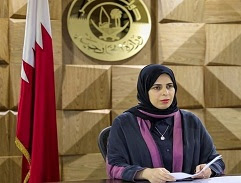
Qatar offers to mediate between Iran and United States

Qatar is ready to mediate between Iran and the United States as Joe Biden, assumes office of President, after the turbulent years of the Trump administrations, said Lolwah al-Khater, spokeswoman for Qatar’s Foreign Ministry. She also pointed out that Qatar is committed to engaging in a “constructive dialogue” between Tehran and the Arab states of the Persian Gulf.

“Qatar has expressed its willingness to play such a role, yet we have to be invited by both parties, who are still hesitant to take this step, in terms of entering and engaging in direct negotiations,” said al-Khater.

She stated that Iran and Arab states of Persian Gulf’s are geographical realities in the region and they need to start a direct dialogue.

“Iran is a geographical reality in our region and the [Persian] Gulf states are a geographical reality, no one is going away, and that is why it is very important to engage in a meaningful, constructive and direct dialogue," the spokeswoman asserted.

She said a dialogue between Iran and its Arab neighbors is even more important than a dialogue between Iran and the United States.

“If it was important for the US to have a dialogue with Iran, then it is even more important for us as [Persian] Gulf Cooperation Council (GCC) countries to have a meaningful and constructive dialogue with Iran, one that will preserve the collective security of our region, the rights of our peoples and ensure a prosperous future for coming generations,” she continued.

The Qatari official also pointed to Qatar’s trade ties with Iran and Turkey during the GCC crisis, saying that these ties helped Qatar in achieving a GDP growth more than that of its neighbors.

“Looking back, the economic gains are significant,” she said of the outcome of the crisis, pointing out that Qatar's GDP grew more than that of its neighbors during the blockade, when Doha strengthened its trade relations with Turkey, Iran and other countries in the area beyond the GCC.

The comments came a few weeks after Qatar mended ties with its Arab neighbors in a reconciliation deal brokered by the US. The deal put an end to a three-year-and-half dispute between Qatar and an Arab quartet of Saudi Arabia, the United Arab Emirates, Bahrain and Egypt. In June 2017, the Saudi-led quartet severed diplomatic ties with Qatar and imposed a total blockade on the tiny Persian Gulf nation.

The four countries closed their airspace, land, and sea routes to Qatari planes, cars, and vessels, a move that prompted Qatar to use Iranian airspace. Kuwait, a country stuck in the middle of the dispute between its neighbors, had studiously worked to reconcile the opposing sides and succeeded in doing so in December.

On 5th January 2021, leaders of the GCC - Saudi Arabia, the UAE, Bahrain, Qatar, Kuwait and Oman- attended the al-Ula summit in Saudi Arabia in which they signed a reconciliation deal, putting an end to the years long GCC crisis.

“There have been no concessions from any side (...) the GCC crisis was a lose-lose situation for everyone, so ending this crisis, I think, will be a gain for everyone”, al-Khater said of the deal.

According to al-Khater, Doha has emerged stronger from the crisis, at least from an economic point of view, as in the past three and a half years it has “diversified its supply chains and reinforced its position as one of the largest energy exporters globally.”

“The blockade was a situation we did not choose, for sure, but we were able to live with it and sustain the situation. Ending the blockade is about the collective interest of our entire region, not only in Qatar’s interest,” the spokeswoman insisted.

Al-Khater’s remarks came after Qatar’s Foreign Minister Sheikh Mohammed bin Abdulrahman Al Thani called for dialogue between Iran and its Arab neighbors to resolve outstanding differences, expressing hope that the two sides would hold a summit to deescalate tensions.

“We are hopeful that this [summit] would happen and we still believe that this should happen. And I think this is also a desire that being shared among the other GCC countries. I just mentioned to you that there is a difference between the countries on the way how to approach such a dialogue. Also from the Iranian side, they have expressed their willingness several times to engage with the GCC countries,” he said in a recent interview with Bloomberg TV.

Bin Abdulrahman underlined that the time should come when the Persian Gulf’s Arab states will sit at the table with Iran and reach a common understanding. “We have to live with each other. We cannot change geography. Iran cannot move the GCC away from its neighborhood and the GCC cannot move Iran from the neighborhood,” he continued.

The chief Qatari diplomat also expressed readiness to facilitate dialogue between Iran and the GCC states or back anyone facilitating such a dialogue.

He also hoped that the much-anticipated talks between Iran and the US on the 2015 nuclear deal –officially known as the Joint Comprehensive Plan of Action (JCPOA)- would help ease tensions between Iran and its Arab neighbors.

Bin Abdulrahman expressed hope that what will happen between Iran and the US on the JCPOA would contribute to resolving the differences between Iran and the GCC. “Of course, things are interconnected at the end of the day,” he noted, adding that Qatar will support negotiations between the stakeholders.

“We will be welcoming this idea. We maintain a good relationship with the US and we maintain a good relationship with Iran,” bin Abdulrahman stated.

Iran welcomed the Qatari call for dialogue between Iran and the Persian Gulf’s Arab states, underlining that the solution to the region’s challenges lies in cooperation to form a strong region free from foreign interference.

“Iran welcomes my brother FM @MBA_AlThani's call for inclusive dialogue in our region. As we have consistently emphasized, the solution to our challenges lies in collaboration to jointly form a 'strong region': peaceful, stable, prosperous & free from global or regional hegemony,” Iranian Foreign Minister Mohammad Javad Zarif said in a tweet following the Qatari foreign minister’s call for dialogue.


Thursday, 21 January 2021

United States still viewed as ‘grey rhino’ risk for Chinese economy

The outlook for China-US trade ties under a Joe Biden presidency has been met with mixed views by Chinese economists; with some saying the United States remains the nation’s biggest “grey rhino” – a very obvious yet ignored threat – in terms of economic risk this year.

Biden, who was sworn in as the 46th US president on Wednesday, inherits a bilateral relationship at historic lows and many economists are hoping he can reverse the course set by former president Donald Trump, who launched a damaging trade war in 2018.

“It is quite safe to say that in the past two years, no one has won the trade war. China may have suffered heavily, but the price the US has paid was also very high,” said Yu Yongding, a prominent Chinese economist and former central bank adviser.

China’s trade surplus with the US rose to US$316.91 billion in 2020 from US$295.77 billion in 2019, despite China’s purchasing commitments in the phase one trade deal and heavy tariffs imposed by the Trump administration on Chinese goods.

The 2020 figure represents a 14.9 per cent jump from a US$275.8 billion surplus in 2017, when Trump took office claiming that China’s trade practices were unfair and cost Americans jobs.

One year after signing the phase one deal, China remains far behind in its commitment to buy more American goods. In the first 11 months of last year, China’s purchases of products included in the agreement reached only 58 per cent of its targets using US Census Bureau statistics, or 56 per cent using Chinese customs data, according to a report by Peterson Institute for International Economics released this month.

Yu said given China was so far behind the target partly due to the coronavirus pandemic, the two countries should renegotiate the agreement in accordance with the force majeure clause, which frees both sides from obligation due to extraordinary events outside their control.

 “To show good faith, China should in principle adhere to its commitments made in the phase one agreements,” he said. “Although personally I don’t like quantity targets – a deal is a deal.”

Scott Kennedy, senior adviser and trustee chair in Chinese business and economics at the Center for Strategic and International Studies in Washington, said Biden must change US policies towards China, including rolling back the Section 301 tariffs, most of which are still in place and borne by US importers and consumers, not Chinese exporters.

Although the Trump administration deserves credit for sounding the alarm on Xi Jinping-led China, “it did not address that challenge with effective policies that changed the facts on the ground in America’s favour,” said Kennedy in a note this week.

Biden is expected to adopt a less antagonistic tone towards China, but he has indicated his approach on trade will not differ hugely from Trump, at least in the short term. This has caused some Chinese economists to take a cautious stance towards the new president.

Guan Qingyou, an economist and president of Rushi Advanced Institute of Finance, said China’s fast recovery from the pandemic has accelerated it along its path to surpass the US as the world’s largest economy, and conflict between the two powers will become more pronounced.

 “The current appointments of senior officials in the Biden administration indicate that the US is building up pressure on China, and the grey rhino China faces this year may still come from the US,” he said in a note published this week.

His view was echoed by Chen Wenling, chief economist at the China Centre for International Economic Exchange, a government-backed think tank, who said on Tuesday “negative energy” from some American politicians had affected efforts to fight the pandemic and rescue the global economy, and might continue during the Biden administration.

“Even though some absurd politicians have withdrawn from the stage of history, the ghosts of the extremely ignorant populism, anti-intellectualism and McCarthyism will keep diffusing over these countries for a long time, continuing to impact the world economy and China-US relations,” she said.

There are also concerns about Biden’s impact on the Chinese yuan exchange rate. The Chinese currency surged against the US dollar last year starting in May, as the world’s second largest economy remained a rare bright spot in an otherwise ravaged global economy.

We’ve previously glorified Biden that he might cut tariffs when he comes into power, but now it seems that he won’t roll back the tariffs immediately

However, the yuan has declined so far this month on expectations for more US economic stimulus under Biden, who unveiled a $1.9 trillion economic rescue plan last week.

China promised not to manipulate the yuan’s exchange rate for competitive advantage as part of the phase one deal, but the US Department of the Treasury kept China on its watch list for foreign-exchange manipulation in its final report before the Trump left office.

Zhong Zhengsheng, chief economist at Ping An Securities, expected more volatility ahead for the yuan, especially in the early stage of Biden’s term.

“Last year the capital market had a very high expectation of de-escalation in US-China relations that partially led to the surge of the yuan,” Zhong said in a webinar this week. “We’ve previously glorified Biden that he might cut tariffs when he comes into power, but now it seems that he won’t roll back the tariffs immediately.

“That’s the key point, because the gap in the expectations will inevitably cause fluctuations in the yuan exchange rate.”

Courtesy: South China Morning Post

Joe Biden nominates 20 Indo-Americans, 13 of them women

Joe Biden, President of United States has nominated at least 20 Indian Americans, including 13 women, to key positions in his administration. Among the Indians are Hindus, Muslims and Christians. As many as 17 of them would be part of the White House complex. This comes as a feat for the small ethnic community that constitutes one percent of America’s population.

Kamala Harris is also the first person of South Asia descent to sworn in as Vice President of the United States. “The dedication that the Indian-American community has shown to public service over the years has been recognized in a big way at the very start of this administration! I am particularly pleased that the overwhelming majority are women. Our community has truly arrived in serving the nation,” Indiaspora founder M. R. Rangaswami told PTI.

Biden had assured the Indian-American community during a virtual celebration of India’s Independence Day on August 15, 2020 that he will continue to reply on the diaspora during his presidential stint. “My constituents in Delaware, my staff in the Senate, the Obama-Biden administration, which had more Indian-Americans than any other administration in the history of this country and this campaign with Indian Americans at senior levels, which of course includes the top of the heap, our dear friend (Harris) who will be the first Indian-American vice president in the history of the United States of America,” Biden had said in his video address.

Here’s a list of all the India-Americans nominated so far:

Neera Tanden: She has been nominated as Director of the White House Office of Management and Budget.

Dr Vivek Murthy: He has been nominated as the US Surgeon General.

Vanita Gupta: She has been nominated as Associate Attorney General Department of Justice.

Uzra Zeya: She has been nominated under Secretary of State for Civilian Security, Democracy, and Human Rights.

Mala Adiga: She has been appointed as Policy Director to the First Lady Dr Jill Biden.

Garima Verma: She has been nominated as the Digital Director of the Office of the First Lady.

Sabrina Singh: She has been named as the First Lady’s Deputy Press Secretary.

Aisha Shah: She has been named as Partnership Manager at the White House Office of Digital Strategy.

Sameera Fazili: She would occupy the key position of Deputy Director at the US National Economic Council (NEC) in the White House.

Bharat Ramamurti: He has been nominated as the Deputy Director of the White House National Economic Council.

Gautam Raghavan: He has been nominated as Deputy Director in Office of Presidential Personnel.

Vinay Reddy: He has been named as Director of Speechwriting.

Vedant Patel: He has been nominated as Assistant Press Secretary to the President.

Sonia Aggarwal: She has been named Senior Advisor for Climate Policy and Innovation in the Office of the Domestic Climate Policy at the White House.

Vidur Sharma: He has been appointed as Policy Advisor for Testing for the White House Covid-19 Response Team.

Apart from them, three Indian-Americans have made their way to the crucial National Security Council of the White House, thus leaving a permanent imprint on the country’s foreign policy and national security. They are: Tarun Chhabra –Senior Director for Technology and National Security; Sumona Guha — Senior Director for South Asia; Shanthi Kalathil — Coordinator for Democracy and Human Rights

Two Indian-Americans women have been appointed to the Office of the White House Counsel — Neha Gupta as Associate Counsel and Reema Shah as Deputy Associate Counsel.

Courtesy: South Asia Journal