Wednesday, 6 January 2021

Another effort to strip Pakistan of its status as a major non-Nato ally of United States

A Republican lawmaker has moved a bill in the 117th Congress, seeking to strip Pakistan of its status as a major non-Nato ally of the United States. The Washington Times also pointed out that the bill, introduced drew little US media notice but triggered headlines in India, which … has long been critical of US-Pakistan relations. I am pleased to share with readers one of my blogs titled “US can’t afford to antagonize Pakistan” written as back as March 2013.

Over the years Pakistan has been fighting proxy US war in Afghanistan, not because of any love for Afghans or even to please the super power. It has been dragged into it and one could sum up the negotiations in before US assault on Afghanistan in one sentence ‘either you are with us or with our enemies’. At that time Pakistan had no option but to bow down as India was ready to join the US crusade. By that time Pakistan was also facing enduring economic sanctions for undertaking ‘nuclear test in 1998 and the probability was that refusal to join the war may also lead to air strikes on Pakistan’s sensitive installations.

On this Monday, Iranian Presidents Mahmoud Ahmadinejad and Pakistani President Asif Ali Zardari jointly inaugurated the work on the of 780-km Pakistani segment of Iran-Pakistan gas pipeline in the Iranian port city of Chahbahar. The point to be noted is that in this city India is constructing a sea port which is also being linked with Central Asia via Afghanistan on which the United States has never raised any objection. In fact it may be said that India is doing this under the instructions of United States which wants an alternative route, other than through Pakistan.

As I have said earlier United States is once again following ‘carrot and stock policy’. Victoria Nuland of the US State Department on one hand warns Islamabad that its cooperation with Tehran falls under the Iran Sanctions Act, which means that Pakistan may face a ban on its transactions through American banks and that US military and other aid to Pakistan may be curtailed. She also plays the mantra that the US administration is willing to offer other alternatives, but little has been done to date.

Pakistan is rightly demanding its treatment at par with India, if it has to quite Iran-Pakistan gas pipeline, this could be done on only one condition supply of nuclear technology for civilian use. The US has offered this to India in exchange for deserting the gas pipeline project.

This morning I got another inspiration after reading an article in eurasiareview quoting Russian analyst Maxim Minayev of the Civic Society Development Foundation on the matter. He said “I don’t think that Washington will cut its military aid to Islamabad as long as the Afghan campaign continues. The aid is meant to strengthen Pakistan’s defense capacity, particularly against radical Islamist groups. Speaking about Pakistani-US relations, one should bear in mind the potential of those who oversee them in the White House, namely US Secretary of State John Kerry and Vice President Joseph Biden. I think that such players will manage to create additional opportunities for the White House in terms of minimizing the impact of the Pakistani-Iranian pipeline project”.

In his view impositions of sanctions may have the opposite effect. If Washington curtails political and military cooperation with Islamabad, the latter will move to expand ties with China. That’s not what the White House wants. There will be a general elections in Pakistan in May with the ruling Pakistan People’s Party facing a tough challenge from the Muslim League-Nawaz led by ex-Prime Minister Nawaz Sharif. Both the parties are campaigning on the promises to ease the country’s energy crisis that has reduced its GDP growth rate to around 2.5%. Therefore, any party that wins majority or form coalition government, its first priority will be to resolve looming energy crisis.

In fact President Asif Ali Zardari has won hearts of Pakistanis once again by transferring control of Gwadar port to China and commencing work on Iran-Pakistan gas pipeline. Any effort by the United States to create hurdle in smooth working of these two projects could raise two popular demands: 1) Pakistan should immediately pull itself out of US proxy war and 2) stopping movement of Nato supplies through Pakistan with immediate effect. I hope the US government just can’t afford either one.

I also tend to agree with Russian Orientalist Sergei Druzhilovsky. He believes that the project will go ahead, no matter who wins the election. All the more so that Iran has already built its 900-km segment of the pipeline and hopes to extend it into India. For Pakistan, gas transit means handsome profits. The latter circumstance must have outweighed the alternatives proposed by Saudi Arabia and the United States. Last May, Pakistani Foreign Minister Hina Rabbani Khar made clear Islamabad would not yield to pressure over the pipeline.

Pakistan needs gas to keep its thermal power plants running and industries operating at optimum capacity utilization. Last but not the least Pakistan has a right to demand that the United States should first impose economic sanctions on India for buying oil from Iran, constructing Chahbahar seaport and rail and road network in Iran.

Tuesday, 5 January 2021

Armenia a new market for Iranian producers

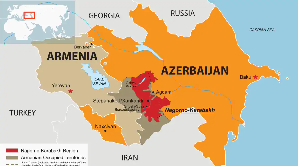
During Armenia’s 44-day conflict with Azerbaijan in the Nagorno-Karabakh region, Turkey had heavily backed Azerbaijan, further deepening the historical conflict between the two neighbors. In retaliation, the Armenian government announced on October 20, 2020, a decision for banning the imports of Turkish goods as of December 31, 2020.

Following the mentioned decision, Armenia has now reached out to the Islamic Republic to replace Turkish commodities with Iranian products in its markets. This has presented a new opportunity for Iranian producers to have a strong presence in this market and turn the (probably) temporary opportunity into a permanent trade bond between the two countries.

 Turkey-Armenia trade

Although, the border between Turkey and Armenia has been closed since 1993, the trade between the two countries has never ceased. The trade transactions between the two neighbors have been historically carried out through third countries like Georgia.

According to the Armenian Statistics Institute, Turkey’s annual exports to Armenia amounted to over US$2 billion over the past 10 years. However, in reality, the total imports of Turkish goods by Armenian people considering the so-called ‘luggage trade’ is much more than the mentioned figure. In fact, Turkey has been dominating the Armenian market for a very long time.

Iran-Armenia trade

Despite having shared borders, and close cultural and historical relations, the trade between Iran and Armenia has not been at a favorable level over the past few decades.

However, Iran’s preferential trade agreement with the Eurasian Economic Union (EAEU) has changed the prospect of the country’s trade relations with Armenia, paving the way for a boost in the economic relations between the two sides.

Back in January 2020, the Head of Iran-Armenia Joint Chamber of Commerce and Industry Hervik Yarijanian said the preferential trade agreement between Iran and EAEU has had a significant impact on the country’s trade relations with Armenia.

According to the official, the volume of trade between the two countries has witnessed an outstanding rise since the agreement became effective in October 2019.

Iran mainly imports red meat from Armenia, while Armenia imports polymer raw materials, machinery, industrial gases, manufactured artifacts, leather and leather goods from Iran, he said.

New opportunity

With the Turkish products being wiped out of the Armenian market, Iranian producers are presented with a great opportunity to showcase the high quality of their products and benefit from the huge capacities of the mentioned market.

Last week, the Director-General of the Asia-Pacific Department of Iran’s Trade Promotion Organization (TPO) said that Armenia is willing to replace Turkish commodities with Iranian products. According to Mojtaba Mousavian, the Republic of Armenia plans to replace 2,250 Turkish commodity items with Iran-made products.

Later on Tuesday, a Board member of the Iran Chamber of Commerce, Industries, Mines and Agriculture (ICCIMA) told ILNA that Iran now has the advantage of exporting goods such as sweets and chocolates, ceramic tiles, detergents, shoes, flooring and carpets and textile and clothing to Armenia, in addition to the previously traded items.

“We may not have been able to make good use of regional agreements in the past, but this is an opportunity for us to enter the Armenian market with full force,” Ali Shariati said.

Establishing strong economic relations with other countries requires a united front by the government, which means it requires close coordination between various government bodies to set the scene for the private sector and traders to play their role.

In this particular case, the situation begs the immediate attention from a triangle consisting of the Trade Promotion Organization, the Iran-Armenia Joint Chamber of Commerce, and the Ministry of Foreign Affairs.

By mobilizing the facilities in the mentioned bodies, exporters will be able to fully showcase their capacities and capabilities and take advantage of this probably short-term opportunity.

Monday, 4 January 2021

Iran Seizes Korean Tanker

According to Bloomberg, Iran has seized a South Korean-flagged oil tanker in the Strait of Hormuz. The Islamic Revolutionary Guard Corps said it detained the Hankuk Chemi vessel on Monday “due to repeated violations of marine environmental laws.”

Concerns of further conflict have grown in the final weeks before Joe Biden takes over in Washington, especially around the recent assassination of a top Iranian nuclear scientist and this week’s first anniversary of the killing of the country’s leading general.

“In the short run, these tactics run the risk of turning into a just cause for war in the waning days of the Trump administration, and in the longer run can poison the well with Biden’s team,” said Ali Vaez, Director of the Iran Project at the International Crisis Group.

That announcement came shortly after Washington decided to keep the USS Nimitz in the Persian Gulf because of “recent threats” from Iran’s leaders against Trump. The aircraft carrier had been set to leave the region.

South Korea has sent an anti-piracy unit to the strait, the Seoul-based Yonhap News Agency reported, citing the country’s Defense Ministry. The Hankuk Chemi’s operator denied it had broken any environmental rules.

The vessel was carrying 7,200 tons of petrochemicals from Jubail in Saudi Arabia when it was intercepted, the IRGC said. The guard corps took it to Bandar Abbas port in Iran, the semi-official Fars News Agency said. Crew members from Korea, Indonesia, Vietnam and Myanmar were arrested, according to Iran’s Tasnim News Agency.

Relations between Tehran and Seoul have been strained since the United States re-imposed tough sanctions on Iran and banned countries, including major Asian customers, from buying its petroleum.

Iran says it has at least US$7 billion from oil sales trapped in South Korea and the money is needed to purchase humanitarian goods, including coronavirus vaccines. Seoul’s deputy foreign minister was scheduled to visit Iran to discuss the trapped funds, a spokesman for Iran’s Foreign Ministry said just before the tanker was seized.

South Korea is not a member of the International Maritime IMSC Security Construct (IMSC), a maritime force created in 2019 in response to Iranian attacks and to protect sea lanes in the Middle East. Seoul has previously indicated a willingness to work with, though it has not requested assistance from the alliance so far, said an IMSC spokesman.

The Hankuk Chemi was sailing to the United Arab Emirates port of Fujairah after loading at Jubail, according to ship-tracking data compiled by Bloomberg. It veered off course in the Strait of Hormuz, a narrow stretch of water between the tip of Oman and Iran, and headed toward Bandar Abbas.

UK Maritime Trade Operations, which serves as a link between the Royal Navy and commercial vessels operating in high-risk areas, said there had been “an interaction” between a merchant vessel and the Iranian authorities in the Strait of Hormuz between 6:15 a.m. and 7:33 a.m. London time.

The U.S. Fifth Fleet, which is based in the region, is “monitoring the situation,” spokeswoman Commander Rebecca Rebarich said.

Year 2020 has changed our lives for ever

It has truly been a year like no other, with the pandemic dominating not just every news cycle but each of our lives. From work to family life, where we went, and what we did, nothing was untouched by COVID-19. But as people got used to phrases like “self-isolate” and “social distancing”, there were plenty of other news too. 

Coronavirus

The year began with a new virus originating from Wuhan, China. Wei Guixian, a 57-year-old shrimp seller, is thought to have been the first person infected. “Every winter I always suffer from the flu,” she later told Chinese media. “So I thought it was the flu.” We now know it wasn’t. COVID-19, as it has since been named, first took hold in the Chinese city then swept the globe. In Wuhan, some citizens have decided to sue the government for what they believe was suppression of the news in the early days of the virus. By January, the first case was in the UK and by March the world witnessed lockdown, focused on maintaining distance and washing hands repeatedly. As cases mounted across the world, there were unexpected issues, like those who wanted to believe that Covid-19 was in fact a hoax. As well as the terrible human cost, with tens of thousands dead in Britain and more than 100,000 still suffering with long-term effects, the pandemic has delivered the largest economic shock to the UK in three centuries – and it isn’t over yet. But with a vaccine now being given to the most vulnerable, even with Christmas plans derailed by another surge, there is still hope for 2021.

Brexit

When Boris Johnson won last December’s election, he succeeded on a series of slogans. First up was to “Get Brexit Done”, which he did, taking Britain out of the European Union on 31 January. After that, it gets a bit more tricky. He pledged to “level up” the country, and, after coronavirus hit, suggested a “Rooseveltian approach”, invoking FDR’s New Deal, though there’s little sign much has changed yet in the “red wall” seats the Tories took from Labour. However, the most pertinent of his soundbites now appears to be the promise that he had an “oven-ready deal” with the EU over Brexit. With time running out, there’s still no trade deal in sight. In the pantheon of prime ministers, Johnson’s currently far from the top of the pile after a whirlwind 12 months. But falling at the final hurdle with Brexit could make things far worse for both the prime minister’s legacy and, more importantly, the country.

US politics

Even by the standards of Donald Trump’s presidency, 2020 has provided some eye-opening moments. Questionable presidential pardons were perhaps to be expected, as were outrageous election claims. Suggestions of injecting bleach into the body to stop coronavirus, on the other hand, were not something anyone expected of a president. As 2020 progressed, the protests in the wake of George Floyd and Breonna Taylor’s deaths took hold across the United States and with them questions over the response from heavy-handed police. Along with coronavirus, it became the big issue of American politics, neither of which Trump had any real solution too, other than to stoke flames. By summer, the Republicans were already preparing for life after Trump. Stuck in campaign mode, the president pressed on, maskless, with rally after rally, and even planned to go ahead with a Republican convention as normal. Now, with Joe Biden set to come into power in a few weeks, the question is how much havoc Trump can wreak before leaving the Oval Office – and what he does next.

Climate crisis

The year began with bushfires blazing across Australia, killing 500 million animals and more than a dozen people, with acres upon acres left scorched in their wake. But it could end on a hopeful note, as the UK looks ahead to hosting the Cop26 climate summit in November. Joe Biden’s election, and his pledge to sign the US up to the Paris Agreement again, will surely help – with climate an issue that could bring him together with British leaders. In the UK, the government’s independent climate advisers have put together recommendations for how the country can limit its carbon emissions to keep temperatures down, and it’ll take more than sending fewer emails. Instead, they say that by 2050 almost every element of our lives will have to change, from the cars we drive to what we eat, if we’re to reach net-zero emissions. But can it really be done while building a third runway at Heathrow airport?

Arabs Israel relations

Many countries have established diplomatic relations with Israel in quick succession. The decision to establish diplomatic relations by itself cannot create alliance. In case of the Arab world, the matter is different. Within each country, there are factions that are hostile to Israel. Any regime that opens relations with Israel will have to face this reality. Each state that has recognized Israel has broken a barrier. Among many Arabs, it is a violation of a fundamental principle. This process, which began with the UAE, is rooted partly in the US Middle Eastern policy that has played an important role in implicitly endorsing the process and occasionally adding a sweetener. The US also made it clear that it was withdrawing its forces from the region and reducing its commitments. That left the region without the power that held it together. These countries could and did work together, but only through secret contacts and US coordination. Without the United States, each state was left to either go it alone or form meaningful relations on the whole. The US policy forced the countries of the region to face a reality they had tried to hide.