Friday, 4 June 2021

Why is Dr. Moeed Yousuf feeling edgy?

This evening one of my friends and most stringent critic of my writing, Ms. Kaniz-e-Fatima, reminded me that over the last few days I have been over-engrossed in Israeli elections. I have been ignoring impact of geopolitics on Pakistan.

Luckily, the first news that attracted my attention was the statement of Dr. Moeed Yusuf, Pakistan’s National Security Adviser saying “Shifting blame on Pakistan to save face amid US withdrawal from Afghanistan was unacceptable”

He also complained that international media had been biased against Pakistan in the past and it was the same today.

He grumbled, “The United States has assured us that Pakistan will not be made a scapegoat amidst the withdrawal of US troops from Afghanistan, but only time will tell whether they stay true to their word as history suggests otherwise.”

Yusuf stressed that Pakistan needed to maintain bilateral ties with the US, which continued to view Pakistan as a regional player, without compromising on national interests.

“The approach is still regional. Though, the US has shifted focus from Af-Pak and are now obsessed with China, seeing India as a country that has a role to play in this equation,” said Yusuf.

The prospect of an end to the US presence in Afghanistan after 20 years comes despite fighting raging across the countryside in the absence of a peace deal, giving rise to security concerns and fears that violence will increase and could also spill over to neighboring states, including Pakistan.

I created this blog in 2012 and since then have been writing about ‘US hegemony in the region’ and ‘dichotomy of the western media’.

I had also written in the past ‘Pak-US relation is marriage of convenience’.

Many critics may agree with me that US has been using Pakistan’s land and other strategic resources to achieve its foreign policy objectives in the region. I feel sorry for Moeed, who despite holding such an important office is still unaware of these harsh realities.

Thursday, 3 June 2021

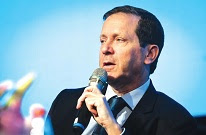
Let all congratulate Isaac Herzog, President-elect Israel

It is time to congratulate Isaac Herzog on his election as 11th President of Israel.

As the world is now talking about ‘Two States’ his biggest responsibility will be to give Palestinians their legitimate share by accepting Palestine as a state. 

He will have to stop annexation and construction of settlements on occupied land and relinquish control of Gaza, West Bank and East Jerusalem.

A veteran politician, Herzog is a former head of the Labor Party, a former opposition leader, a former labor, social affairs and social services minister and Diaspora minister and is the son of Chaim Herzog, who served as Israel’s president from 1983 to 1993. Therefore, is perfectly aware of the issues and also the possible solutions

His openness deserves admiration, he said, “I call my opponent, Israel Prize-winning educator Miriam Peretz, a hero and an inspiration.”

US President Joe Biden words must be kept in mind, “Throughout his career, President-elect Herzog has demonstrated his unwavering commitment to strengthening Israel’s security, advancing dialogue and building bridges across the global Jewish community”.

Now, he has to build bridges to improve relationship with Palestinians, if he believes in ‘mutual coexistence’.

If he is serious in bringing peace and prosperity for Israelis, he will also have to eradicate hostilities against Palestinians.

Above all, he has to convert Gaza, world’s largest open air prison, into a peaceful neighborhood.

Wednesday, 2 June 2021

Coalition formed to oust Netanyahu

A new governing coalition has been formed and is prepared to replace Prime Minister Benjamin Netanyahu, opposition leader Yair Lapid officially informed President Reuven Rivlin and Knesset Speaker Yariv Levin late Wednesday night.

"I commit to you Mr. President, that this government will work to serve all the citizens of Israel including those who aren't members of it, will respect those who oppose it, and do everything in its power to unite all parts of Israeli society," Lapid told Rivlin.

Yamina leader Naftali Bennett, Lapid and Ra'am (United Arab List) Chairman Mansour Abbas signed an agreement at a meeting on Wednesday night at Ramat Gan's Kfar Hamaccabiah Hotel, in the first coalition deal ever signed by an Arab party.

Abbas had added last-minute demands on Wednesday, following multiple conversations with Prime Minister Benjamin Netanyahu. After Netanyahu offered to cancel a law enforcing fines on illegal Arab building, Abbas demanded the same from the unity government being formed.

The Southern Islamic Movement's Shura Council decided in Kfar Kassem on Wednesday night to empower Abbas to make a final decision about whether to enter the coalition, based on his conversation with Bennett and Lapid. 

"The decision was hard and there were several disputes but it was important to reach agreements," Abbas told reporters after singing the deal.

Another coalition deal was signed with the New Hope Party. The deal guarantees splitting the role of the attorney-general, preventing Palestinian construction in Israeli controlled Area C of the West Bank and legalizing the usage of cannabis. The party received the Justice, Education, Construction and Communications portfolios.

Another dispute appeared to be on the way to a compromise after Bennett's number two in Yamina, MK Ayelet Shaked, accepted a rotation in the Judicial Selection Committee with Labor leader Merav Michaeli. According to the compromise, Shaked would serve on the committee in the first half of the term, along with an MK from Labor, and Michaeli in the second half, along with an MK from New Hope.

But Michaeli then demanded to go first in the rotation, which Shaked requested. One way of resolving the dispute that was discussed is a rotation of portfolios in the second half of the term, with Shaked becoming justice minister, New Hope leader Gideon Sa'ar shifting from the Justice to the Foreign Affairs portfolio and Bennett moving from Prime Minister to Interior Minister and alternate Prime Minister when Lapid becomes Prime Minister. Michaeli could also be promoted in that scenario.  

Michaeli and Lapid met late Wednesday night just ahead of the deadline.

The judicial selection committee is due to select six new Supreme Court judges over the next four years. It automatically includes the justice minister, who will be New Hope leader Gideon Sa'ar, one additional minister, an MK from the coalition and one from the opposition. There are also representatives from the current Supreme Court and the Bar Association.  

Michaeli said late Tuesday night that she accepted the agreement that gives Shaked the right to serve in the selection committee first. In return, Labor received the Chairmanship of the Knesset Law and Constitution Committee. She said she was proud to make history in ousting Netanyahu.

Shaked was not the only MK in Yamina causing problems. MK Nir Orbach, who has been touted as a possible coalition Chairman, was undecided about whether to vote for the government in the minutes before the deadline.

Orbach and Bennett met late Wednesday night after the coalition was announced. The meeting was positive, according to Yamina, and they will hold another one Thursday.

Lapid needed to tell President Reuven Rivlin and Knesset Speaker Yariv Levin by Wednesday midnight that he can form a government. Had he not done so, the mandate would have gone to the Knesset, where any MK had the opportunity to build a coalition with the support of 61 MKs.

A source close to Lapid said that even if details remain unresolved, Lapid would still tell Rivlin he had formed a government and allow the remaining issues to be dealt with before the new government gets approved in the Knesset.

Lapid had wanted to inform Levin that he had formed a government during Wednesday's Knesset session, in order to make sure the Knesset speaker would schedule a vote of confidence in the new government and the swearing in of the new ministers by next week. 

But final deals were not reached in time. It is expected that once Levin receives word from Lapid that a government is ready, he will insist on waiting as long as permitted by law in order to maximize pressure on Yamina MKs, which could end up being 12 days.

Marathon talks among representatives of the eight parties set to join the coalition at the Kfar Hamaccabiah Hotel finalized coalition agreements with every party overnight Tuesday night, concluding with a deal with Blue and White. A Blue and White spokeswoman said they agreed upon a number of central policy areas to advance and strengthen democracy and Israeli society at large.

Know more about Isaac Herzog, Israel’s eleventh president

Isaac Herzog made history on Wednesday when he became Israel’s first second-generation president-elect. Long before he actually announced his candidacy, it was generally assumed that Herzog would become Israel’s eleventh president. He never made a secret of the fact that this was his ultimate ambition, although he would have preferred to be prime minister before he became president.

He has followed in the footsteps of his father Chaim Herzog, Israel’s sixth president, in many respects. Chaim Herzog was the key spokesman for Israel during the 1967 Six Day War. Isaac Herzog, who served in the elite intelligence Unit 8200, was one of the major spokesmen for Israel during the Second Lebanon War. Chaim Herzog was a lawyer by profession. Isaac Herzog is also a lawyer by profession.

Chaim Herzog was a Labor MK before his election to the presidency. Here, his son outdid him, because he was not only a Labor MK, but had served as leader of the Labor Party, and leader of the opposition, and before that minister of social welfare, diaspora affairs, construction and housing and tourism, prior to all that he was cabinet secretary.

For the past three years he has also served as chairman of the Jewish Agency in which capacity he worked closely with Aliyah and Integration Minister Pnina Tamano-Shata to bring Ethiopian Jews to Israel, and was at the airport to greet them when they arrived. Many of these new immigrants had waited for years for their dream of making aliyah to be realized.

Herzog also traveled abroad extensively to cement relationships with those communities with which he was already familiar, and to forge new relationships with those communities with which he had not previously engaged.

Unlike his father, Herzog was not officially a diplomat, but in his various roles as a public servant, participated in diplomatic events, and as opposition leader, he met almost every foreign dignitary who came on an official visit to Israel. And of course, there were sensitive security issues in which there was no division of opinion between Left and Right, meaning that in his meetings with these foreign dignitaries Herzog echoed the line taken by the prime minister and defense minister.

At the Jewish Agency, where both his father and mother also once worked in the pre-state and early-state periods, Herzog outdid his father, by virtue of being the chairman. Like his father, who wrote several books, Herzog also has several books to his credit, and aside from what he’s written, like his father, he is a voracious reader.

He has also been elected president at a younger age. His father was 65.  Herzog is 60.

The Herzog family has a long history of public service. It’s a well-known fact that his paternal grandfather, for whom he was named, was the first Ashkenazi chief rabbi of Israel, but what is less known is that the family has a centuries old history of public service – both official and unofficial.

After the Second World War, Herzog’s grandfather accompanied by Herzog’s uncle Yaakov Herzog (who later became famous as Israel’s eloquent ambassador to Canada), went to Europe to search for child Holocaust survivors, many of whom had been taken in by convents and monasteries. The nuns and the priests were reluctant to give them up and denied that they were Jewish. Rabbi Herzog stood in front of all the children and recited the Shema prayer. Those who came from traditional or Orthodox homes spontaneously joined him, and he was thus able to restore their heritage and bring them to the Land of Israel.

It’s hardly surprising that one of the two of his grandsons who bear his name chose to go to the Western Wall in Jerusalem to pray there on the day before his election for president.