Tuesday, 2 March 2021

OPEC and allies likely to raise output

Crude oil futures rallied in the Asian session before paring gains as the European session progressed as traders look ahead to the OPEC+ meeting this week. OPEC and allies meeting is scheduled on 4th March 2021 with market participants looking at likely easing of output constraints.

Going into the meeting, analysts note that global inventories are falling at their fastest rate in two decades. Clearly with the ongoing demand uncertainty there is a risk that OPEC over tightens by maintaining output curbs for too long. The risk is now one of keeping too much oil on the side lines and not pumping enough, which will drive prices sharply higher. Goldman Sachs says Brent will hit US$75 this year.

Thirteen OPEC members pumped 24.89 million barrels per day (bpd) during February 2021, down 870,000 bpd from January 2021 in the first monthly decline since June 2020. In February the largest supply cut came from Saudi Arabia, which pledged an additional, voluntary one million bpd production cut for February and March. As a result, compliance with pledged cuts stood at 121% in February, up from 103% in January.

Current output constraints stand at a little over 7 million bpd, with the 23-country OPEC+ likely to agree to reduce this by another 500,000 bpd from April on Thursday. In addition, it’s likely Saudi Arabia will confirm the additional one million bpd it removed from the market will return in April. This would bring an additional 1.5 million bpd on stream, but even this may not be enough to satisfy the demand. 

OPEC will be mindful of the IEA report that suggested that inventories could start to climb again in the second quarter due to seasonal factors before drawing down again in the second half of the year.

“The rebalancing of the oil market remains fragile in the early part of 2021 as measures to contain the spread of COVID-19, with its more contagious variants, weigh heavily on the near-term recovery in global oil demand,” the IEA’s latest Oil Market Report said.

“But fresh support has been provided by a more positive economic outlook for the second half of the year, along with a pledge from OPEC+ to hasten the drawdown of surplus oil inventories.” The report added

The spread on Brent futures contracts points to significant short-term supply shortage. Six-month spreads are above US$3, while the December contract trades about US$4 below the May contract as the front months are commanding a significant premium over back months, a situation known as backwardation. This implies bullish positioning and tight supplies. Analysts also see similar levels of backwardation on WTI futures, with the April contract trading about US$4 above December contract.

OPEC should be mindful of US shale producers, albeit the conditions for a sharp recovery in output are not what they once were. Nevertheless, OPEC+ could, by keeping output too tight, create conditions for a sharp acceleration in prices that see rivals deliver more. 

Baker Hughes said oil and gas producers added rigs for a 7th straight month for the first time since May 2018, although the rate of growth slowed as the Texas deep freeze hit. The less OPEC does to return the production cut last year the quicker these numbers should rise.

Monday, 1 March 2021

United States backed militants looting 140,000 barrels per day of Syrian oil

Reportedly, Syrian Democratic Forces (SDF), a militant group supported by the United States, is stealing around 140,000 barrels of crude oil on a daily basis from oil fields in Syria’s northeastern province of Hasakah.

Lately, Ghassan Halim Khalil, Governor of Hasakah, announced the grim news in an interview with the Lebanese al-Akhbar newspaper, adding that Syrian oil is being plundered by the SDF militants in various ways, all with the participation and support of the US troops deployed in the region.

He stressed that precise intelligence collected and received show that the US-backed militants use tanker trucks from Taramish area in the vicinity of Tigris and in al-Malikiyah to smuggle the Syrian oil to neighboring Iraq.

Khalil further noted that many tanker trucks pass through the illegal al-Mahmoudiyah crossing into Iraq every day, adding that the SDF militants also regularly send stolen oil to their controlled areas in Syria.

The Syrian Governor also revealed that the US forces have ordered the SDF militants not to allow the Damascus-controlled areas receive oil.

Khalil added that while the Syrian people are suffering from the cold weather and hunger, these US-supported militants plunder Syria's national oil resources.

The US looting of Syrian oil was first confirmed during a Senate hearing exchange between South Carolina Republican Senator Lindsey Graham and then US secretary of state Mike Pompeo in July 2020.

During his testimony to the Senate Foreign Relations Committee, Pompeo confirmed for the first time that an American oil company would begin work in northeastern Syria, which is controlled by the SDF, which is an alliance of Kurdish militants operating against Damascus and currently controls areas in northern and eastern Syria.

The Syrian government denounced, in the strongest terms, the agreement inked to plunder the country's natural resources, including Syrian oil and gas under the sponsorship and support of the administration of former US President Donald Trump.

Since late October 2019, the US has been redeploying soldiers to the SDF-controlled oil fields in eastern Syria, in a reversal of Trump’s earlier order to withdraw all troops from the war-torn country.

The Pentagon claims that the move aims to protect the fields and facilities from possible attacks by the Daesh terrorists, while Trump openly said that the US seeks economic interests in controlling the oil fields.

A US-led military coalition has been pounding what it claimed was the positions of Daesh inside Syria since September 2014 without any authorization from the Damascus government or a UN mandate. The strikes have on many occasions resulted in civilian casualties and failed to fulfill their declared aim of countering terrorism.

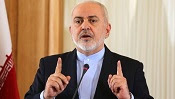
Resolution against Iran at IAEA will disrupt the situation, says Zarif

Mohammad Javad Zarif, Iranian Foreign Minister, on Monday warned the three European parties to the 2015 nuclear deal that a resolution against Iran by the IAEA Board of Governors would disrupt the current conditions, reports Tasnim news agency.

Speaking to reporters after a meeting with members of the Parliament National Security and Foreign Policy Committee, Zarif warned of agitation in case the International Atomic Energy Agency’s Board issues a statement against Iran over its decision to suspend the voluntary implementation of the Additional Protocol of the NPT.

“The Europeans (UK, France, and Germany) have begun a wrong move at the Board of Governors with the backing of the United States. We believe such an action would upset the conditions,” Zarif noted.

He also stressed that Iran’s ambassador to the Vienna-based international organizations has already warned the Board of Governors about the consequences of confusing the status quo.
 
“We hope wisdom would prevail, otherwise, we would have (other) approaches,” Zarif warned.

Speaking at the parliamentary meeting, Zarif also said the US has no right to return to the JCPOA – the official name for the 2105 nuclear deal- until it recommits itself to its obligations.

In accordance with the Iranian Parliament’s legislation on lifting sanctions, Iran has halted the voluntary implementation of the Additional Protocol because the signatories to the 2015 nuclear deal have failed to fulfill their commitments.

Following last week’s visit to Tehran by the IAEA Director General, Tehran and the UN nuclear watchdog issued a joint statement, declaring that Iran will stop its voluntary implementation of the Additional Protocol and will deny IAEA inspectors access to its nuclear facilities beyond the Safeguards Agreement as of 23rd February 2021, for three months.

According to Reuters, Britain, France and Germany have draft a US-backed resolution at the IAEA’s Board to criticize Iran for limiting cooperation with the Agency, despite Russian and Iranian warnings of serious consequences,.

The IAEA’s 35-nation Board of Governors is holding a quarterly meeting this week against the backdrop of faltering efforts to revive Iran’s nuclear deal with major powers now that US President Joe Biden is in office.

Iran scaled back its cooperation with the IAEA last week, ending extra inspection and monitoring measures introduced under the deal, including the power given to the IAEA to carry out snap inspections at facilities that have not been declared to be related to nuclear energy. Tehran’s move is a response to the US withdrawal from the deal in 2018 and the re-imposition of sanctions that had been lifted under it.

The European trio (E3), all parties to the 2015 nuclear deal, circulated a draft resolution for the Vienna meeting voicing “serious concern” at Iran’s reduction of transparency and urging Iran to reverse its steps.

Iran has warned to cancel a deal struck a week ago with the IAEA to temporarily continue many of the monitoring measures it had decided to end - a black box type arrangement valid for up to three months and aimed at creating a window for diplomacy.

Iran said on Sunday it would not take up a proposal by European Union Foreign Policy Chief, Josep Borrell to hold an informal meeting with the United States.

It is unclear how many countries would support a resolution. Moreover, Russia warned that a resolution could hurt efforts to revive the deal, formally known as the Joint Comprehensive Plan of Action (JCPOA), and that it would oppose it.
 
“Adoption of the resolution will not help the political process of returning to the normal comprehensive implementation of the JCPOA,” Russia’s note to other member states said.

“On the contrary it will hugely complicate those efforts undermining the prospects for the restoration of the JCPOA and for normal cooperation between Iran and the Agency,” it added. 

Sunday, 28 February 2021

Israel designates PFLP international branch as a terrorist organization,

As part of the campaign against the Palestinian Front for the Liberation of Palestine (PFLP) and its global organizational infrastructure, Defense Minister of Israel, Benny Gantz has signed an order designating the Samidoun organization, which acts abroad on the group’s behalf, as a terrorist organization.

According to a Defense Ministry press release, representatives of the organization are active in many countries in Europe and North America.

The Samidoun Palestinian Prisoner Solidarity organization, also known as Samidoun (Arabic for holding ground), was designated as a terrorist organization because it is part of the PFLP. It was founded by members of the front in 2012.

The designation was made following the recommendation of the Shin Bet (Israel Security Agency) and the National Bureau for Counter Terror Financing, the Defense Ministry said in a press release.

Representatives of the organization are active in many countries in Europe and North America, led by Khaled Barakat, who is part of the leadership of the PFLP abroad, press release stated.

Barakat is involved with establishing terrorist cells in the West Bank and abroad, the Defense Ministry said. The formal goal of Samidoun is to help Palestinian prisoners secure their release from prison, it said, adding that in practice, it serves as a front for the PFLP abroad.

Samidoun also plays a leading and significant role in the PFLP’s anti-Israel propaganda efforts, fundraising and recruiting of activists, the Defense Ministry said. These activities complement PFLP terrorist attacks against Israel, it said.

Gantz and the defense establishment will continue to take measures to foil terrorist activity and enforce the law against the attempts of the PFLP terrorist organization and its associated bodies to harm the security of Israel, the Defense Ministry said.